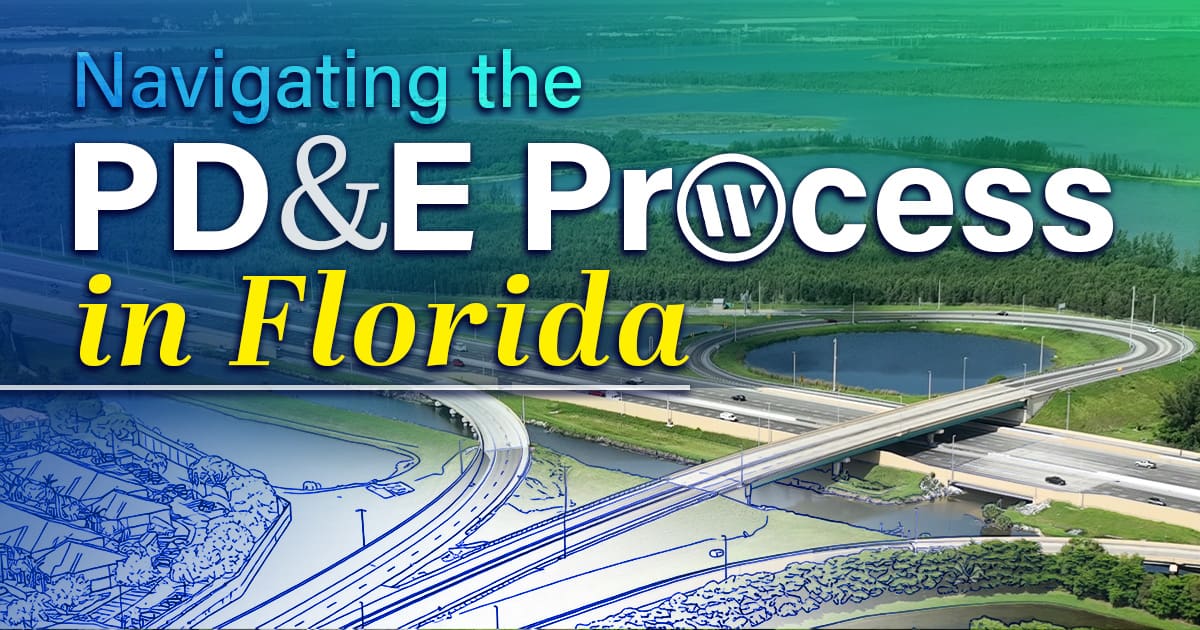
Transportation projects do not begin with construction. Long before the first shovel hits the ground, they move through a rigorous planning and environmental framework designed to ensure that investments are feasible, fundable, and aligned with community needs. In Florida, that framework is the Project Development and Environment (PD&E) process.
Recent updates to Florida Department of Transportation (FDOT) policy have fundamentally reshaped how PD&E studies are prioritized, funded, and delivered. For agencies, Metropolitan Planning Organizations (MPOs), and project stakeholders, the challenge is clear: how to continue advancing critical infrastructure projects within a more structured, time-sensitive framework.
At WGI, this is where experience, technical insight, and strategic thinking come together.
Understanding the Role of PD&E in Project Delivery
The PD&E process serves as the critical bridge between long-range planning and design. It evaluates project need, develops and compares alternatives, assesses environmental and community impacts, and identifies a recommended concept that can move forward into design and construction.
For major transportation improvements, particularly capacity enhancements and new alignments, PD&E is essential to satisfying both federal National Environmental Policy Act (NEPA) requirements and state regulations. These studies have historically functioned as a pipeline, feeding viable, long-term projects into the transportation work program and addressing complex corridor-level challenges tied to growth, congestion, safety, and economic development.
However, the updated FDOT policy introduces a new level of urgency and discipline into that pipeline, fundamentally changing how and when projects advance.
Breaking Down the New FDOT PD&E Policy
The updated FDOT Project Development Policy establishes three key requirements that directly influence project delivery from the earliest stages of development:
1. Construction Funding Within Eight Years
Projects entering the PD&E phase must have identified and programmed construction funding within eight years of initiation. This requirement ties project development directly to fiscal reality, ensuring that studies advance only when there is a clear path to implementation.
2. Accelerated PD&E Delivery Timeline
PD&E studies for capacity improvements and new alignments are expected to be completed within 18 months of commencement, to the maximum extent possible. This compresses schedules and demands a more focused, decision-driven approach to alternatives evaluation and environmental analysis.
3. Integration Across the Project Lifecycle
The policy reinforces alignment between feasibility, PD&E, design, and construction phases, requiring planning decisions to be made with a clearer understanding of downstream cost, funding, and constructability implications.
The immediate effect of these changes has been to pause or reevaluate of many PD&E studies across Florida. Yet, while the policy introduces constraints, it also creates an opportunity to rethink how projects are developed, encouraging a more strategic, implementation-focused approach.
From Pause to Progress: Strategic Approaches to Moving Forward
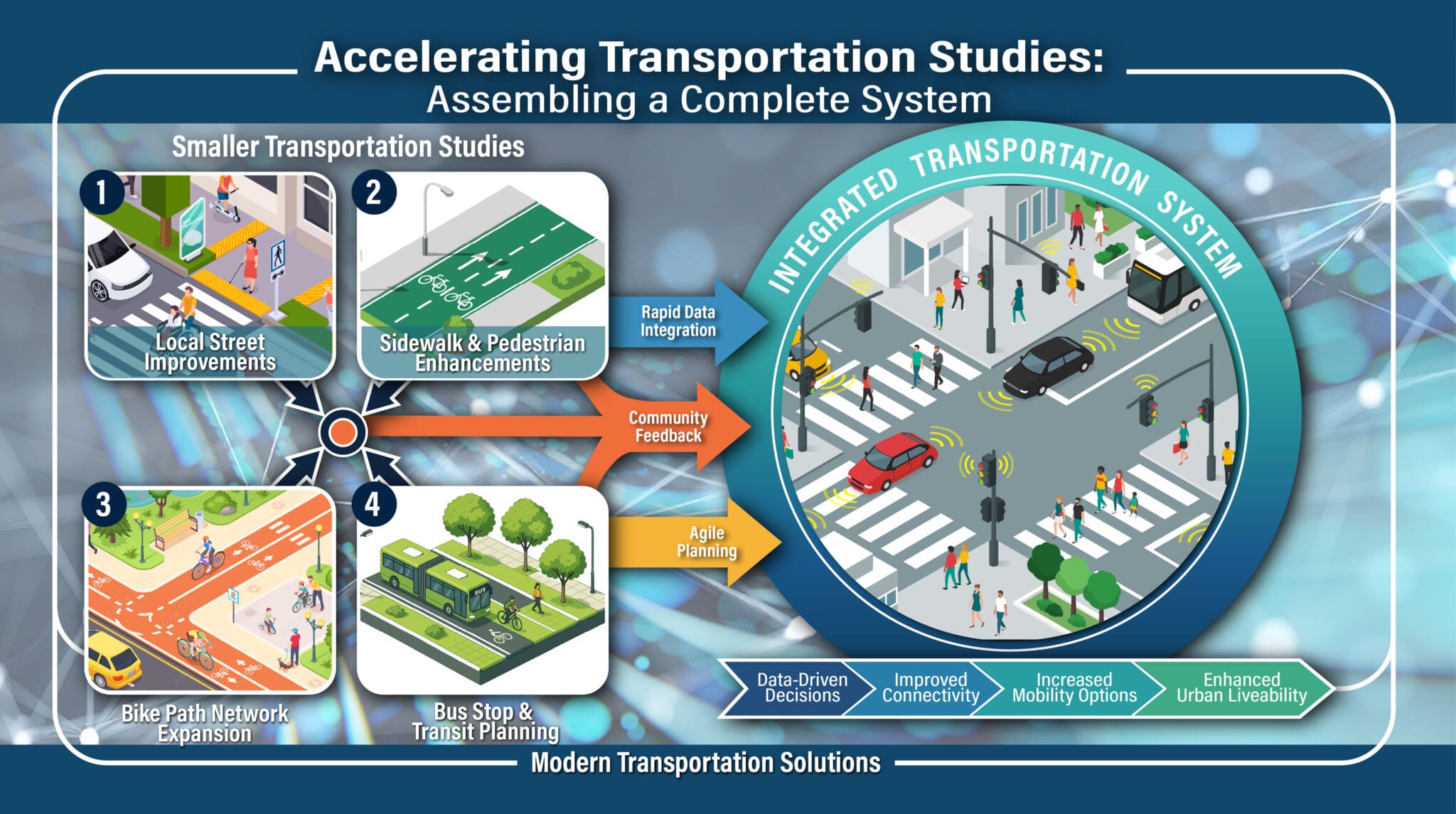
While the policy introduces constraints, it also encourages more feasibility studies focused on strategic, data-driven decision-making. This is where PD&E professionals are uniquely positioned to adapt, because project development and alternative evaluation is at the core of what they do.
Advancing Feasibility Before PD&E
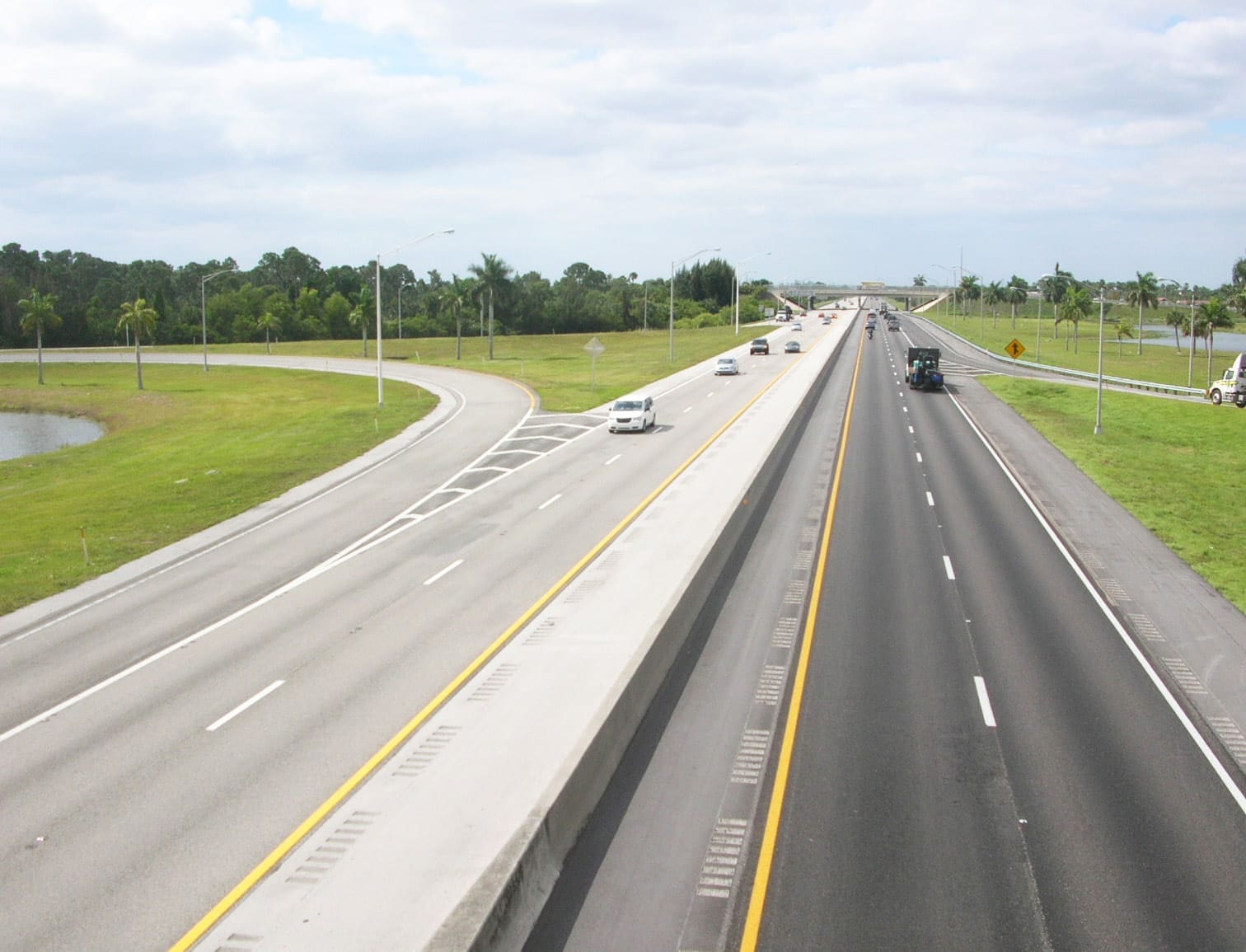
One of the most effective strategies is to shift greater emphasis to feasibility studies and assessments prior to initiating the PD&E phase.
By continuing existing conditions analysis, alternatives screening, and high-level cost evaluation prior to the PD&E, agencies can maintain momentum on paused projects. This approach allows teams to identify viable, lower-cost improvements that can be implemented in the near term while refining larger, more complex concepts into phased or segmented projects for future programming. It also supports the development of corridor-specific implementation strategies that better align with funding realities and long-term planning objectives.
For large-scale projects, segmentation becomes especially important. Instead of advancing a single, high-cost concept, projects can be broken into smaller, fundable components that collectively achieve long-term corridor goals.
Aligning PD&E with Realistic Funding Windows
The requirement to program construction funding within eight years fundamentally changes how projects are prioritized.
MPOs and transportation agencies must now evaluate which projects can realistically be funded within the Long Range Transportation Plan (LRTP) horizon. This prioritization often favors:
- Safety improvements with clear, data-driven justification
- Capacity enhancements within existing right-of-way
- Projects in high-growth areas with demonstrated demand
- Improvements with limited right-of-way acquisition or environmental complexity
In parallel, there is growing value in establishing construction cost ranges early in project development. Using historical PD&E and new real-time pay item construction data, agencies can better define planning-level cost brackets (for example, $20M, $50M, $80M, $120M) to support earlier programming decisions.
This reduces the risk of delays associated with identifying funding gaps after PD&E alternatives are finalized, a process that can lead to cost escalation and missed implementation windows.
Delivering PD&E Studies with Speed and Precision
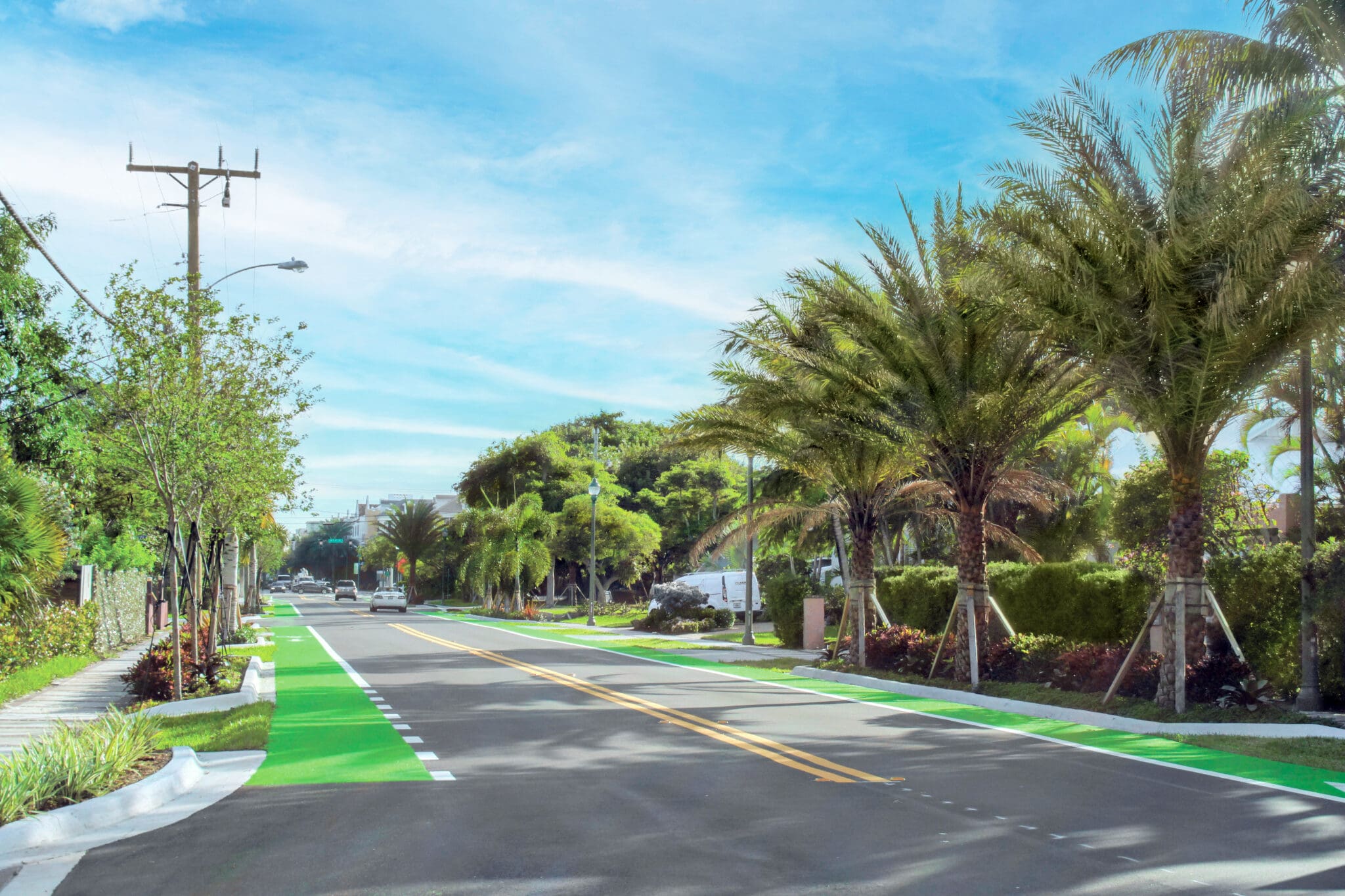
With a target delivery window of 18 months, PD&E studies must be more focused and efficient than ever before.
Key strategies include:
- Early identification of a viable “best alternative” through feasibility work
- Streamlined NEPA documentation supported by high-quality data
- Proactive agency coordination to reduce review cycles
- Targeted public engagement that informs decision-making without delaying progress
Several states have successfully implemented phased approaches that separate planning, environmental review, and design into more discrete steps. Florida’s updated policy moves in a similar direction, emphasizing clarity and commitment before advancing into detailed analysis.
Rethinking What Requires a PD&E Study
As the PD&E process becomes more focused, it is equally important to recognize that not every transportation improvement requires a full PD&E study. Many operational and safety-focused projects can be advanced through alternative mechanisms that are better suited for near-term delivery.
Improvements such as traffic operations enhancements, safety modifications, pavement rehabilitation, and bridge repairs are often driven by established data sources, including crash analyses, condition assessments, and inspection reports. Because these projects typically occur within existing infrastructure footprints, they can move forward more quickly and with fewer regulatory requirements.
By strategically leveraging these alternative pathways, agencies can continue delivering meaningful system improvements while reserving the PD&E process for projects that require comprehensive environmental review and long-term planning. This balanced approach supports both immediate performance needs and future infrastructure investment.
The Value of an Integrated, Multidisciplinary Approach
Successfully navigating this evolving landscape requires more than process knowledge. It demands a fully integrated approach that brings together planning, engineering, environmental analysis, and cost expertise from the outset.
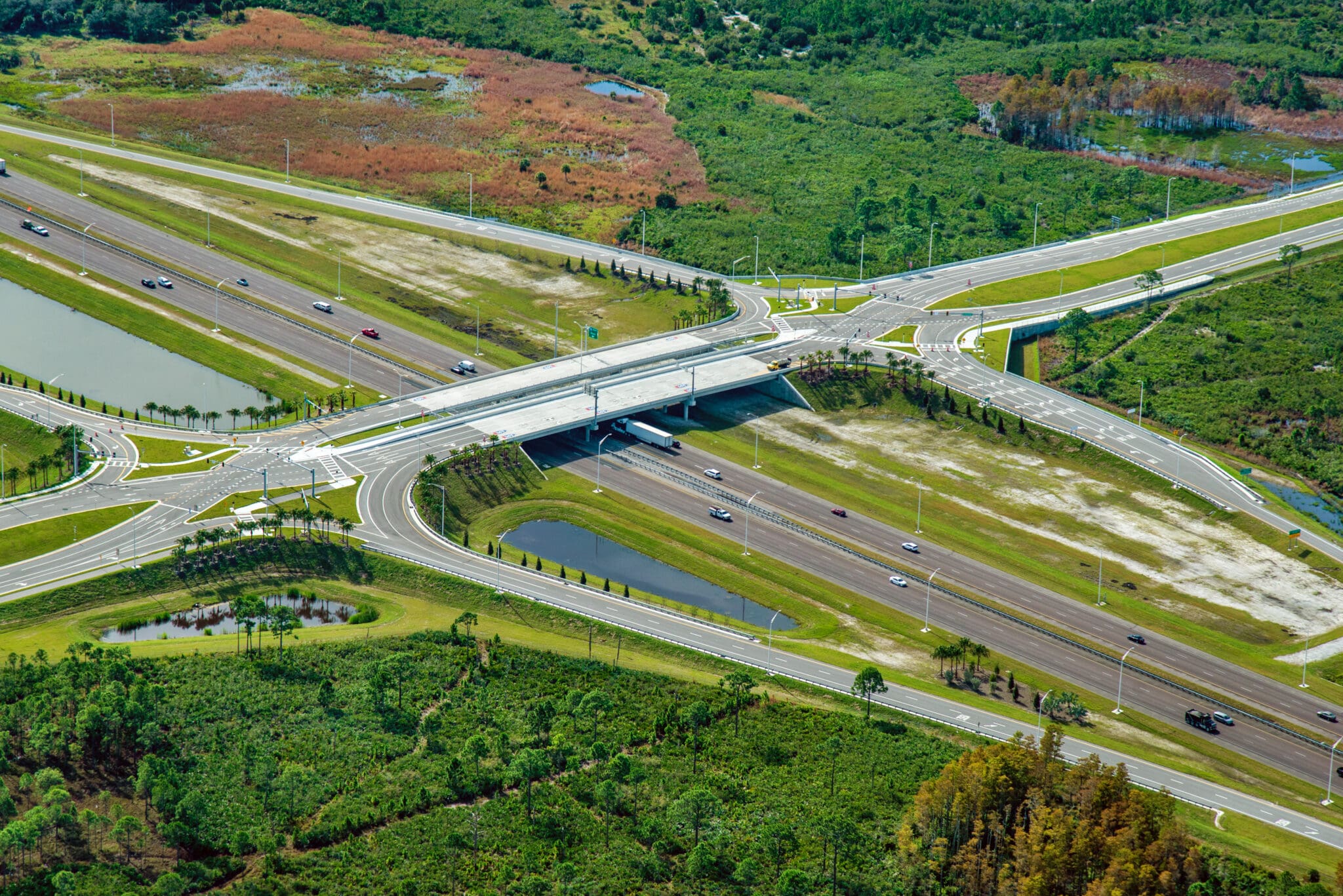
At WGI, our teams collaborate across disciplines to align project vision with technical feasibility and funding realities. PD&E project managers, planners, roadway, traffic, and bridge engineers, and cost estimating professionals work together to evaluate alternatives through the lens of constructability, budget, and long-term performance.
This level of integration allows projects to advance with greater confidence and fewer surprises. By coordinating early and maintaining alignment throughout project development, we help agencies move beyond conceptual alternatives to implementation-ready solutions that meet both policy requirements and community needs.
Delivering Infrastructure That Meets Today’s Reality
The updated FDOT PD&E policy reflects a broader shift toward accountability, efficiency, and implementation-focused planning. Projects must not only be visionary; they must also be deliverable within defined timeframes and funding constraints.
While these changes may initially slow progress, they ultimately strengthen the connection between planning and construction, reducing uncertainty and improving long-term outcomes. For agencies and stakeholders, success lies in embracing this shift, leveraging technical expertise, advancing projects strategically, and aligning decisions with both policy requirements and real-world conditions.
Partner with WGI
WGI’s PD&E professionals understand both the process and the evolving policy landscape in Florida. We bring expertise in alternatives analysis, environmental documentation, construction cost estimating, and multidisciplinary coordination to help agencies move projects forward with clarity and confidence.
From feasibility assessments and corridor studies to accelerated PD&E delivery and implementation strategies, WGI partners with clients to navigate complexity and deliver infrastructure solutions that are practical, fundable, and built for long-term performance.
Connect with WGI to learn how our team can support your next transportation project!