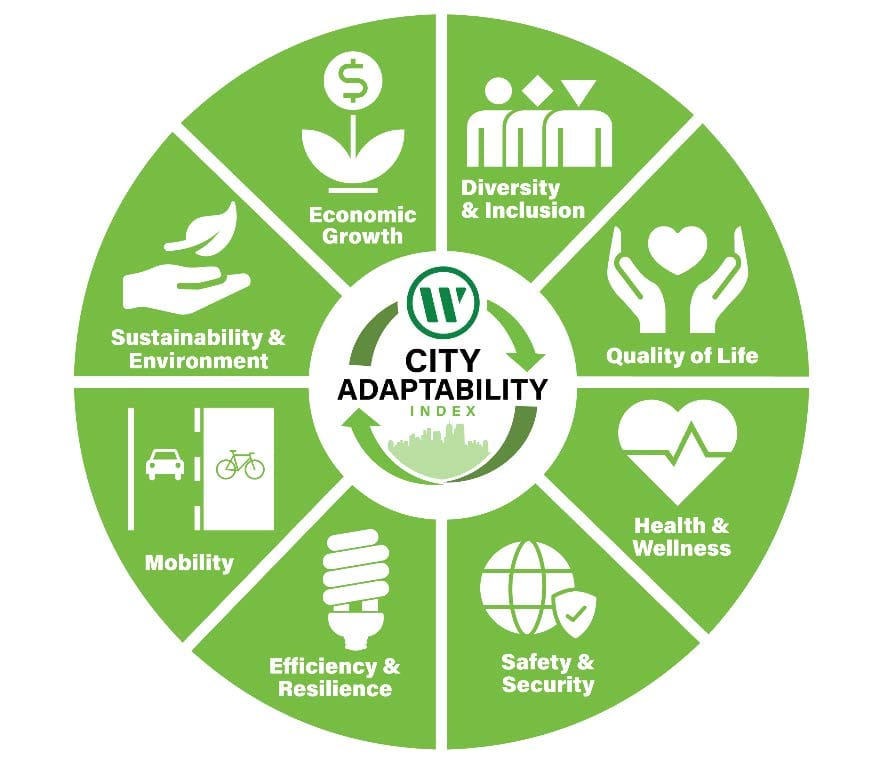
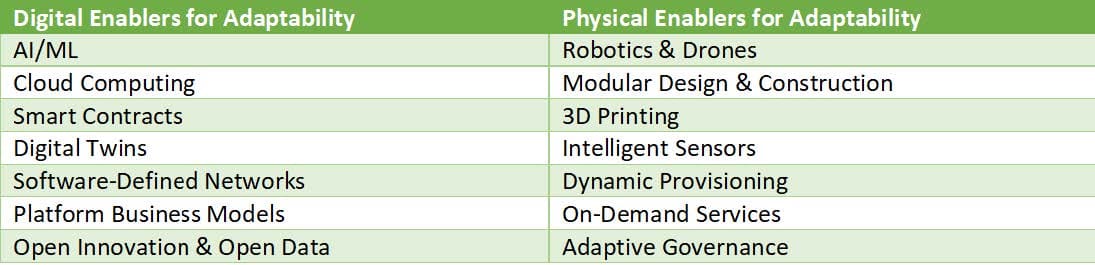
The Smart City of the future needs to become an Adaptive City to be able to respond dynamically to continuous change and disruption.It’s said that Rome wasn’t built in a day, and there’s a good reason for that. Cities are the most complex human-designed system on the planet. Today, 55% of the world’s population lives in urban areas, with 68% projected to live in urban areas by 2050. In the United States, the number is already at 83% and projected to reach 89% by 2050. As such, cities represent perhaps the most important opportunity for innovation and digital transformation for our entire society and the planet. Through this transformation we can deliver an urban future that is more sustainable and resilient, but also more adaptive. Since cities are naturally complex, adaptive systems, at least from a human perspective, the key to their future digital transformation is in design and implementation that utilizes both digital and physical enablers of adaptation. To achieve the smart city of the future, the Adaptive City needs to take the following 3 steps: