Built in the 1940s as a school for pilot instructors, Tyndall Air Force Base has been a critical asset for the nation’s defense strategy. In early October 2018, Hurricane Michael, which was thought to be a Category 2 hurricane, quickly escalated into a Category 5, significantly damaging more than 60% of Tyndall Air Force Base facilities. Prior to Hurricane Michael, Tyndall Air Force Base was home to various training schools for weapons systems and state-of-the-art simulator facilities. Some of these facilities have remained at Tyndall while others have been moved temporarily to nearby Air Force Bases.
WGI was tasked with obtaining accurate, detailed information on existing utilities at the base to aid in the $3 billion recovery and modernization efforts. Over a span of 3 months, WGI performed over 350 utility test holes and located more than 10,000 linear feet of various utilities, some of which included gas, fiber optic, and water. WGI coordinated closely with Civil Engineering Services and Airfield Management to ensure there was no disruption of airfield activities. WGI also surveyed the area using the data collected from our utility investigation. All information was presented to the design team in the form of utility base maps. This information will ultimately assist with their goal of building a 21st-century, digitally-integrated training facility, one that can be a model for other bases moving forward.
Project Highlights
- Performed 350 test holes in a span of 3 months
- Located 10,000 linear feet of various utilities (gas, fiber optic, and water)
.png?width=185&height=175&name=WGI%20Icon_Green%20(1).png)




















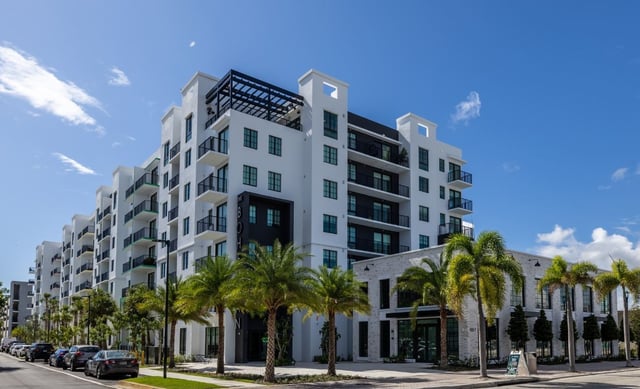 LAKE WORTH BEACH