.png?width=185&height=175&name=WGI%20Icon_Green%20(1).png)
















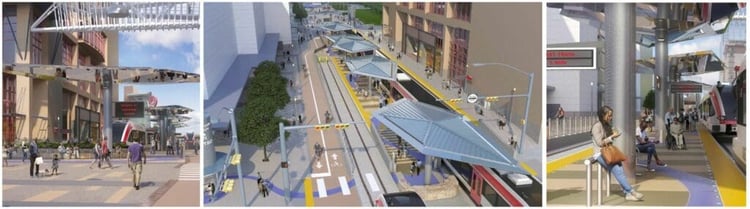
Transit Oriented Developments (TODs) plan for an area-wide transit system that connects various densities of mixed-uses with businesses and modes of transportation, with traditional TODs surviving on market-supported development. TOD’s mix of residential, retail, office, open space, and public land uses in a walkable environment make them convenient for people to safely travel by transit, bicycle, or on foot.
 However, the implementation of a TOD without protecting equity for the existing residents and businesses can and often does lead to negative outcomes. Developers can largely benefit from these developments, but existing communities are often forced to relocate due to increased costs and taxes that come with the redevelopment.
Marginalized businesses cannot compete with the influx of new development, new businesses, and higher rental cost. Long-time residents, often representing racial minorities, tend to be pushed out, ultimately changing the demographics, history, and soul of the neighborhood. While TODs can certainly mature an area by concentrating on buildings, layouts, land uses, and densities to maximize potential, they have traditionally overlooked the people who initially represented those communities.
Equitable Transit Oriented Developments (ETODs)
However, the implementation of a TOD without protecting equity for the existing residents and businesses can and often does lead to negative outcomes. Developers can largely benefit from these developments, but existing communities are often forced to relocate due to increased costs and taxes that come with the redevelopment.
Marginalized businesses cannot compete with the influx of new development, new businesses, and higher rental cost. Long-time residents, often representing racial minorities, tend to be pushed out, ultimately changing the demographics, history, and soul of the neighborhood. While TODs can certainly mature an area by concentrating on buildings, layouts, land uses, and densities to maximize potential, they have traditionally overlooked the people who initially represented those communities.
Equitable Transit Oriented Developments (ETODs)
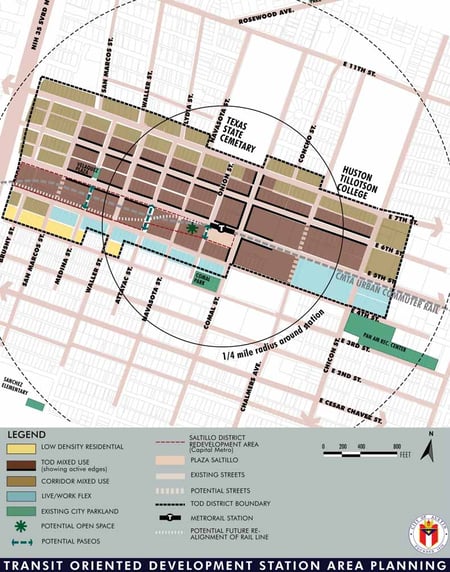 Start with a focus on the ‘people’ aspect of development and, from there, build upon the tenet that equitable economic programs can be established to support and maintain the existing characteristics of a neighborhood. Those existing residents and businesses can then be integrated into the TOD transit area system, which in the end, will allow for better and fairer community growth.
This concept promotes enhanced and denser development with measures that are aimed at preventing existing community displacement. Utilizing the buildings, layouts, and land uses of an area while factoring in the existing residents and users of a particular area, as well as including programs that provide protections, can ensure that the existing residents don’t get “priced out”.
ETODs will actively enable all people, regardless of income, race, ethnicity, age, gender, immigration status, or disability, to experience the benefits of an enhanced, dense, mixed-use, pedestrian-oriented development near transit hubs. ETOD projects and processes elevate the community's voice in decision-making and in community benefits such as affordable housing, public health, and sustainability.
Start with a focus on the ‘people’ aspect of development and, from there, build upon the tenet that equitable economic programs can be established to support and maintain the existing characteristics of a neighborhood. Those existing residents and businesses can then be integrated into the TOD transit area system, which in the end, will allow for better and fairer community growth.
This concept promotes enhanced and denser development with measures that are aimed at preventing existing community displacement. Utilizing the buildings, layouts, and land uses of an area while factoring in the existing residents and users of a particular area, as well as including programs that provide protections, can ensure that the existing residents don’t get “priced out”.
ETODs will actively enable all people, regardless of income, race, ethnicity, age, gender, immigration status, or disability, to experience the benefits of an enhanced, dense, mixed-use, pedestrian-oriented development near transit hubs. ETOD projects and processes elevate the community's voice in decision-making and in community benefits such as affordable housing, public health, and sustainability.
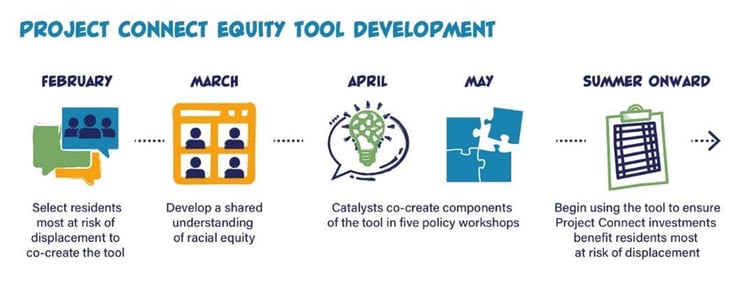 Local land use, zoning, and housing policies are also in the process of being evaluated and modified to ensure that new development increases housing production serving households across a range of incomes and ensuring that affordable housing is being preserved.
These policies also aim to ensure that tenants and small businesses are protected from exorbitant rent increases and evictions without just cause and that improved transit services take their needs into account to maximize the benefits for all.
As the Project Connect program has progressed and ETODs come into focus, each station area seeks to consider a specific set of questions:
Local land use, zoning, and housing policies are also in the process of being evaluated and modified to ensure that new development increases housing production serving households across a range of incomes and ensuring that affordable housing is being preserved.
These policies also aim to ensure that tenants and small businesses are protected from exorbitant rent increases and evictions without just cause and that improved transit services take their needs into account to maximize the benefits for all.
As the Project Connect program has progressed and ETODs come into focus, each station area seeks to consider a specific set of questions:
 Most recently, the City of Austin’s ETOD Policy Plan was approved by City Council on March 9, 2023, initially for stations within the Northeast Austin District, with amendments to:


But How Will This Be Accomplished in Austin, TX?
The ETOD Policy Plan is a set of guidelines to help the residents of Austin equitably put transit-oriented development in place. These guidelines seek to support residents of all incomes and backgrounds, especially those who have been hurt by transportation and planning decisions of the past. There are several basic goals of these plans, including:- ENABLE all residents to benefit from safe, sustainable, and accessible transportation.
- HELP close the racial, wealth, and health gaps.
- PRESERVE and increase housing opportunities that are affordable and attainable.
- EXPAND ACCESS to high-quality jobs and career opportunities.
- SUPPORT healthy neighborhoods.
- EXPAND Austin’s diverse cultural heritage and small BIPOC-owned and legacy businesses.

- Who lives here?
- Who works here?
- What services do they have/need?
- What needs to be preserved?
- What service or infrastructure can be added/enhanced?
- How can affordable housing be added without displacing existing low-income residents?
- What employment/entertainment/grocery opportunities need to be preserved/added?
ETOD Year One Planning
Two CapMetro existing stations are included in Year 1 planning:- North Lamar Transit Station
- South Congress Transit Station
- Decker
- Sendero Hills
- US 183
- Colony Park Town Center
- Loyola/Johnny Morris
- Purple Sage
- Delco Center
- Delwau
- Colony Park

- Prioritize the utilization of publicly owned lands
- Explore value-capture tools such as tax-increment financing (TIFs) to fund necessary infrastructure and improvements
- Present an implementation plan with clear tools, outcomes, timelines, and performance measures to track the progress and effectiveness of these programs
- Prioritize the use of public transit, including rail and MetroRapid bus lines
- Provide updates and communications on the implementation plan progress to Council Committees later this year
- Rental assistance
- Home repair programs
- Soft zoning density changes, such as the by-right ability to build triplexes and quadplexes in single-family neighborhoods
- Tax abatements for residents in the ETOD area.
With ETODs in Austin, who wins?
- Development Professionals will benefit from having clear land development code rules and generous development bonuses that come with providing better mixed-use and affordable housing in their developments
- Low-income residents are protected from displacement and provided with better affordability, access, employment, conditional zoning, tax benefits, and transit options in their existing neighborhoods
- Marginalized and historic businesses are protected from displacement with incentives and support specific to the station area and neighborhood. Commercial cooperatives, community land trusts, and commercial cooperative shareholding are some of the strategies which are under review
- The City of Austin can increase affordable housing and public transportation options. Through TIF financing, the bonds issued are based on increased market demand and increased tax revenues, and the cost of the bond is largely paid for by the value of increased development activity