.png?width=185&height=175&name=WGI%20Icon_Green%20(1).png)


















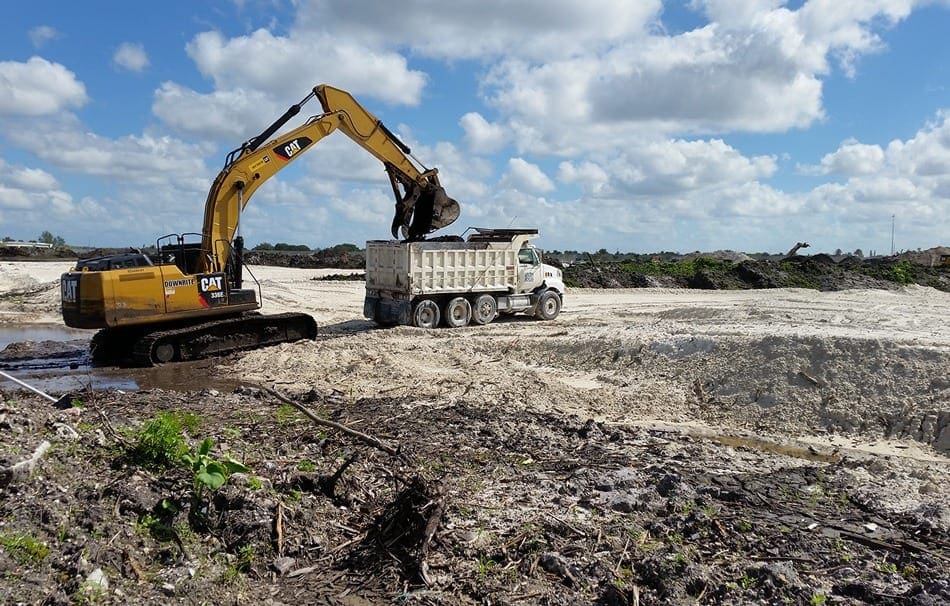
The scarcity of Florida’s buildable land has developers turning to parcels they previously passed over because they contained thick layers of muck. Muck (wet, sticky soil made from decaying plant material) presents several challenges for developers, including:
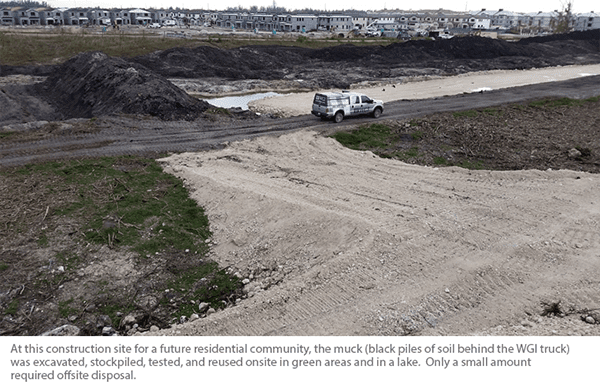 Before WGI proposes a remedial plan for arsenic, we meet with the developer (including the geotechnical engineer and the general contractor) to understand what earthwork needs to occur regardless of any arsenic remediation. What lakes need to be dug? How much soil needs to be imported or exported for grading and flood control? What earthwork needs to occur to create geotechnically stable subsoils? Then we develop a cost-effective remedial plan that incorporates the earthwork that needs to get done anyway for other site development purposes.
If active arsenic remediation is needed, WGI has a range of effective tools. In some cases, removal and offsite disposal of some “hot spots” are the most economical, followed by soil blending of the remaining muck with soil that has lower concentrations. One of our most common solutions is to over-excavate a lake (especially if the development needs a source of clean fill material) and place the muck in the bottom of the lake. A key consideration here, however, is to test the soil using the Synthetic Precipitation Leaching Procedure to ensure the arsenic will not leach out of the muck and contaminate the groundwater. Also, the environmental regulatory agencies require a comprehensive water quality assessment, including pre-construction (baseline) monitoring wells, to compare to post-construction conditions. Sometimes the best “tool in the toolbox” is to leave some of the muck right where it is, especially if onsite wetland preservation is needed. Our extensive experience shows the most cost-effective solution uses multiple tools from that toolbox.
Before WGI proposes a remedial plan for arsenic, we meet with the developer (including the geotechnical engineer and the general contractor) to understand what earthwork needs to occur regardless of any arsenic remediation. What lakes need to be dug? How much soil needs to be imported or exported for grading and flood control? What earthwork needs to occur to create geotechnically stable subsoils? Then we develop a cost-effective remedial plan that incorporates the earthwork that needs to get done anyway for other site development purposes.
If active arsenic remediation is needed, WGI has a range of effective tools. In some cases, removal and offsite disposal of some “hot spots” are the most economical, followed by soil blending of the remaining muck with soil that has lower concentrations. One of our most common solutions is to over-excavate a lake (especially if the development needs a source of clean fill material) and place the muck in the bottom of the lake. A key consideration here, however, is to test the soil using the Synthetic Precipitation Leaching Procedure to ensure the arsenic will not leach out of the muck and contaminate the groundwater. Also, the environmental regulatory agencies require a comprehensive water quality assessment, including pre-construction (baseline) monitoring wells, to compare to post-construction conditions. Sometimes the best “tool in the toolbox” is to leave some of the muck right where it is, especially if onsite wetland preservation is needed. Our extensive experience shows the most cost-effective solution uses multiple tools from that toolbox.
- it normally indicates a wetland is present that needs permitting and mitigation,
- it is geotechnically unsuitable for building upon, and
- it can contain arsenic in concentrations above residential standards.
Before WGI proposes a remedial plan for arsenic, we meet with the developer (including the geotechnical engineer and the general contractor) to understand what earthwork needs to occur regardless of any arsenic remediation. What lakes need to be dug? How much soil needs to be imported or exported for grading and flood control? What earthwork needs to occur to create geotechnically stable subsoils? Then we develop a cost-effective remedial plan that incorporates the earthwork that needs to get done anyway for other site development purposes.
If active arsenic remediation is needed, WGI has a range of effective tools. In some cases, removal and offsite disposal of some “hot spots” are the most economical, followed by soil blending of the remaining muck with soil that has lower concentrations. One of our most common solutions is to over-excavate a lake (especially if the development needs a source of clean fill material) and place the muck in the bottom of the lake. A key consideration here, however, is to test the soil using the Synthetic Precipitation Leaching Procedure to ensure the arsenic will not leach out of the muck and contaminate the groundwater. Also, the environmental regulatory agencies require a comprehensive water quality assessment, including pre-construction (baseline) monitoring wells, to compare to post-construction conditions. Sometimes the best “tool in the toolbox” is to leave some of the muck right where it is, especially if onsite wetland preservation is needed. Our extensive experience shows the most cost-effective solution uses multiple tools from that toolbox.