.png?width=185&height=175&name=WGI%20Icon_Green%20(1).png)



















As LED light fixtures are becoming more popular, color temperature selection is becoming more important for building owners, project designers, and electrical engineers. Here are some strategies to keep in mind when selecting color temperatures for the LED fixtures in your next project.
 Warm Light resembles the color of an incandescent; looking orange or yellow. Cool White ranges from Yellow-White (3000K) to White (4000K) to Blue-White (5000K). Daylight ranges from Blue-White (5000K) to Bright Blue (6500K).
While lighting preferences are purely subjective, research has shown that these three ranges of light have different effects on sleep cycle, productivity, and mood. Warm Light is relaxing which helps people to calm down and prepare for sleep. Cool White and Daylight contain blue spectra which helps people be wakeful, productive, attentive, and improves moods.
Warm Light resembles the color of an incandescent; looking orange or yellow. Cool White ranges from Yellow-White (3000K) to White (4000K) to Blue-White (5000K). Daylight ranges from Blue-White (5000K) to Bright Blue (6500K).
While lighting preferences are purely subjective, research has shown that these three ranges of light have different effects on sleep cycle, productivity, and mood. Warm Light is relaxing which helps people to calm down and prepare for sleep. Cool White and Daylight contain blue spectra which helps people be wakeful, productive, attentive, and improves moods.
 Work in kitchens requires attention and focus so a Cool White color temperature is a good choice. Image Credit: Canarini Designer Kitchens[/caption]
Living Room:
The living room is the place to relax so a Warm Light color temperature may be desired.
Dining Room:
The dining room can be tricky as it should promote calm, but also keep family and guests attentive for conversing and eating. To achieve this, use accent lighting such as an over the table chandelier with a Warm White, and general lighting on the lower end of Cool White color temperatures.
Bathrooms:
Bathrooms are where people get ready in the morning for work. A color temperature matching your office lighting may help you see how you will appear at work. Since a Cool White color temperature is generally used in offices this may be a good choice. A means of reducing the light level in the evening before sleep may be beneficial.
Hallways/Bedrooms:
Work in kitchens requires attention and focus so a Cool White color temperature is a good choice. Image Credit: Canarini Designer Kitchens[/caption]
Living Room:
The living room is the place to relax so a Warm Light color temperature may be desired.
Dining Room:
The dining room can be tricky as it should promote calm, but also keep family and guests attentive for conversing and eating. To achieve this, use accent lighting such as an over the table chandelier with a Warm White, and general lighting on the lower end of Cool White color temperatures.
Bathrooms:
Bathrooms are where people get ready in the morning for work. A color temperature matching your office lighting may help you see how you will appear at work. Since a Cool White color temperature is generally used in offices this may be a good choice. A means of reducing the light level in the evening before sleep may be beneficial.
Hallways/Bedrooms:
 Hallways and bedrooms are the main areas lights will be on at night. Warm Light helps people relax and prepare for sleep so this color temperature may be a good choice in these areas of the house.
Study/Office:
The study/office is the area where business is conducted which requires attention, focus, and productivity so a Cool White color temperature may be desired.
Hallways and bedrooms are the main areas lights will be on at night. Warm Light helps people relax and prepare for sleep so this color temperature may be a good choice in these areas of the house.
Study/Office:
The study/office is the area where business is conducted which requires attention, focus, and productivity so a Cool White color temperature may be desired.
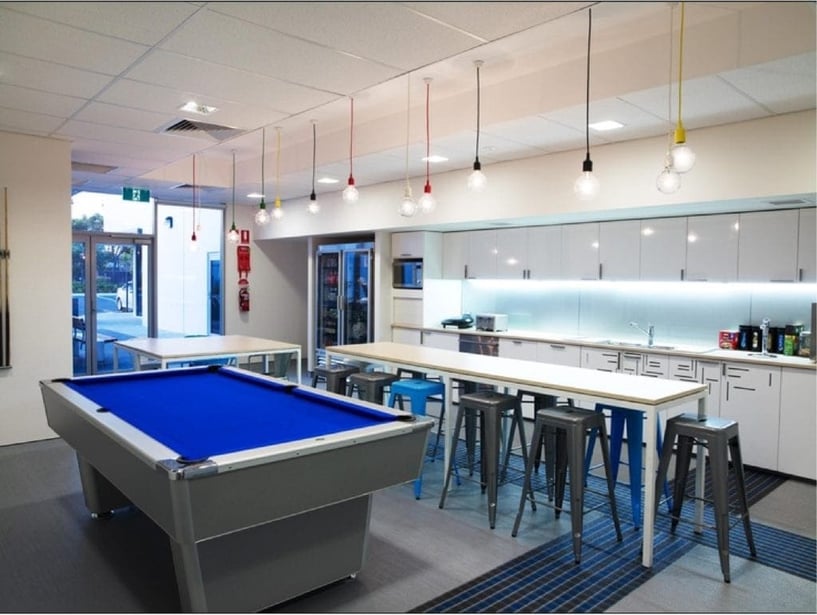 Photo credit: MKDC[/caption]
The break room is the place employees go to relax, and take a step back from their work. A range of Warm White close to Neutral White color temperature may be a good choice.
Huddle/Conference Room:
Huddle and conference rooms are used for meetings and collaboration. During meetings it is important that everyone is relaxed and comfortable, but also attentive so a range of Warm White to Neutral White color temperature may be desired.
Lobby:
[caption id="attachment_33283" align="alignnone" width="753"]
Photo credit: MKDC[/caption]
The break room is the place employees go to relax, and take a step back from their work. A range of Warm White close to Neutral White color temperature may be a good choice.
Huddle/Conference Room:
Huddle and conference rooms are used for meetings and collaboration. During meetings it is important that everyone is relaxed and comfortable, but also attentive so a range of Warm White to Neutral White color temperature may be desired.
Lobby:
[caption id="attachment_33283" align="alignnone" width="753"]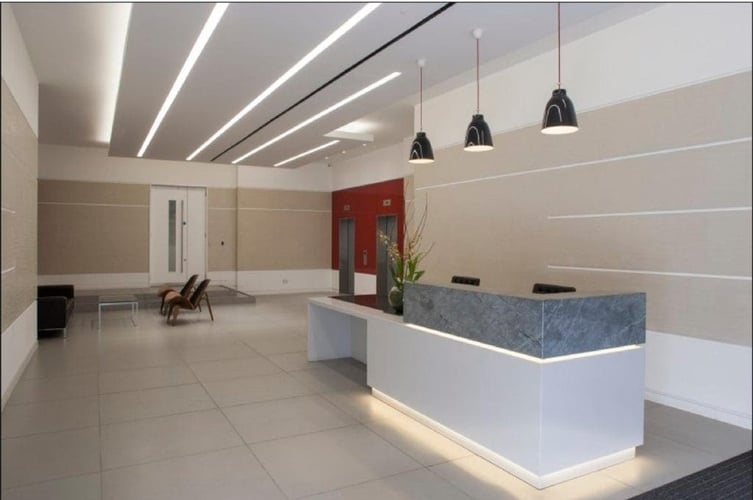 Photo credit: Michael C K Jones via Architizer[/caption]
The lobby for a business is used to not only grab visitor's attention, but also help them feel comfortable when they enter the space. Light in the Warm to Cool White color temperature range may be desired for business lobbies.
Photo credit: Michael C K Jones via Architizer[/caption]
The lobby for a business is used to not only grab visitor's attention, but also help them feel comfortable when they enter the space. Light in the Warm to Cool White color temperature range may be desired for business lobbies.
Color Temperature - What's the Difference?
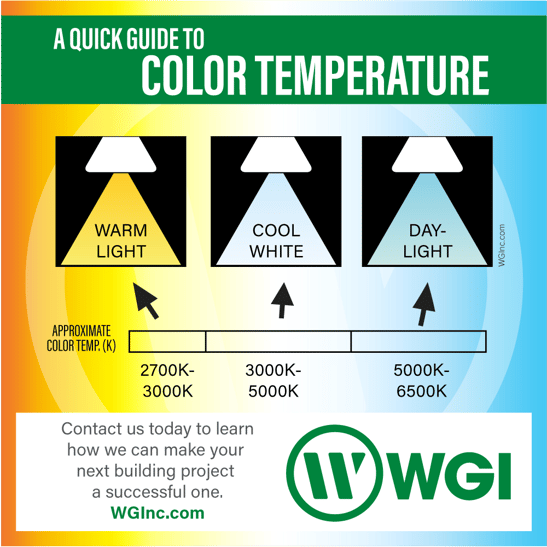
Color temperature is measured in Kelvin (K), and there are three common ranges: Warm Light (2700K-3000K); Cool White (3000K-5000K), and Daylight (5000K-6500K). Warm Light resembles the color of an incandescent; looking orange or yellow. Cool White ranges from Yellow-White (3000K) to White (4000K) to Blue-White (5000K). Daylight ranges from Blue-White (5000K) to Bright Blue (6500K).
While lighting preferences are purely subjective, research has shown that these three ranges of light have different effects on sleep cycle, productivity, and mood. Warm Light is relaxing which helps people to calm down and prepare for sleep. Cool White and Daylight contain blue spectra which helps people be wakeful, productive, attentive, and improves moods.
Warm Light resembles the color of an incandescent; looking orange or yellow. Cool White ranges from Yellow-White (3000K) to White (4000K) to Blue-White (5000K). Daylight ranges from Blue-White (5000K) to Bright Blue (6500K).
While lighting preferences are purely subjective, research has shown that these three ranges of light have different effects on sleep cycle, productivity, and mood. Warm Light is relaxing which helps people to calm down and prepare for sleep. Cool White and Daylight contain blue spectra which helps people be wakeful, productive, attentive, and improves moods.
Color Temperature in the Home
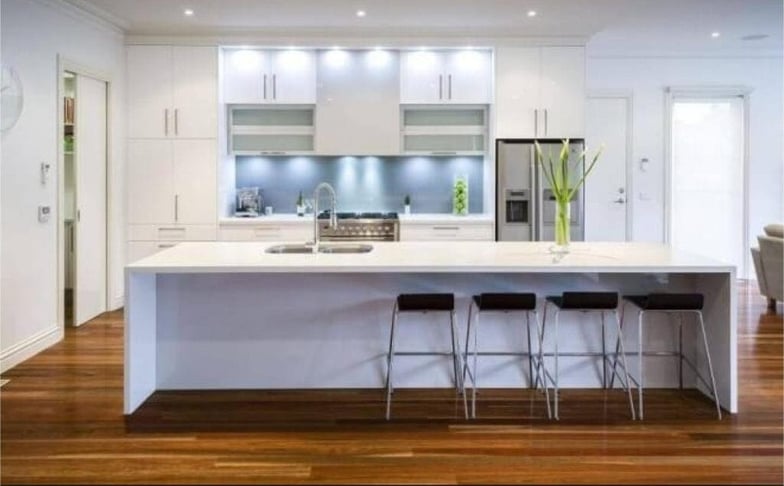
Kitchen: [caption id="attachment_33280" align="alignnone" width="784"]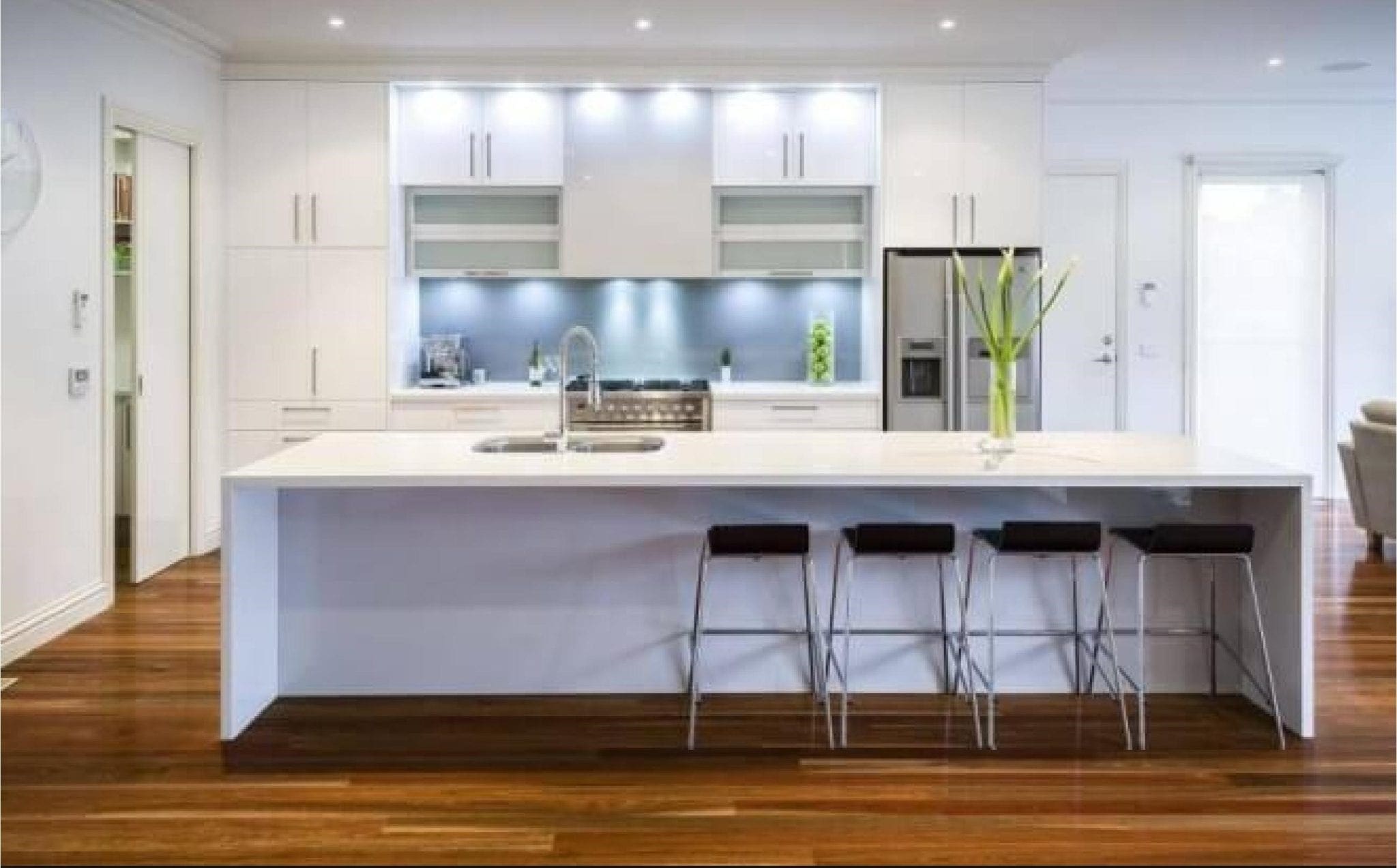 Work in kitchens requires attention and focus so a Cool White color temperature is a good choice. Image Credit: Canarini Designer Kitchens[/caption]
Living Room:
The living room is the place to relax so a Warm Light color temperature may be desired.
Dining Room:
The dining room can be tricky as it should promote calm, but also keep family and guests attentive for conversing and eating. To achieve this, use accent lighting such as an over the table chandelier with a Warm White, and general lighting on the lower end of Cool White color temperatures.
Bathrooms:
Bathrooms are where people get ready in the morning for work. A color temperature matching your office lighting may help you see how you will appear at work. Since a Cool White color temperature is generally used in offices this may be a good choice. A means of reducing the light level in the evening before sleep may be beneficial.
Hallways/Bedrooms:
Work in kitchens requires attention and focus so a Cool White color temperature is a good choice. Image Credit: Canarini Designer Kitchens[/caption]
Living Room:
The living room is the place to relax so a Warm Light color temperature may be desired.
Dining Room:
The dining room can be tricky as it should promote calm, but also keep family and guests attentive for conversing and eating. To achieve this, use accent lighting such as an over the table chandelier with a Warm White, and general lighting on the lower end of Cool White color temperatures.
Bathrooms:
Bathrooms are where people get ready in the morning for work. A color temperature matching your office lighting may help you see how you will appear at work. Since a Cool White color temperature is generally used in offices this may be a good choice. A means of reducing the light level in the evening before sleep may be beneficial.
Hallways/Bedrooms:
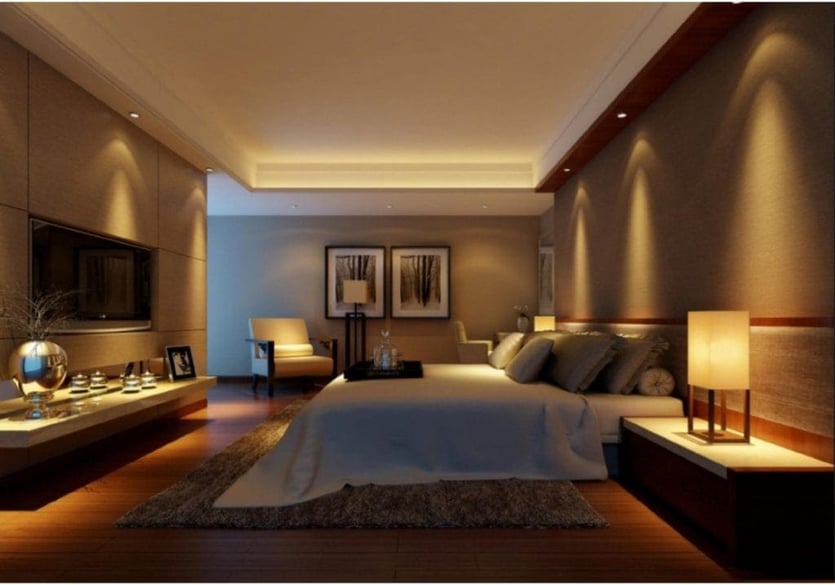
 Hallways and bedrooms are the main areas lights will be on at night. Warm Light helps people relax and prepare for sleep so this color temperature may be a good choice in these areas of the house.
Study/Office:
The study/office is the area where business is conducted which requires attention, focus, and productivity so a Cool White color temperature may be desired.
Hallways and bedrooms are the main areas lights will be on at night. Warm Light helps people relax and prepare for sleep so this color temperature may be a good choice in these areas of the house.
Study/Office:
The study/office is the area where business is conducted which requires attention, focus, and productivity so a Cool White color temperature may be desired.
Color Temperature in the Office:
General Office: Just like in the home, the office is the area where business is conducted. A Cool White color temperature can help keep employees attentive, focused, and productive throughout the day. Break Room: [caption id="attachment_33282" align="alignnone" width="817"] Photo credit: MKDC[/caption]
The break room is the place employees go to relax, and take a step back from their work. A range of Warm White close to Neutral White color temperature may be a good choice.
Huddle/Conference Room:
Huddle and conference rooms are used for meetings and collaboration. During meetings it is important that everyone is relaxed and comfortable, but also attentive so a range of Warm White to Neutral White color temperature may be desired.
Lobby:
[caption id="attachment_33283" align="alignnone" width="753"]
Photo credit: MKDC[/caption]
The break room is the place employees go to relax, and take a step back from their work. A range of Warm White close to Neutral White color temperature may be a good choice.
Huddle/Conference Room:
Huddle and conference rooms are used for meetings and collaboration. During meetings it is important that everyone is relaxed and comfortable, but also attentive so a range of Warm White to Neutral White color temperature may be desired.
Lobby:
[caption id="attachment_33283" align="alignnone" width="753"] Photo credit: Michael C K Jones via Architizer[/caption]
The lobby for a business is used to not only grab visitor's attention, but also help them feel comfortable when they enter the space. Light in the Warm to Cool White color temperature range may be desired for business lobbies.
Photo credit: Michael C K Jones via Architizer[/caption]
The lobby for a business is used to not only grab visitor's attention, but also help them feel comfortable when they enter the space. Light in the Warm to Cool White color temperature range may be desired for business lobbies.