.png?width=185&height=175&name=WGI%20Icon_Green%20(1).png)
















Part 2
Kicking the Tires: Lessons for Building a Micromobility Program
In Part 1, we reviewed the first generation of micromobility pilot programs, with special attention to equitable distribution to transit deserts in lower income neighborhoods. This article takes a holistic view of developing successful micromobility programs.
Without a doubt, e-scooters and e-bikes are popular. However, many operational problems persist with respect to safety, parking, and supportive infrastructure. How can communities and campuses start?
Manufacturers use something called a “Whole Product Wheel” to determine how a core product and associated goods and services work together in delivering a compelling product. For example, the customer experience with a new computer is not just a piece of hardware, but the software, customer support, training, peripherals, and internet service. What if we apply the same thinking to scooters?
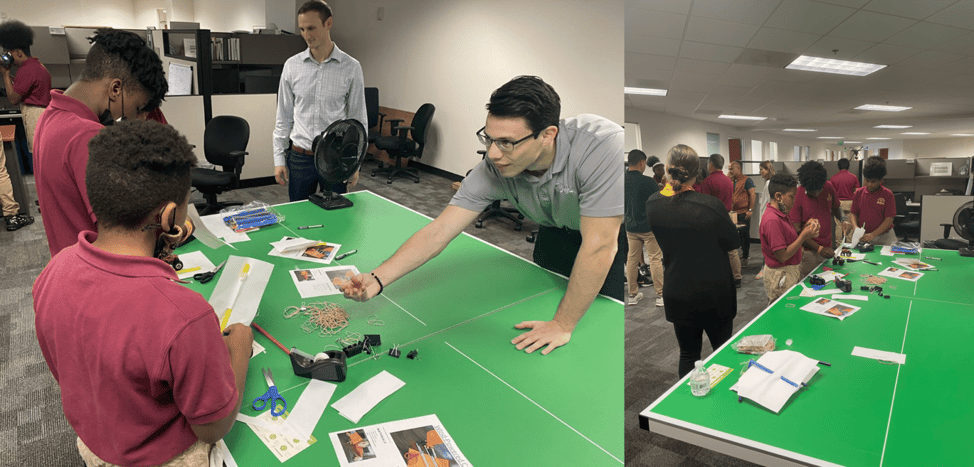 In the graphic, the product wheel revolves around the product (scooters) and product goals, in this case the ability to satisfy short trips, provide access to transit and design for safety (note: goals will vary from place to place and have an influence on how the supporting elements are crafted). For shared scooters to succeed, there is a collection of supportive elements needed to create a sustainable service model. With the results from pilots, we can begin to understand the elements of a successful program.
 Source: City of Austin.[/caption]
Other trends
There is a discernible trend towards companies offering multiple types of vehicles. Both Uber and Lyft are increasing fleets of scooters and e-bikes. Envoy Technologies are offering amenity fleets for individual buildings and development complexes that include electric cars, mopeds, and electric bicycles.
There are also companies that offer Do-It-Yourself shared-use programs. Ridecell offers turnkey operations including apps, vehicles and operations. Any organization, from a University to a local advocacy group, can build and manage its own scooter share fleet. In fact, public transit agencies could introduce vehicles as part of public transit’s mission to provide environmentally sustainable transportation.
Entrepreneurs are also testing new designs to produce lightweight, durable and affordable scooters for sale. The University of California Berkeley’s Haas School of Business has found that electric scooters could represent an annual revenue opportunity of between $34 and $42 billion by 2025. If you are looking at micromobility overall, both shared and owned models increase demand for safer infrastructure and an integrated role in the transportation system
Source: City of Austin.[/caption]
Other trends
There is a discernible trend towards companies offering multiple types of vehicles. Both Uber and Lyft are increasing fleets of scooters and e-bikes. Envoy Technologies are offering amenity fleets for individual buildings and development complexes that include electric cars, mopeds, and electric bicycles.
There are also companies that offer Do-It-Yourself shared-use programs. Ridecell offers turnkey operations including apps, vehicles and operations. Any organization, from a University to a local advocacy group, can build and manage its own scooter share fleet. In fact, public transit agencies could introduce vehicles as part of public transit’s mission to provide environmentally sustainable transportation.
Entrepreneurs are also testing new designs to produce lightweight, durable and affordable scooters for sale. The University of California Berkeley’s Haas School of Business has found that electric scooters could represent an annual revenue opportunity of between $34 and $42 billion by 2025. If you are looking at micromobility overall, both shared and owned models increase demand for safer infrastructure and an integrated role in the transportation system
In the graphic, the product wheel revolves around the product (scooters) and product goals, in this case the ability to satisfy short trips, provide access to transit and design for safety (note: goals will vary from place to place and have an influence on how the supporting elements are crafted). For shared scooters to succeed, there is a collection of supportive elements needed to create a sustainable service model. With the results from pilots, we can begin to understand the elements of a successful program.
What’s next for Micromobility
At this point in testing and scaling pilots, there are three main drivers for program development. First, cities need to address the three main challenges: safety, infrastructure, and parking. Second, and somewhat overlooked, is the fact that micromobility is still evolving. While scooter share quickly eclipsed e-bikeshare in early pilots, pedal-assist bikes could have greater impacts as an alternative to driving and congestion relief. Finally, commuters are beginning to purchase their own scooters and e-bikes; micromobility is more than just shared systems. Safety: Scooter injuries and fatalities are on the rise. In 2018, Austin TX enlisted the Centers for Disease Control to study factors related to scooter crashes. Two main takeaways were the high proportions of incidents involving head injuries for riders not using helmets (45%), and incidents that occurred on a rider’s first trip (30%). In a recent study in San Diego, nearly half of the patients tested for alcohol were above the legal limit. Nearly 52 percent of those assessed for drug use tested positive. In all safety studies, riders were by and large not wearing helmets. One trend is a move towards understanding the root causes of crashes. Virginia Tech is working with Spin to outfit scooters with sensors and cameras to better understand circumstances related to crashes and falls. In August, Skip launched a sturdier scooter better suited for shared fleets. Others are testing training sessions, larger wheels and disc brakes that are easier to use. Infrastructure: Two items dominate infrastructure discussions. First, discussions as to whether scooters belong on sidewalks, in bike paths or in the street. Second, the condition of infrastructure, namely potholed streets, has led to finger pointing as to who holds responsibility. The manufacturer Bird launched a program to help host cities upgrade infrastructure, however ceased funding when audits showed cities were not using funds as intended. Many pilots showed the utility of scooters in first/last mile access to transit, which points to a need to prioritize walk and bike upgrades leading to stops and stations. Parking: The dockless model promotes ubiquity, but is a primary complaint related to clutter and improperly parked vehicles. Cities and companies have been trying to resolve parking through incentives and penalties. Moreover, cities are creating designated parking areas on sidewalks and in streets. Over the past six months, entrepreneurs have introduced scooter racks that serve as parking and recharging stations, in effect solving two problems at once. Spin posted a job for Head of Real Estate Partnerships to work with commercial, multifamily, and retail sectors. This could point to future arrangements where parking is offered on private properties in addition to public rights of way. Some cities, including Austin, TX, have begun requiring dedicated micromobility and shared vehicle parking spaces with land development projects in areas where use of such devices are prevalent. [caption id="attachment_32080" align="alignnone" width="974"] Source: City of Austin.[/caption]
Other trends
There is a discernible trend towards companies offering multiple types of vehicles. Both Uber and Lyft are increasing fleets of scooters and e-bikes. Envoy Technologies are offering amenity fleets for individual buildings and development complexes that include electric cars, mopeds, and electric bicycles.
There are also companies that offer Do-It-Yourself shared-use programs. Ridecell offers turnkey operations including apps, vehicles and operations. Any organization, from a University to a local advocacy group, can build and manage its own scooter share fleet. In fact, public transit agencies could introduce vehicles as part of public transit’s mission to provide environmentally sustainable transportation.
Entrepreneurs are also testing new designs to produce lightweight, durable and affordable scooters for sale. The University of California Berkeley’s Haas School of Business has found that electric scooters could represent an annual revenue opportunity of between $34 and $42 billion by 2025. If you are looking at micromobility overall, both shared and owned models increase demand for safer infrastructure and an integrated role in the transportation system