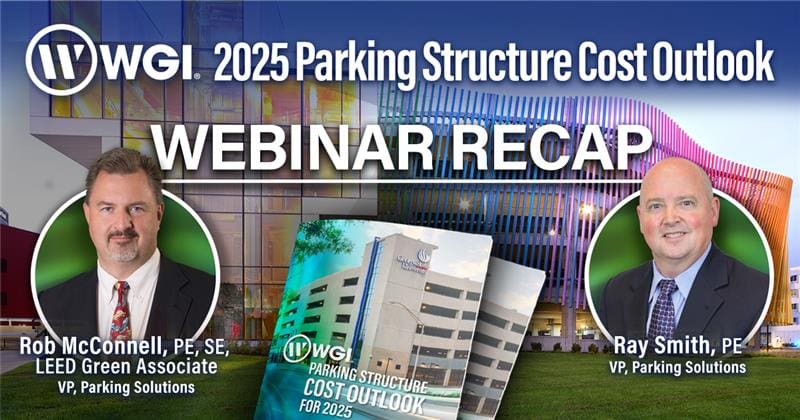
In our latest webinar, 2025 Parking Structure Cost Outlook, WGI’s Vice Presidents of Parking Solutions, Rob McConnell, PE, SE, LEED GA, and Raymond Smith, PE, shared a data-rich breakdown of the trends, challenges, and cost drivers shaping parking structure development in the year ahead. Drawing on WGI’s national database of completed projects and normalized through industry-standard indexes, this session offered a detailed look at how regional market conditions, material costs, regulatory pressures, and evolving design standards are influencing construction costs across the U.S. As the parking landscape continues to evolve with rising demand for EV charging infrastructure, new fire code mandates, and ongoing labor and supply chain constraints, understanding where the market is heading in 2025 isn’t just helpful, it’s critical. The ability to plan accurately, budget efficiently, and respond strategically to shifting inputs gives owners and developers a competitive edge in a highly dynamic construction environment.
Key Takeaways from the Webinar
-
Regional Cost Variability: Costs vary widely by location - San Francisco remains the most expensive, while Dallas is the lowest. Local labor, code enforcement, and material access are major cost drivers.
-
Market Forces at Play: Tariffs, labor shortages, and high interest rates continue to impact budgets. While some materials have stabilized, input costs remain nearly 40% above pre-2020 levels.
-
Regulatory Shifts Impacting Cost: New requirements, like fire sprinklers and EV charging, are now standard in many jurisdictions, adding cost and complexity that must be factored into 2025 plans.
-
Design Features That Move the Needle: Elements like below-grade construction, mixed-use integration, or enhanced façades can significantly increase costs. The session covered which design choices drive pricing and where value can be optimized.
-
The Outlook Ahead: Costs are expected to rise another 3-6% in 2025, but increased competition in some markets may help balance inflationary trends.
So, whether you’re budgeting for a new structure or advising stakeholders on capital forecasts, this session delivered actionable insights to help you plan, design, and build with greater clarity and confidence. Watch the full recap below to gain a better understanding of the data, drivers, and strategies shaping parking structure construction in 2025.
Explore the Full Data and Forecast Behind the Report
Download our whitepaper, "Parking Structure Cost Outlook for 2025," for a detailed analysis of national cost benchmarks, regional breakdowns, design implications, and key market indicators that informed this year’s report.
Connect With Our Parking Experts
If you’re planning a new parking facility, facing cost uncertainty, or looking to optimize project delivery strategies, WGI’s multidisciplinary team is here to help. From budgeting and design guidance to code compliance and value engineering, our Parking Solution experts will work with you to deliver a data-informed, future-ready parking structure tailored to your goals. Connect with our team to get your next project moving!
.png?width=185&height=175&name=WGI%20Icon_Green%20(1).png)