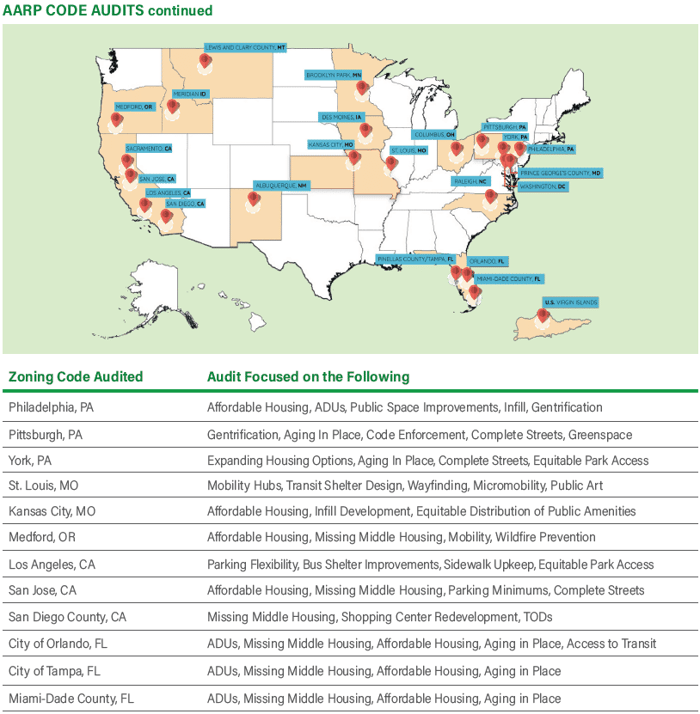
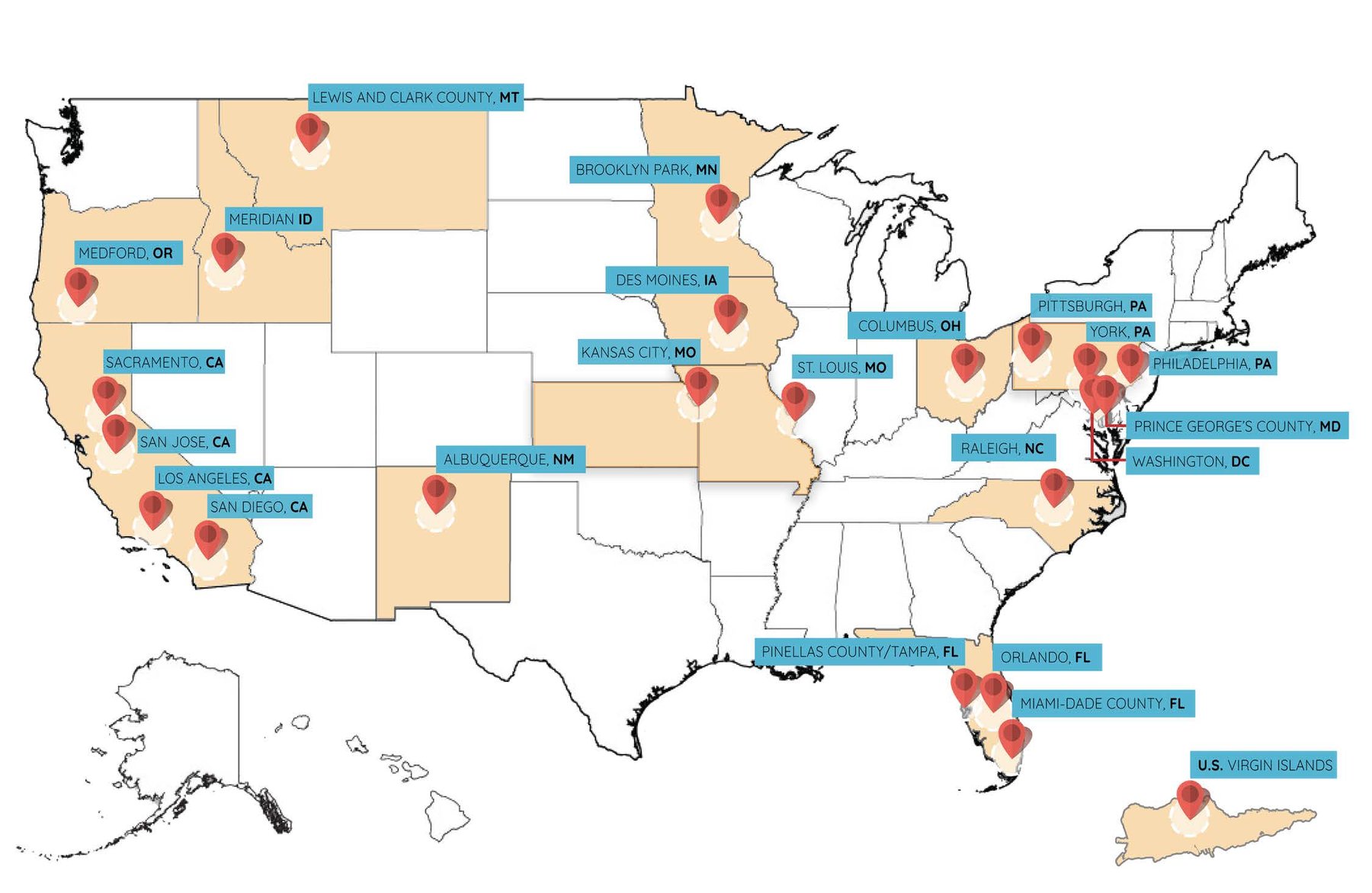
WGI analyzed zoning codes of multiple cities and counties to identify livability barriers to senior and low-income communities. Most of the code audits focused on regulatory barriers to developing affordable housing and dwelling units that allow seniors to age in place. Other common themes included regulatory barriers to senior housing, ADUs, equitable redevelopment, complete streets, senior/low-income mobility, and access to public parks. WGI identified specific code sections that hinder the development and implementation of these elements. The team developed zoning code revision recommendations backed by best practices and successful case studies that would
significantly impact AARP’s target populations.
Additionally, AARP hired WGI to analyze a compendium of previously completed code audits to identify common themes, insights, and concerns brought up within the code audits that can be improved by their local AARP state offices. AARP’s advocacy agenda includes efforts to ensure older individuals can age in place, address housing affordability issues, increase transportation options, and ensure equity throughout the built environment.
.png?width=185&height=175&name=WGI%20Icon_Green%20(1).png)


















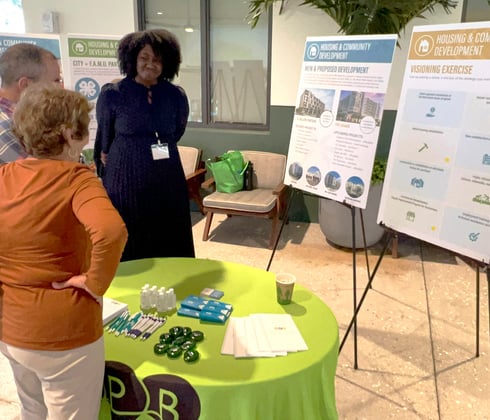 WEST PALM BEACH
%20copy%203.png?width=640&height=420&name=MicrosoftTeams-image%20(2)%20copy%203.png)