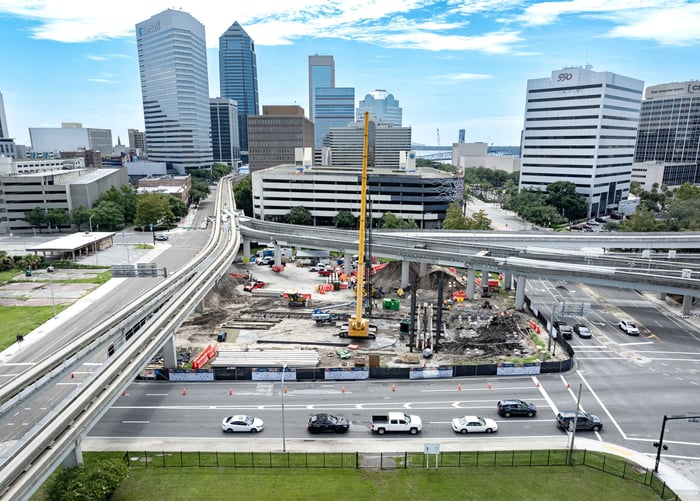
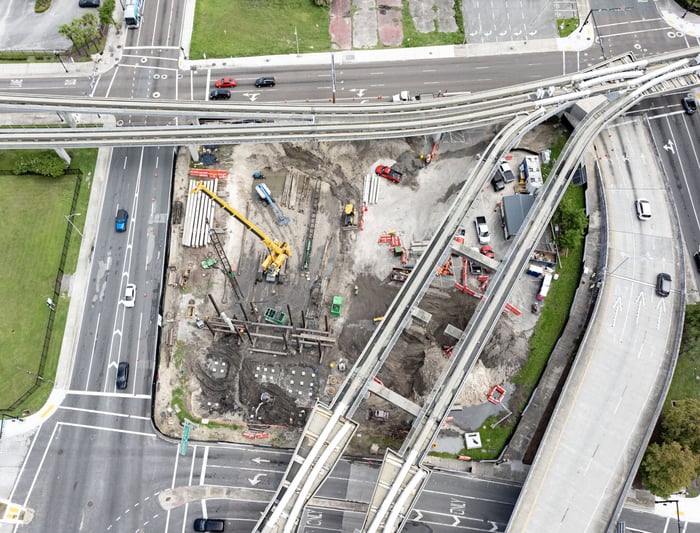
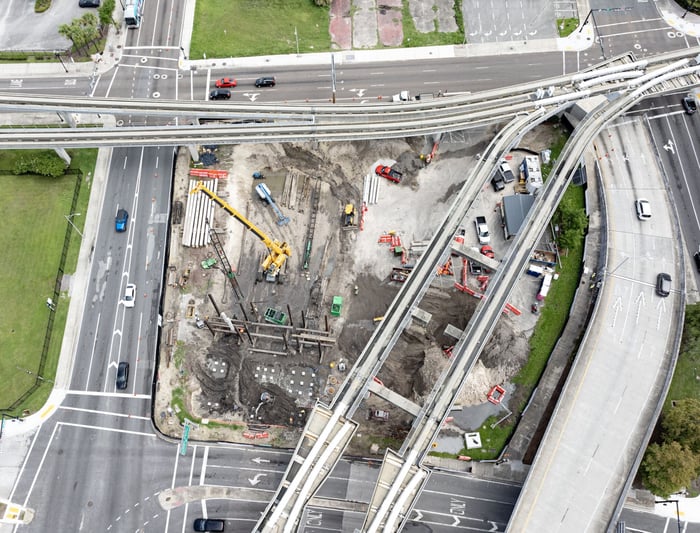
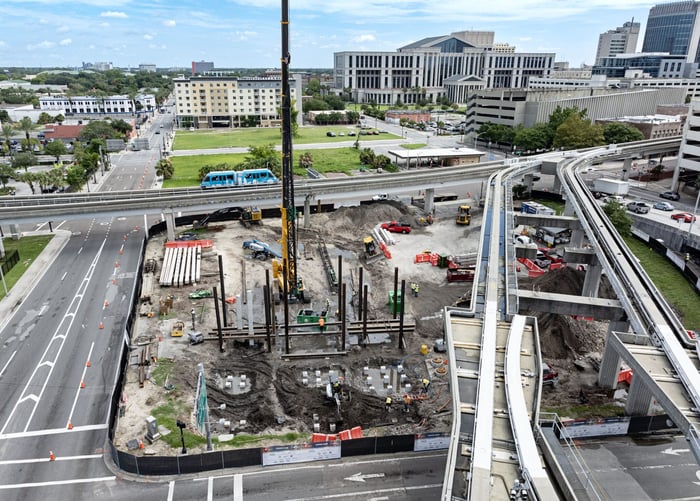
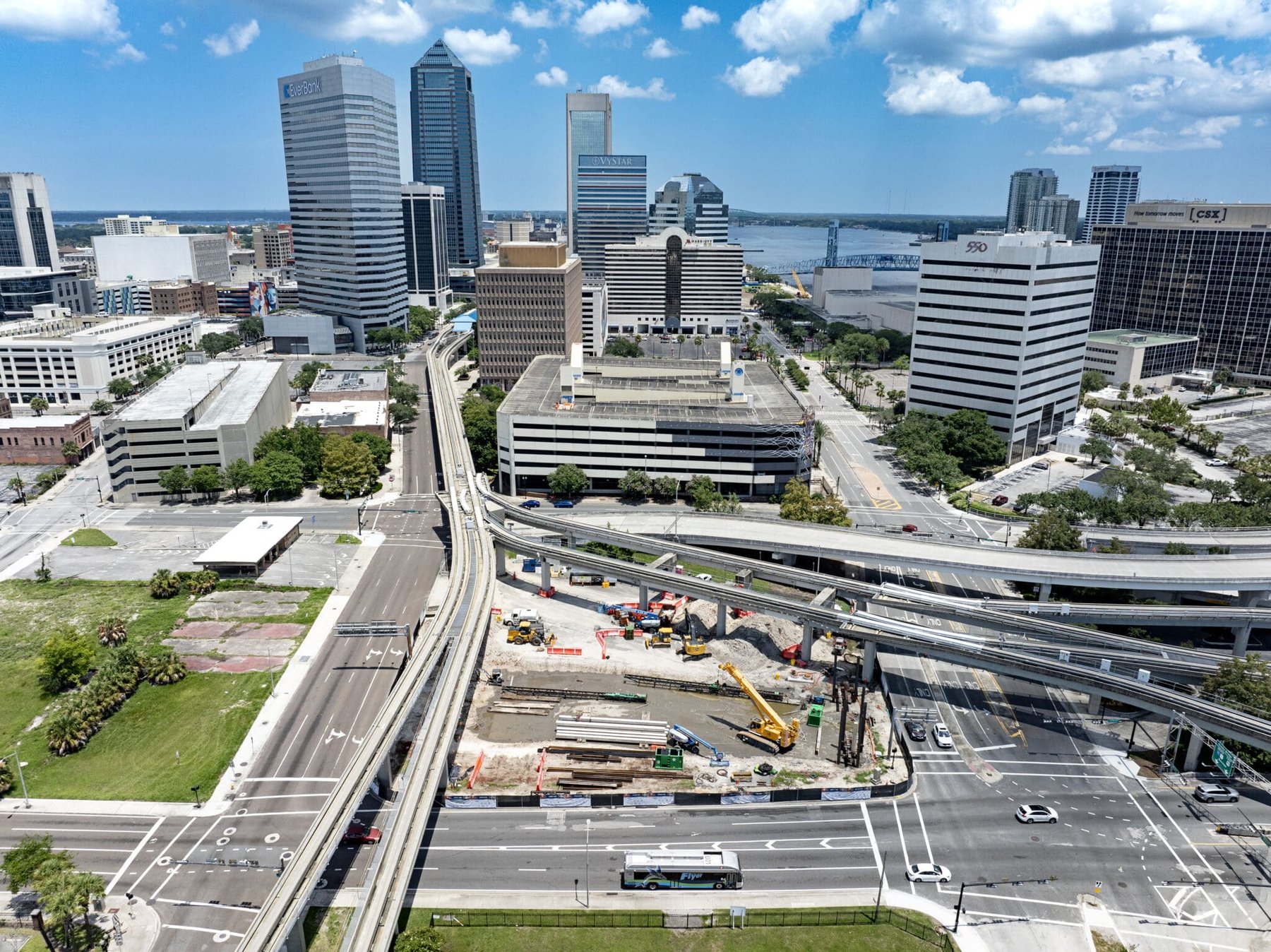
Jacksonville Transportation Authority’s (JTA) U2C project is a comprehensive upgrade and expansion of the Downtown Jacksonville Skyway. The monorail system will be modernized to implement autonomous vehicles (AVs) to transport riders over a 10-mile route. To convert the system, JTA is constructing a rarely used parking lot at the corner of West Bay St and Jefferson St to an AV Operations and Maintenance center that includes a WGI-designed, 7,500-square-foot building. During preconstruction geotechnical testing, a strong fuel-like odor was detected in the soil. WGI’s environmental team responded quickly, developing a Conceptual Site Model of the potential source(s) of impact through the application of Ground ground-penetrating radar and of historical and regulatory record reviews. WGI then expedited the assessment by defining the petroleum impact at the property boundary to allow cleanup and the option for risk-based closure during the construction phase. Soil and groundwater were screened and sampled for petroleum-related vapors and FDEP-required compounds. WGI’s analysis of the histories and assessment data for the site and adjoining properties, including a Brownfield redeveloped for residential use, revealed a similar impact. WGI generated a Site Assessment Report and advised JTA’s team about the regulatory protocols, feasibility, sequence, and process of implementing cleanup and application of exposure controls during the construction phase.
Project Highlights:
- Generating a conceptual site model (CSM) for a parking lot with no apparent source of a petroleum release revealed the historical development, transition, and potential sources of impact to the site and immediate vicinity. The site’s planned commercial/ institutional use allowed WGI to establish a risk-based goal of closure for the incident of contamination. The option allows concurrent cost-effective, time-saving cleanup and management of impacted soil during construction and the implementation of construction features like foundations and pavement as well as a restrictive covenant to act as controls to contaminant exposure.
.png?width=185&height=175&name=WGI%20Icon_Green%20(1).png)















 HOLLYWOOD RESERVATION
%20copy%203.png?width=640&height=420&name=MicrosoftTeams-image%20(2)%20copy%203.png)