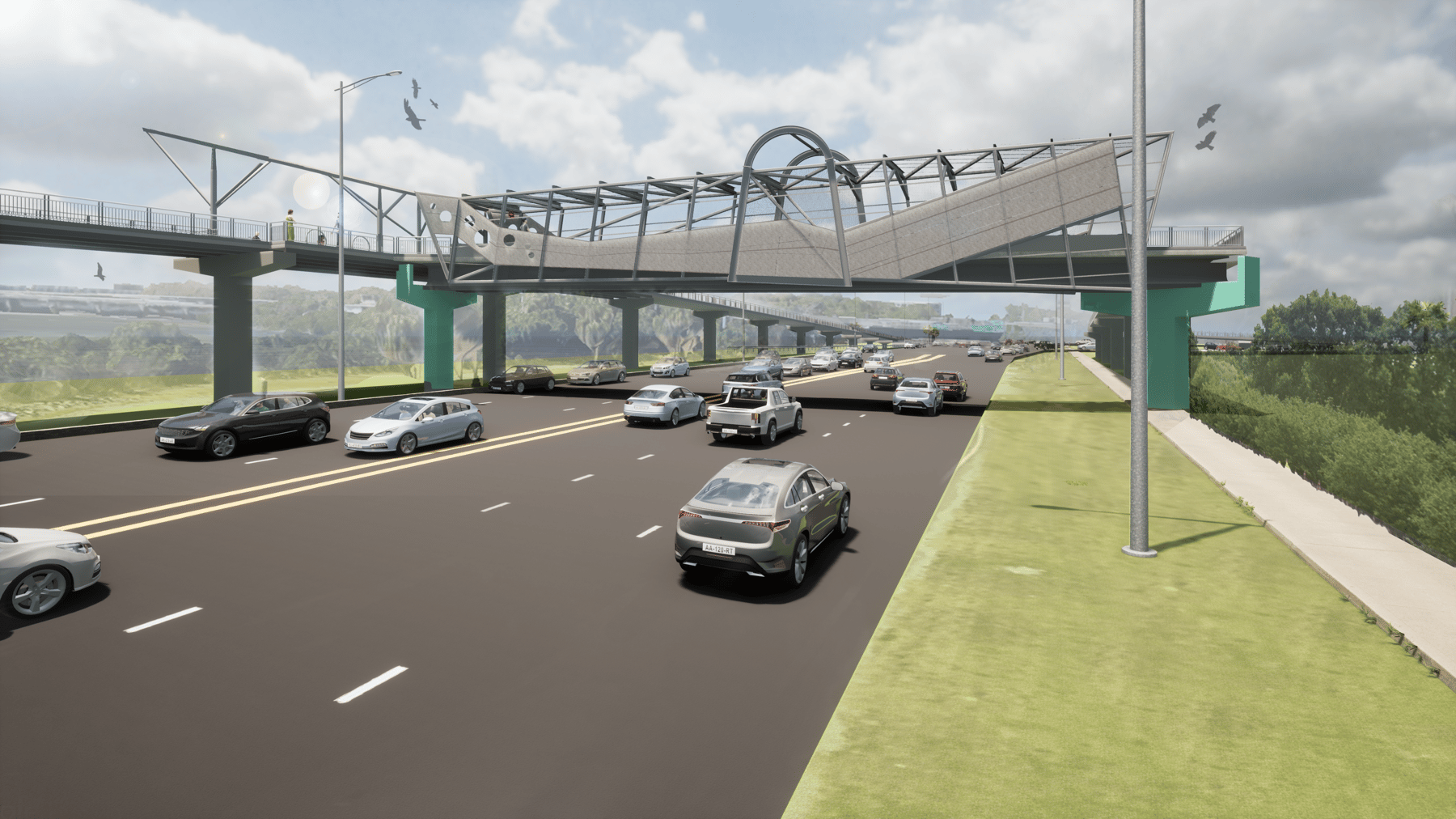
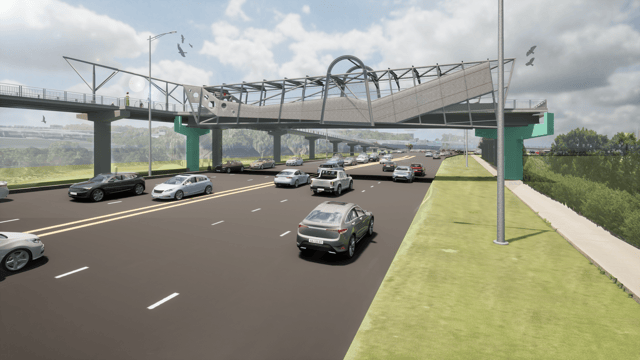
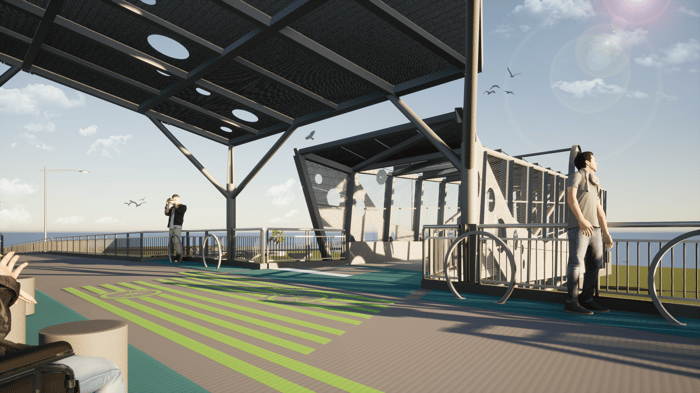
WGI was tasked with designing an engaging and architecturally significant pedestrian overpass to enhance pedestrian mobility between the Courtney Campbell Causeway and Bayshore Trails. Following architectural stakeholder engagement, the “Fish” concept was selected for installation above a standard FDOT bridge superstructure crossing State Road 60.
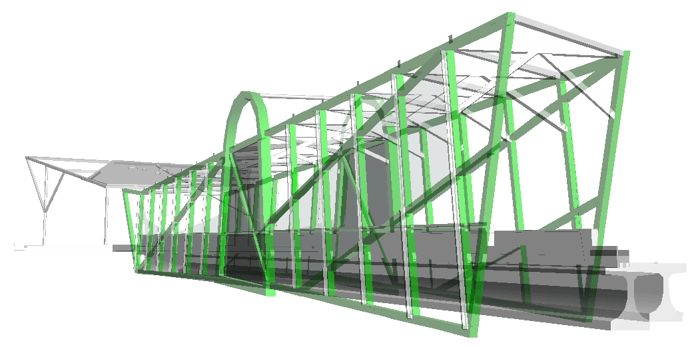
WGI structural engineers collaborated closely with the FDOT Pedestrian Bridge Engineer and WGI Architects to develop a structural steel frame attached to the concrete bridge components while meeting the anticipated wind loads at the north end of Old Tampa Bay. Due to the structure’s unique geometry and variable-dimension mesh panels, wind design was evaluated using AASHTO, AASHTO LTS, and ASCE 7 provisions. A 3-D finite element model was developed to determine member sizes, dynamic properties, mass distribution, and modal deflections.
As an FDOT Category 2 bridge structure, WGI collaborated with Wind Tunnel Specialists (RWDI) as they prepared a refined detailed physical wind tunnel study including cladding pressure tests used to refine cladding design pressures and a high frequency force analysis to derive final structural wind loads necessary to complete the design. Based on wind tunnel testing results, the 3-D Finite Element Model was completed with each steel connection analyzed for strength and constructability accounting for limitations in available hot-dipped galvanizing facilities, transportation and erection at the site without the use of field welding.



















 OKEELANTA