.png?width=185&height=175&name=WGI%20Icon_Green%20(1).png)

















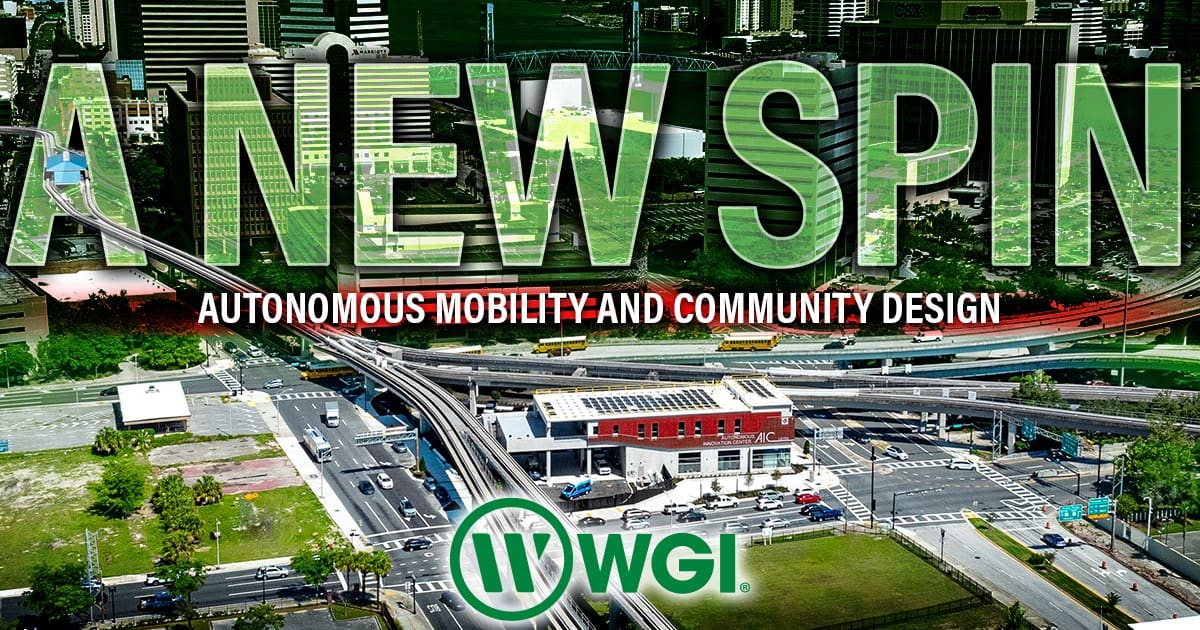
We are thrilled to share that the American Council of Engineering Companies (ACEC) of Florida awarded WGI its highest recognition, the Grand Conceptor Award, for our contribution to the Jacksonville Transportation Authority (JTA) Ultimate Urban Circulator (U2C) Phase 1 project. This prestigious honor underscores our commitment to delivering transformative infrastructure solutions that shape the future of our communities.
This post takes a closer look “under the hood” to highlight not only our progress so far, but also how our team is preparing for the opportunities that expanded transit options bring.
 JTA is currently conducting public outreach on future phases, which includes reuse of the elevated Skyway system.
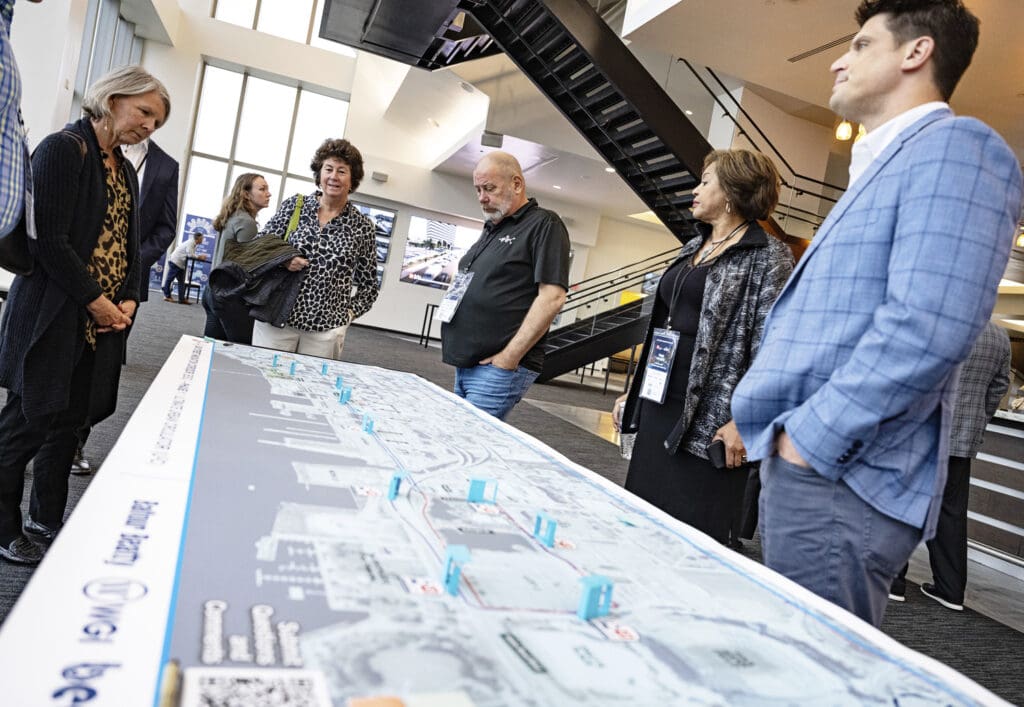 Community Engagement: WGI understands that travelers need to navigate both trip planning and understanding new technology. We craft programs using technology as a catalyst for attracting new riders while growing ridership through tailored trip planning.
Alternative Delivery: For large-scale projects, WGI offers flexible delivery models including, Design-Build, Public-Private Partnerships (P3), and CMAR to ensure efficient project completion. These larger intermodal centers entail complex design, funding, and regulatory considerations that are best coordinated through alternative delivery methods.
Community Engagement: WGI understands that travelers need to navigate both trip planning and understanding new technology. We craft programs using technology as a catalyst for attracting new riders while growing ridership through tailored trip planning.
Alternative Delivery: For large-scale projects, WGI offers flexible delivery models including, Design-Build, Public-Private Partnerships (P3), and CMAR to ensure efficient project completion. These larger intermodal centers entail complex design, funding, and regulatory considerations that are best coordinated through alternative delivery methods.
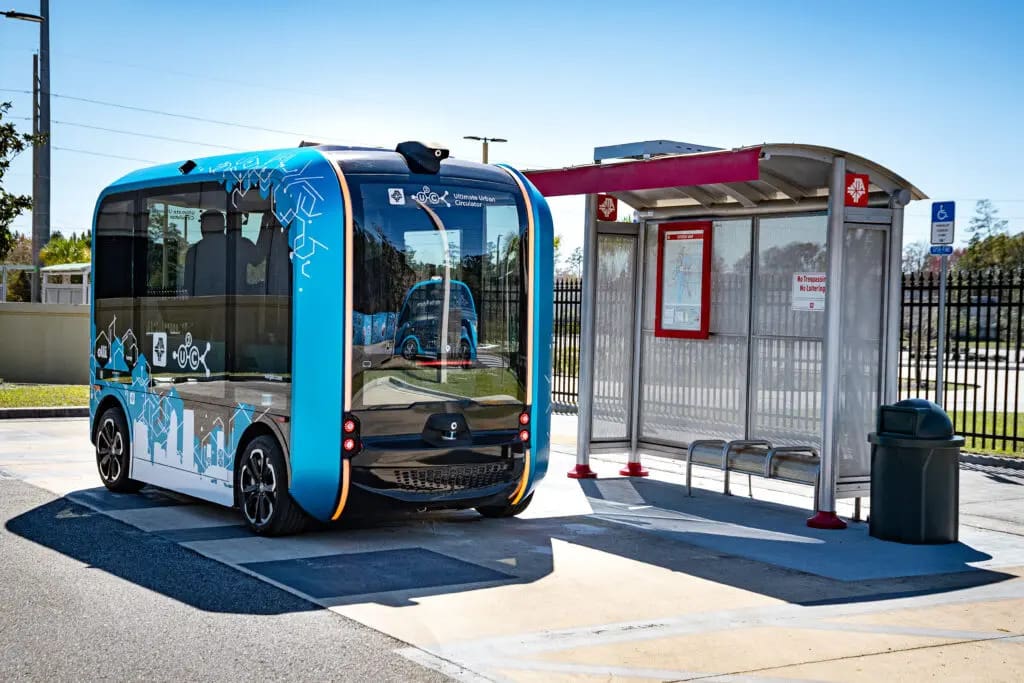 Curbsides: Ride-hailing and e-commerce deliveries have turned the modest curbside into in-demand real estate. The competition for curb space is intensifying with growing robotaxi services. While the technology is evolving, current robotaxis form “swarms” when algorithms send every vehicle to the same drop-off point. Cities are already addressing congested drop-off areas by relocating pick-up and drop-off away from the core of entertainment and activity districts.
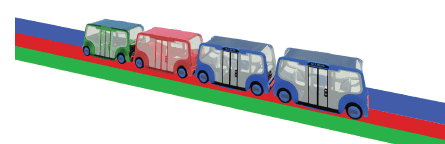 Using connected vehicle technology, individual shuttles can form “trains” that offer the efficiency of premium transit. Unlike current trains with a fixed number of cars going in the same direction, autonomous shuttles can decouple and reconvene along routes.
This presents an exciting opportunity. Instead of a train where all cars serve the same route, a platooned “train” can be composed of vehicles serving several routes along dynamic networks. Vehicles serving different routes can travel together through dense urban areas. Once outside the downtown core, the vehicles can decouple to serve a wider area.
Operators can provide additional vehicles based on demand patterns or events. The main problem this solves is the age-old tradeoff of frequency versus coverage. Dynamic platoons are an approach for optimizing both.
“Trains” serving multiple lines will also influence station design. The main design challenge is making sure travelers easily navigate to the correct vehicle.
Using connected vehicle technology, individual shuttles can form “trains” that offer the efficiency of premium transit. Unlike current trains with a fixed number of cars going in the same direction, autonomous shuttles can decouple and reconvene along routes.
This presents an exciting opportunity. Instead of a train where all cars serve the same route, a platooned “train” can be composed of vehicles serving several routes along dynamic networks. Vehicles serving different routes can travel together through dense urban areas. Once outside the downtown core, the vehicles can decouple to serve a wider area.
Operators can provide additional vehicles based on demand patterns or events. The main problem this solves is the age-old tradeoff of frequency versus coverage. Dynamic platoons are an approach for optimizing both.
“Trains” serving multiple lines will also influence station design. The main design challenge is making sure travelers easily navigate to the correct vehicle.
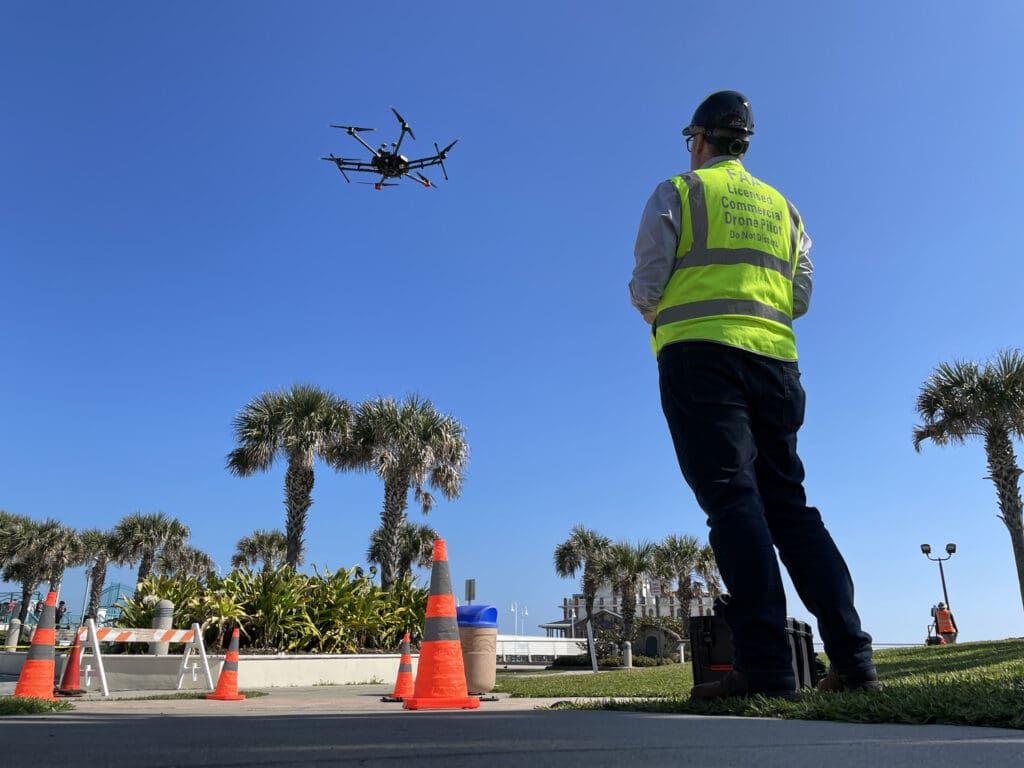 One area is the integration of vertiports and other facilities serving advanced air mobility. Once an eVTOL lands, passengers need to connect. New types of intermodal centers can be used to catalyze new development and economic hubs for cities and counties of all sizes. Vertiports will generate new demand for intermodal connections, car rental, ride-hail waiting areas, and facilities for meetings, office space, retail and more.
About the U2C Project
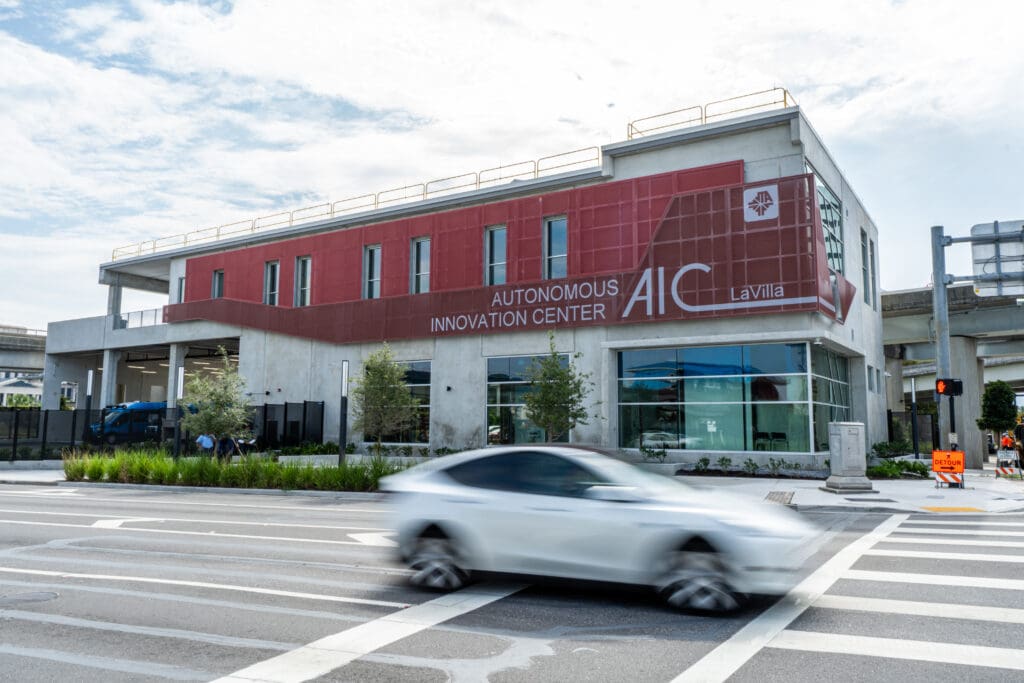
WGI is part of a team led by Balfour Beatty to deliver the nation’s first public transit service using autonomous vehicles. As part of this groundbreaking project, WGI designed the first-ever AV/EV transit center in the U.S., the Autonomous Innovation Center (AIC) in downtown Jacksonville, Florida. This facility is a multifunctional powerhouse, serving as an AV vehicle facility, a centralized control center, training facility, and a research testbed. This model represents the next generation of transit infrastructure and is designed to be replicated or integrated into existing commercial buildings and transit stations to support the growth of autonomous networks.A Full Suite of Transit-Oriented Services
Transit’s success has always been tied to supportive land use and infrastructure. The term transit-oriented development (or transit-oriented communities) recognizes the importance of “built-in ridership” through a mix of uses, station-area density, and attention to first and last mile access for pedestrians, cyclists, rideshare patrons, and other transit modes. At WGI, we built a portfolio of services around transit access and placemaking. These time-tested concepts still apply - whether a driver is present onboard or not. We combine architecture, planning, and engineering to ensure land use and transportation remain closely linked. This portfolio of services is designed to guide projects from initial concept to groundbreaking.Urban Design & Placemaking
Our planners understand the timeless aspects of building design, use mix, infrastructure, parking, and public spaces that are hallmarks of transit-oriented development. Access is a key planning lens to ensure comfort, connectivity, and safety for travelers of all ages and abilities. In addition, our planners are scanning the horizon to determine changes to policy, planning, and zoning to manage changes that arise from autonomous operations for transit, robotaxis, and advanced air mobility.New Mobility and Future-Ready Streets: Technology is also helping expand access to transit. Micromobility, in the form of electric scooters and bicycles, translates to an access shed that extends beyond the one-mile mark. WGI’s planners and engineers excel at multimodal street design.
Civil Engineering: We manage the entire street design process, including utility coordination, signalization, lighting, and permitting. This includes special consideration for automated vehicles and associated digital infrastructure.What is Different About Autonomous Transit?
The transition to autonomous mobility is about much more than just removing a person from the driver's seat. While AV systems share much of the same DNA as conventional transit, they offer a new level of flexibility and efficiency not seen in conventional systems: Vehicle Diversity: The "bus" is evolving. The autonomous shuttle manufacturer Holon is building a manufacturing plant in Northern Florida, which means US communities have “Buy America” compliant vehicles. Advancements in electric chassis and drivetrain design result in agile processes for testing, perfecting, and producing new vehicle types. Service Models: Beyond standard fixed routes and stops, autonomous transit enables on-demand, door-to-door service and hybrid service models that adapt to rider needs. Infrastructure: Transit always operates best when separated from traffic. This will be even more important with the increased frequency expected with driverless deployments. Separate lanes also create a more predictable environment for AVs, thereby reducing the computational load on operating systems.
Curbsides: Ride-hailing and e-commerce deliveries have turned the modest curbside into in-demand real estate. The competition for curb space is intensifying with growing robotaxi services. While the technology is evolving, current robotaxis form “swarms” when algorithms send every vehicle to the same drop-off point. Cities are already addressing congested drop-off areas by relocating pick-up and drop-off away from the core of entertainment and activity districts.
The Evolution: What’s Next for Autonomous Transit?
WGI continues to examine future phases of autonomous transit. One of the more interesting scenarios for autonomous transit involves platooned shuttles.Using connected vehicle technology, individual shuttles can form “trains” that offer the efficiency of premium transit. Unlike current trains with a fixed number of cars going in the same direction, autonomous shuttles can decouple and reconvene along routes.