The original Pompano Beach Fishing Pier, also known as Fisher Family Pier, had served residents and visitors since 1963. Decades of storms, salt exposure, and constant wave action had taken their toll, and the City of Pompano Beach set out to replace it with a structure built for modern coastal conditions. WGI designed the replacement, delivered through a Construction Manager-at-Risk approach that let the design and construction teams collaborate on innovations and keep the schedule moving.
The result earned an Engineering Excellence Award of Honor from the Florida Chapter of the American Council of Engineering Companies, recognizing the project’s innovative applications, complexity, budget and schedule management, and its fulfillment of the City’s goals for the site.
A Structure Shaped by Its City
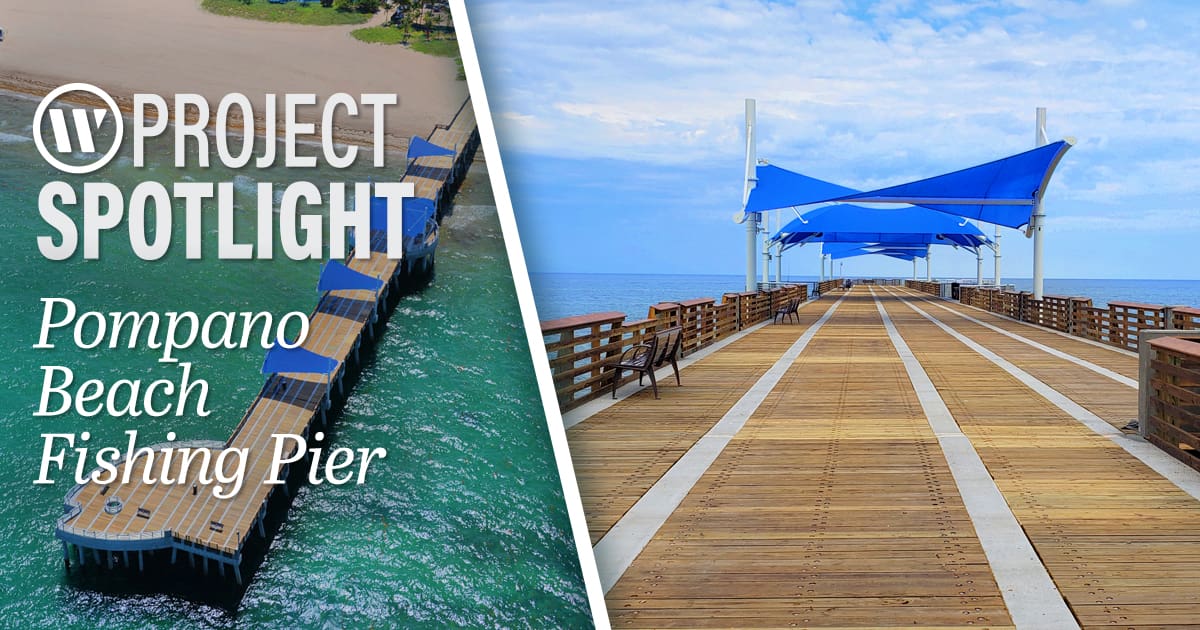
WGI designed the new pier to feel unmistakably like Pompano Beach. Visitors loop past a bait shop near the entrance before the walkway opens up and carries them east over the water, widening as it goes to give anglers and pedestrians room of their own.
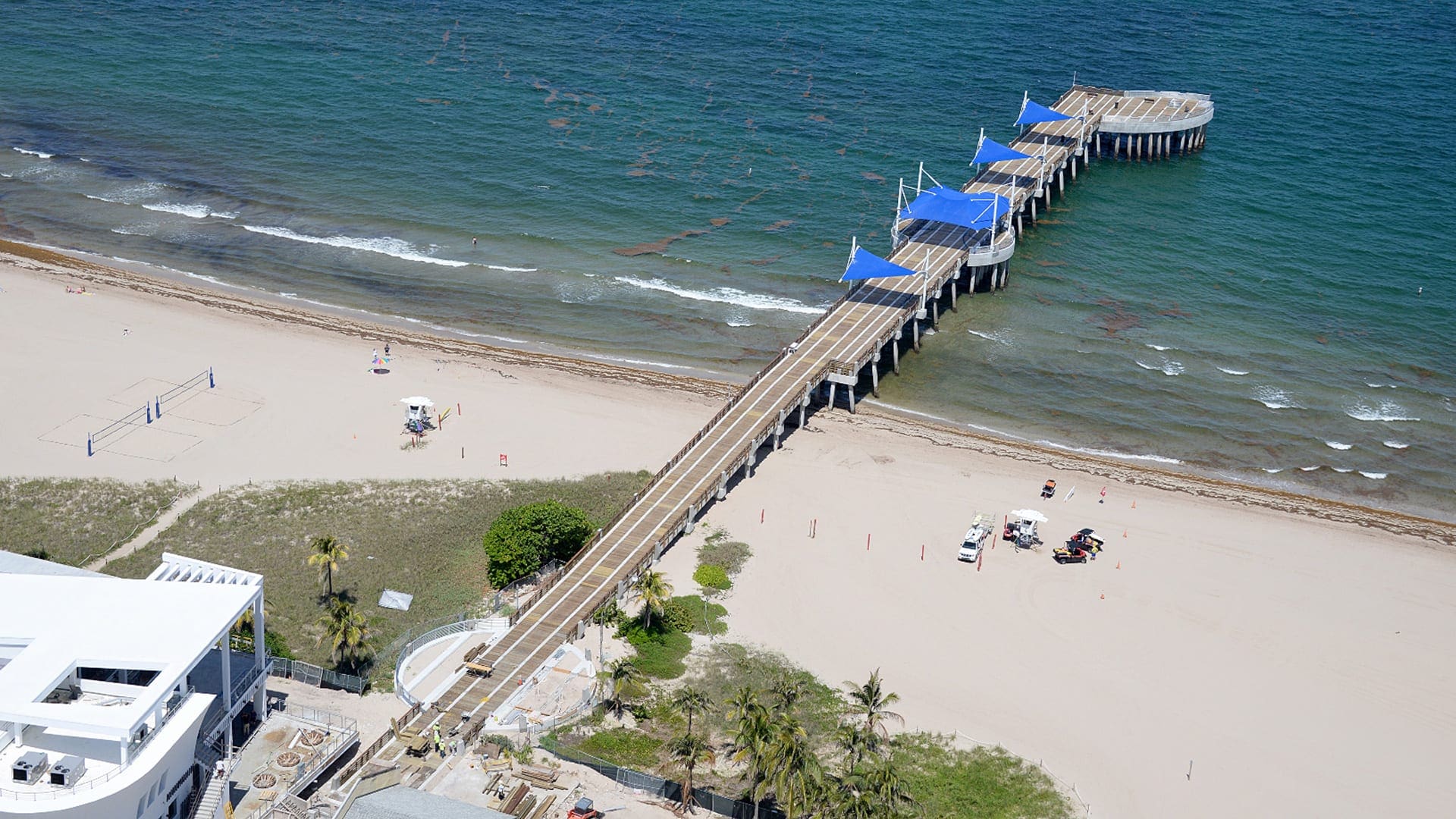
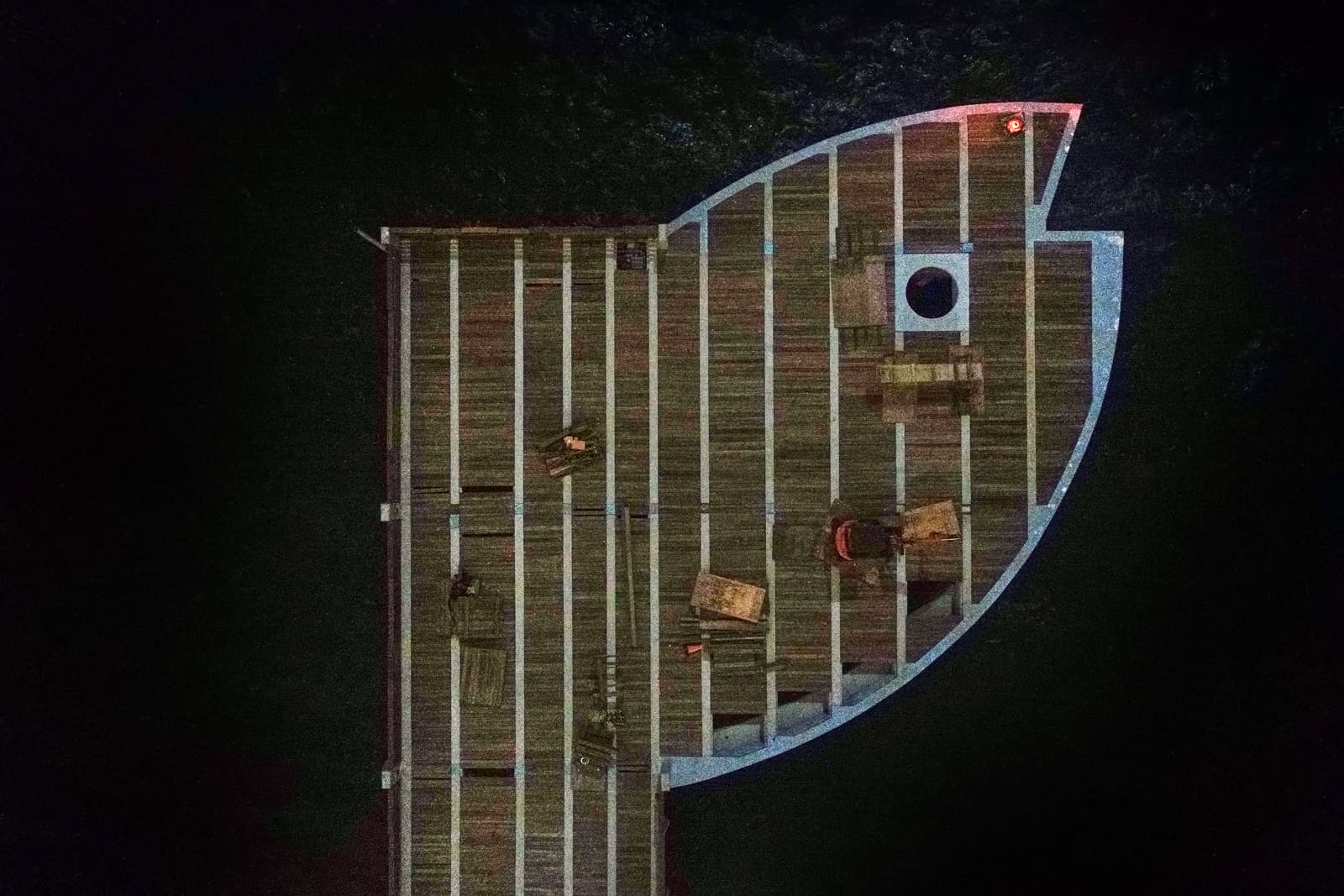
At the far end, WGI set aside the octagonal platform found on most piers and shaped the terminus like a pompano’s head, echoing the City’s logo and the fish the community was named for. That design choice carried practical weight too, letting WGI route the structure around sensitive hardbottom just offshore.
Engineered for Florida’s Coastal Conditions
Piers face a punishing environment, and Pompano Beach Fishing Pier was designed with that reality in mind. Concrete pile foundations and a concrete pile cap support the structure, with concrete beams and wood decking forming the walking surface above. The elevated design accounts for sea level rise, and the deck nearly doubles the width of the original pier, giving anglers and pedestrians separate space to fish and stroll.
Storm resilience shaped many of the engineering decisions on this project. Pilings are designed to move with waves during major storms, similar to how high-rises are engineered to sway during seismic events, and the concrete beams above them are not rigidly fixed in place. That flexibility lets the pilings respond to wave action while keeping the deck more isolated from the forces below.
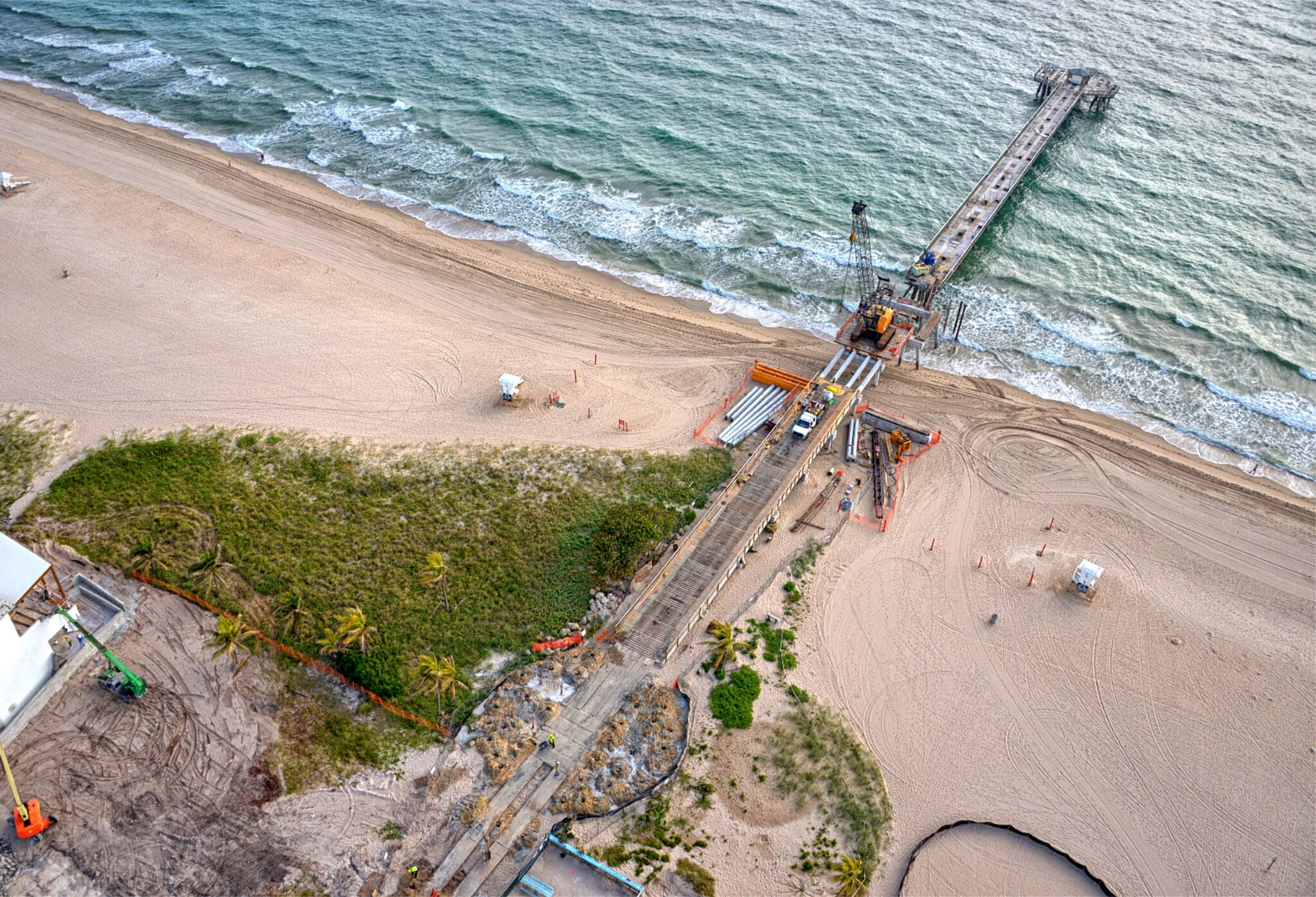
Sections of the deck are also detailed to break away and dissipate energy during extreme storms, protecting the pilings and other critical structural elements. A pier able to fail by design in a few replaceable spots avoids the far greater cost and downtime of a rigidly built structure damaged by the full force of a hurricane or nor’easter.
Integrated Engineering from Concept Through Completion
Delivering a pier of this scale took more than a single discipline. WGI’s civil, structural, landscape, and MEP teams worked side by side with the City of Pompano Beach throughout design and construction.
Our services included:
Civil Engineering & Structural Design – WGI engineered the concrete pile foundations, pile cap, and beam-and-deck system that supports the pier, along with the fish-shaped end platform, routing the structure to avoid sensitive hardbottom while withstanding repeated wave impact during major storms.
Landscape Architecture – Our landscape architecture team selected plantings and materials able to hold up under constant salt spray, wind, and sun, supporting the pier’s shaded gathering spaces and pedestrian areas.
MEP Engineering – WGI designed the pier’s electrical, plumbing, and fire protection systems, including sea turtle-friendly lighting, fresh water hose bibs, and a dry fire line, all built to resist a corrosive marine environment.
Permitting – WGI guided the project through local, state, and federal review, a process that typically spans years on coastal sites and requires close coordination with regulatory agencies at every level.
Alternative Delivery – WGI delivered the project through a Construction Manager-at-Risk approach, allowing the design and construction teams to collaborate on innovations and keep work moving throughout the project. That approach was central to the pier earning the Engineering Excellence Award of Honor.
By bringing these disciplines together under one team, WGI helped the City move from concept to a completed pier built to perform for decades.
Amenities for Anglers and Visitors Alike
Pompano Beach Fishing Pier was designed to serve both serious anglers and casual visitors. Features include:
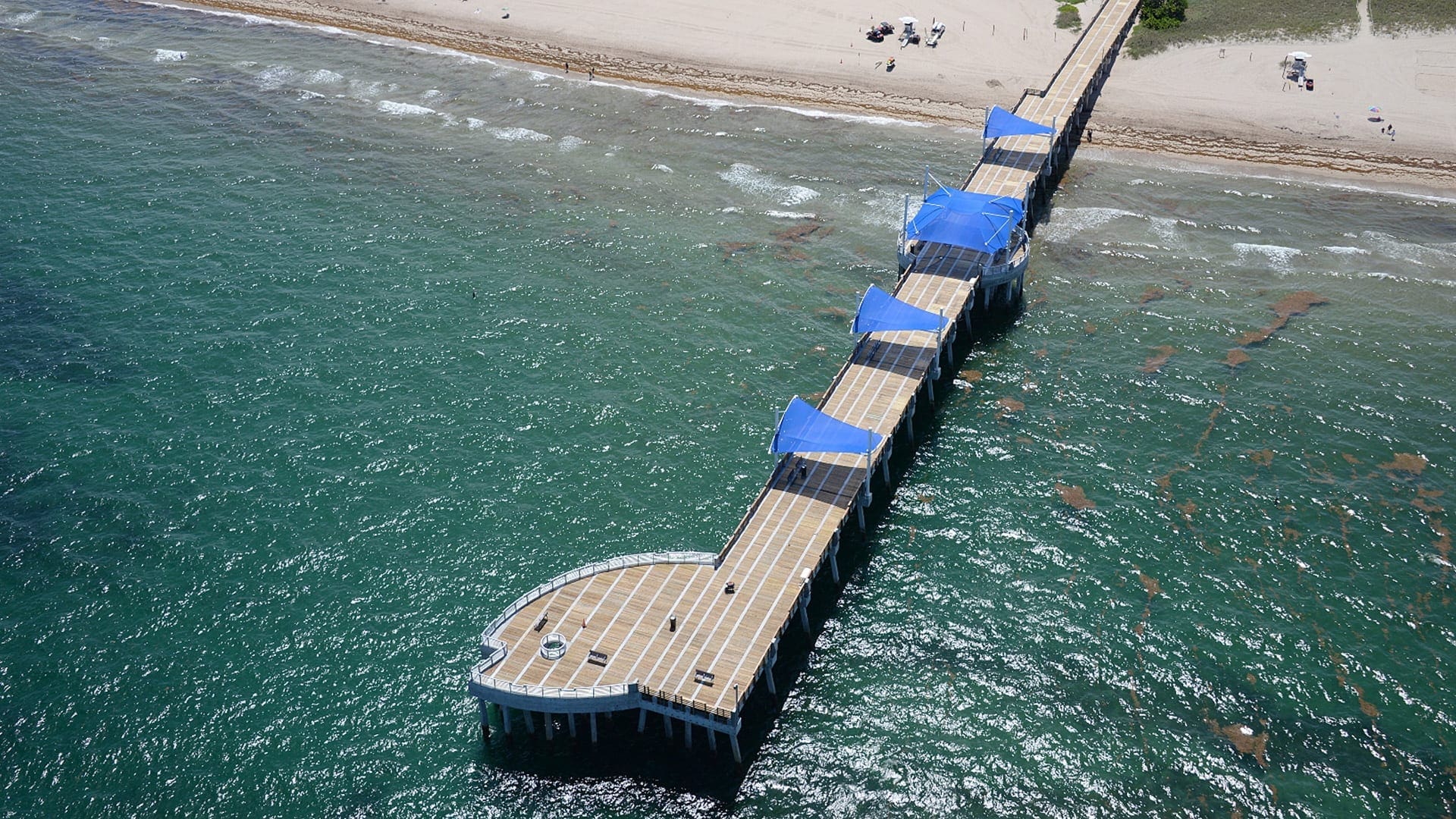
- Four shade structures and large overhead sails
- Electrical outlets for maintenance staff
- Fresh water hose bibs and a dry fire line for fire safety
- Three fish gutting stations
- Sea turtle-friendly lighting and environmental education signage
- Artwork depicting marine and sea life along the walkway
Strengthening the Pompano Beach Fishing Village
Pompano Beach Fishing Pier sits at the center of the Pompano Beach Fishing Village, and its design reflects what public piers mean to coastal communities: a place to fish, walk, and gather, and an economic draw for the restaurants, bars, and shops that grow up around them. Navigating the permitting and environmental review that comes with building on an active beach took years of coordination with local, state, and federal agencies, work that WGI managed throughout design and construction.
Contact Us
WGI brings civil, structural, landscape, and MEP engineering expertise to coastal and waterfront projects across Florida and beyond. From permitting through construction, our teams help municipalities deliver public infrastructure built to last in demanding environments.
If you’re planning a pier, waterfront park, or other coastal infrastructure project, contact us today to learn how WGI can help bring your vision to life.