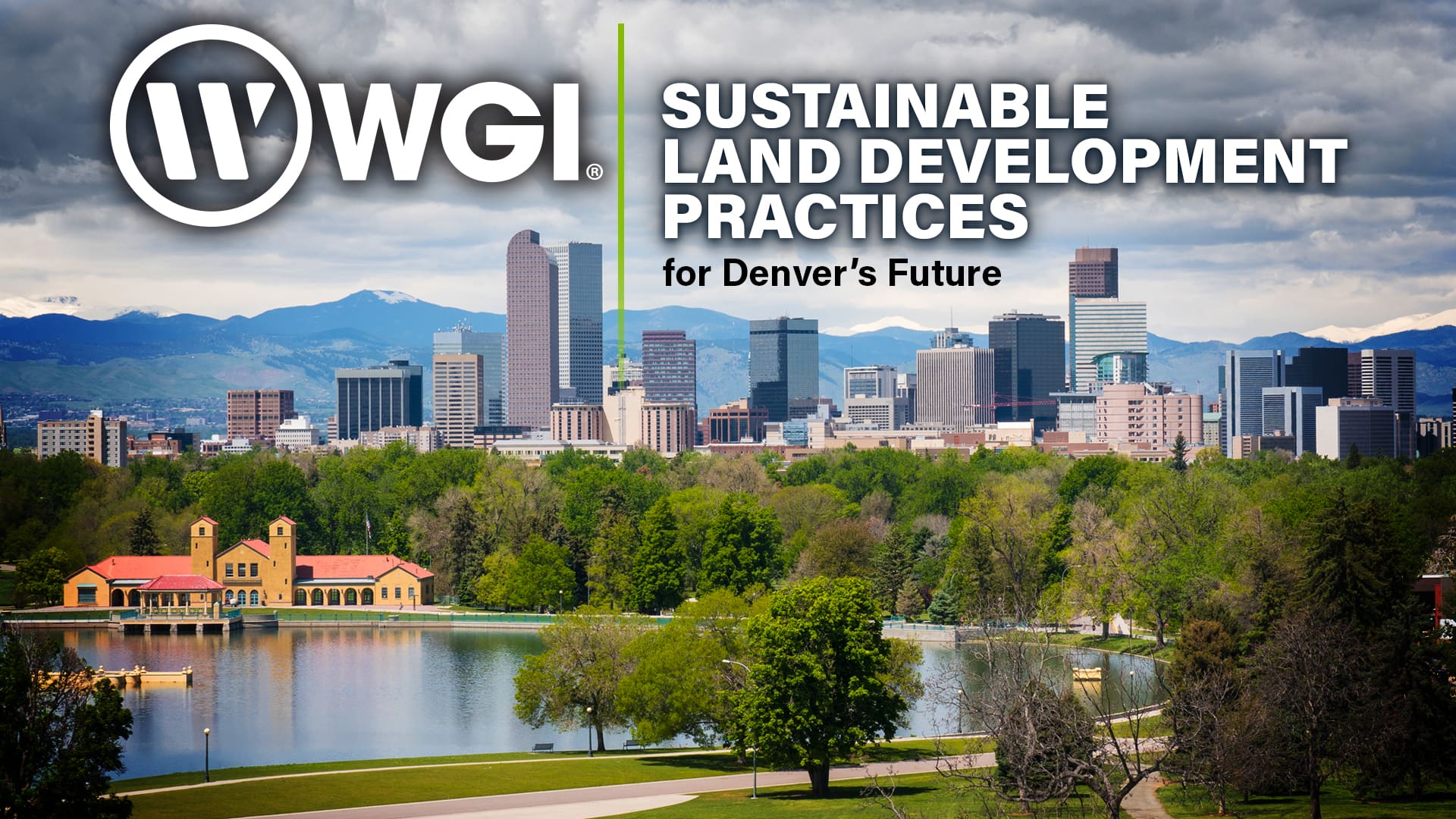
As Denver continues to grow, driven by population, economic development, and evolving urban patterns, the way land is developed will shape the city’s resilience, livability, and environmental footprint for decades to come. Traditional development approaches often prioritize maximizing density, reducing upfront costs, and simplifying site grading and drainage, but those methods can create long-term challenges such as greater stormwater runoff, increased energy consumption, and strain on infrastructure. Sustainable land development offers a better path forward, one that balances economic growth with ecological sensitivity, resource conservation, and community well-being.
At its core, sustainable development simply means designing and building in ways that conserve resources, protect ecosystems, and reduce environmental impacts. It’s about restoring natural hydrology, managing stormwater at the source, reducing carbon emissions, and designing communities that are both functional and resilient…. And in Denver, a city already leading with bold climate policies, sustainable practices are no longer optional; they’re essential.
Green Infrastructure: Shaping Growth Through Nature
One of the most powerful tools in Denver’s sustainable development toolbox is green infrastructure, a term used to describe engineered or natural systems that capture, filter, and manage stormwater in a way that mimics natural processes.
Instead of treating stormwater as waste to be redirected away from infrastructure, green infrastructure integrates features like bioswales, rain gardens, permeable pavements, and green roofs to mimic natural processes. These systems reduce stormwater runoff, filter pollutants, recharge groundwater, and even cool urban spaces.
Denver has already taken big strides with its Green Infrastructure Implementation Plan. By prioritizing nature-based solutions for drainage and stormwater management, the city aims to transform infrastructure into a dual-purpose asset: one that manages water effectively while also providing amenity value (e.g. parks, trails, habitat corridors), aesthetics, and thermal moderation benefits.
Smarter Water & Wastewater Management
In a semi-arid climate like Denver’s, water is both precious and scarce. That makes innovative water & wastewater management strategies critical to sustainable growth. Denver has embraced a “One Water” vision, treating every drop, whether from rain, wastewater, or groundwater, as a resource that can be reused and repurposed.
From rainwater harvesting and graywater recycling to stormwater reuse for irrigation, developers are rethinking how water flows through projects. Floodplain preservation, daylighting of streams, and the creation of natural buffers are not only helping manage risk but also restoring ecological value across urban landscapes. These practices reduce strain on city systems while helping ensure long-term water security for residents.
Designing for Energy Efficiency and Carbon Reduction
Energy efficiency is another cornerstone of Denver’s future. The city’s adoption of the 2022 Denver Green Code and the Energize Denver Ordinance signals a clear direction: new buildings must be smarter, cleaner, and more energy-efficient. These codes set standards for everything from cool roofs and green building options to strict energy benchmarking and performance targets.
For developers, that means opportunities to lead with innovation. All-electric systems, high-performance building envelopes, passive solar design, on-site renewables, and advanced controls are no longer fringe ideas; they’re the new expectation. By designing for efficiency and carbon reduction, Denver is not just meeting compliance standards; it’s positioning itself as a national model for sustainable urban growth.
WGI’s Role in Denver’s Sustainable Future
At WGI, our civil engineering team specializes in helping clients navigate this evolving landscape, turning sustainability requirements into opportunities for innovation and long-term value.
We offer:
- Integrated Planning & Design: Hydrology, energy, grading, stormwater, landscape, and earthwork components weaved into a cohesive, sustainable strategy rather than separate silos.
- Code Compliance & Innovation: Denver’s evolving code landscape (Green Code, Energize Denver, Green Building Ordinance) expertise and cost-effective compliance or advanced optional pathways.
- Tailored Green Infrastructure Solutions: Site-specific Low Impact Development (LID) systems, infiltration galleries, bioswales, permeable pavements, and stormwater reuse systems optimized for Denver’s soils, climate, and slope constraints.
- Cost-Benefit and Life Cycle Analysis: Upfront vs. long-term value of sustainable choices (reduced drainage infrastructure, lower energy/water utility costs, resilience benefits).
- Cross-Disciplinary Coordination: Our firm is equipped with award-winning architects, MEP engineers, and landscape architects on staff who coordinate with municipalities to integrate sustainable decisions from concept through permitting and construction.
- Local Expertise & Relationships: Familiarity with Denver’s permitting agencies, utility providers, and sustainability expectations helps streamline project delivery and reduce risk.
We don’t just design for compliance; we design for performance. Our approach integrates stormwater, grading, energy, and site systems into cohesive strategies that reflect Denver’s codes and climate goals while also maximizing return on investment. By combining technical precision with creative problem-solving, we help our clients deliver projects that stand out for their resilience, efficiency, and community impact.
Ready to Build What’s Next?
Denver’s future is being written now. With new energy codes in place, a growing demand for water-smart design, and bold sustainability goals shaping development, the path forward is clear: growth must be greener, smarter, and more resilient.
At WGI, we’re ready to help developers, municipalities, and project partners seize this moment. So, whether you’re planning a large-scale community, retrofitting an existing site, or designing a single facility, our experts can guide you through the complexities of green infrastructure, water reuse, and energy efficiency to deliver projects that don’t just meet today’s standards but set tomorrow’s benchmarks.
If you’re ready to transform your next project into a model of sustainable land development, contact our team today – And get to know our partners at Streamline Technology to learn how, together, we’re pushing the boundaries of innovation in water resources, stormwater management, and flood forecasting for improved resiliency and sustainability in the world around us.
Together, let’s shape a Denver that thrives for generations to come!