.png?width=185&height=175&name=WGI%20Icon_Green%20(1).png)



















People want to live and work in places that offer natural beauty, access to outdoor recreation, and a strong sense of place. Communities that grow successfully are those that protect their natural resources while thoughtfully planning for the future. Landscape architects play a pivotal role in making this balance possible; helping communities understand what they have, envision what they want to become, and design environments that perform environmentally, socially, and economically over time.
Landscape architects are uniquely positioned to support community development at every stage of growth, from early site studies to long-term green infrastructure monitoring and maintenance planning. Their work bridges planning, engineering, ecology, and design to ensure that growth enhances, not diminishes, the places people value most.
 These assessments provide a technical foundation for informed decision-making, guiding land use, infrastructure placement, and development patterns. By understanding how natural systems function, communities can plan growth in a way that conserves critical resources, reduces environmental risk, and aligns development with long-term sustainability and resilience goals.
 From sports complexes and playgrounds to multi-use parks and open spaces, these environments are designed to accommodate diverse users and adapt as community needs evolve. Landscape architects consider accessibility, safety, stormwater management, shade, and long-term maintenance to ensure these outdoor assets remain welcoming, durable, and valuable for decades.
 These strategies include rain gardens and bioswales, tree planting and urban canopy expansion, habitat restoration, floodplain management, permeable pavements and green streets, and shoreline and riverbank restoration. Together, these approaches reduce risk, improve environmental performance, and strengthen ecological systems while contributing to more livable and attractive communities.
 By shaping environments that respond to natural systems, support healthy lifestyles, and adapt to changing conditions, landscape architects help communities grow with intention. The result is more than attractive public spaces; it’s infrastructure and landscapes that perform over time, delivering lasting value for residents, stakeholders, and future generations.
Revealing What Makes a Place Special: Natural Resource Inventories & Site Analyses
Before new development occurs, it is critical to understand the opportunities and constraints of the land. Landscape architects conduct natural resource inventories and site analyses to identify ecological assets such as functioning waterways and floodplains, healthy vegetation, unique or critical wildlife habitats, soil conditions, topography, and cultural features.
Designing Infrastructure That Enhances a Sense of Place
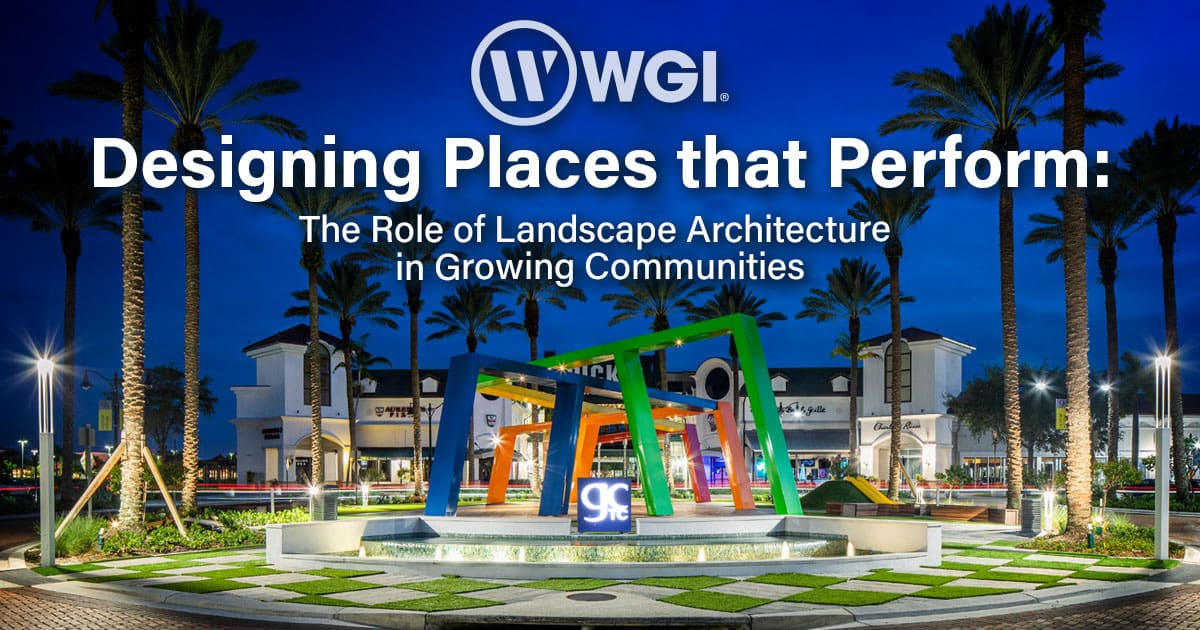
Landscape architects design public spaces and infrastructure that elevate a community’s identity and improve everyday experiences for residents and visitors. Parks and trail systems, streetscapes, pedestrian-friendly corridors, plazas, civic spaces, and outdoor gathering areas all shape how people interact with their surroundings. Thoughtful design reinforces local character through the use of context-sensitive materials, native and adaptive plantings, and layouts that respond to climate, culture, and community needs. When infrastructure is designed with both function and identity in mind, it strengthens community pride while delivering long-term performance.Creating Outdoor Facilities That Support Healthy, Connected Lifestyles
Growing communities require outdoor environments that are both functional and inspiring. Landscape architects design spaces that encourage physical activity, social interaction, and community programming, supporting public health and social connection.
Planning for the Future: Operations & Maintenance Strategies
One of the greatest strengths landscape architects bring to growing communities is the ability to plan beyond initial design and construction. Long-term operations and maintenance strategies are essential to ensuring that green infrastructure continues to perform over time. This includes planning for stormwater system performance, seasonal and long-term maintenance needs, cost-effective irrigation strategies, and lifecycle planning for materials and systems. By addressing operations and maintenance early in the design process, communities can reduce long-term costs while maximizing environmental and functional benefits.Supporting Sustainable Growth & Climate Resilience
As climate change accelerates, communities must plan for increasing temperatures, more intense rainfall, and evolving environmental stressors. Landscape architects implement nature-based solutions that help communities adapt while enhancing quality of life.
Helping Communities Envision Their Future
Collaboration is central to the role of the landscape architect. Working alongside city leaders, engineers, planners, and residents, landscape architects help shape a shared vision for the future. Through facilitated charrettes, community engagement workshops, and immersive 3D visualizations, they translate complex technical information into accessible concepts. These tools empower stakeholders to understand trade-offs, explore possibilities, and build consensus around growth strategies that reflect community values.Designing Communities for Long-Term Performance
Growing communities face complex challenges: balancing development with conservation, creating spaces that support well-being, attracting investment, and planning for a sustainable, resilient future. Landscape architects bring a holistic perspective that integrates environmental performance, technical expertise, and thoughtful design. By shaping environments that respond to natural systems, support healthy lifestyles, and adapt to changing conditions, landscape architects help communities grow with intention. The result is more than attractive public spaces; it’s infrastructure and landscapes that perform over time, delivering lasting value for residents, stakeholders, and future generations.