.png?width=185&height=175&name=WGI%20Icon_Green%20(1).png)



















From CAD to Data Rich Building Information Models (BIM)
30 years ago, the parking-design revolution was driven by computer-aided design (CAD), which replaced hand drawings and enabled basic 3-D modeling. Engineers and architects embraced CAD for linework, sections, elevations, and simple 3-D models. When it was introduced, CAD was a gamechanger, but now its capabilities seem almost quaint.
Today, design teams are creating data rich models expanding upon the typical construction data to include live sensor information, asset analytics, and operational feedback loops. Designers engage early to recommend technologies that drive operational efficiencies, integrating systems rather than layering them on. Ramp geometries, sensor locations, lighting, and signage are now planned in concert, ensuring that processes and technology are integrated from day one. Every system — human workflow, controls, analytics, and asset management — must communicate seamlessly.
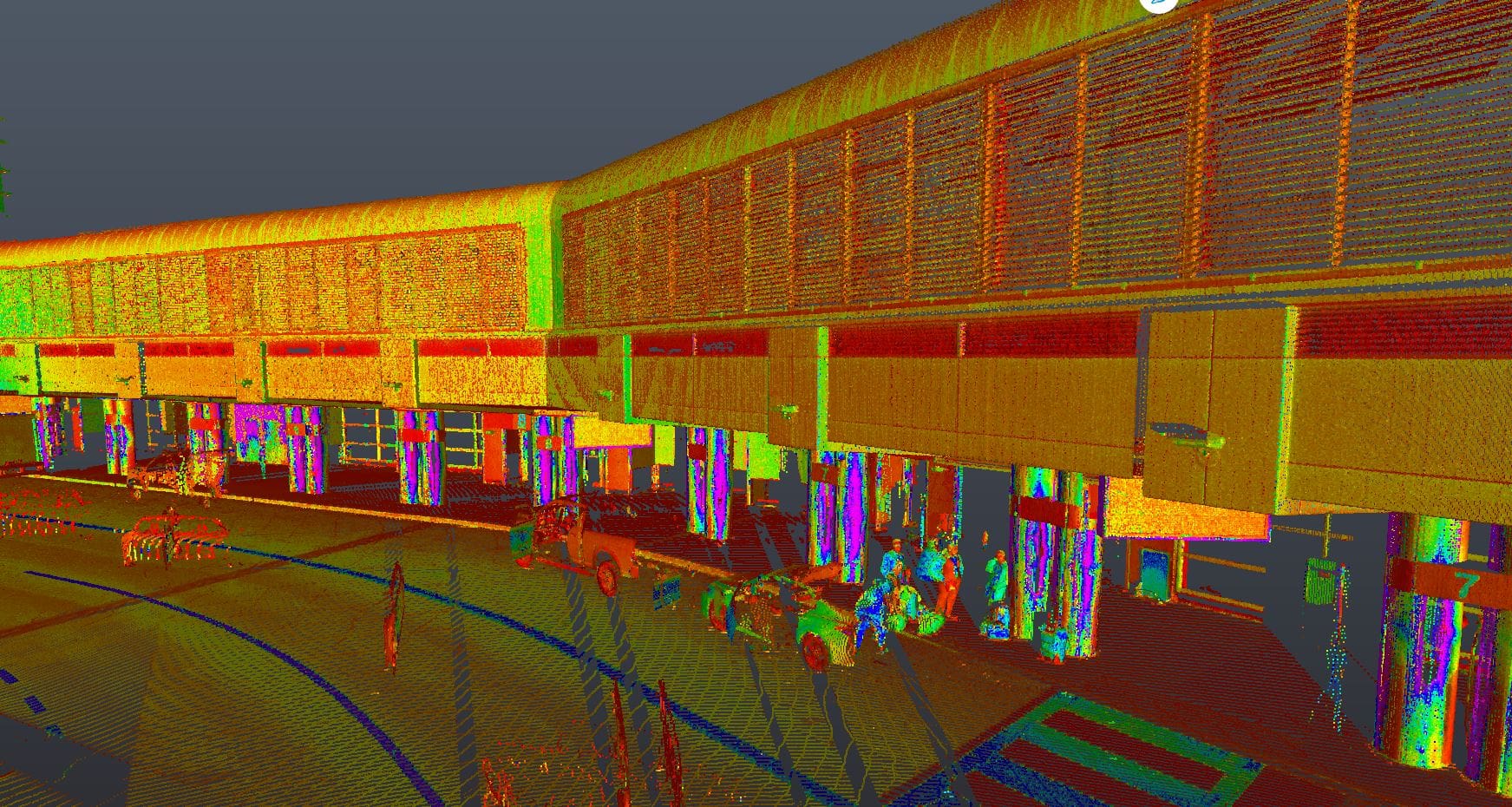
Viewing a parking facility as a system rather than a collection of spaces reveals new opportunities for efficiency. Technology allows optimization of ramp geometry, structural grids, and circulation patterns, reducing wasted space and improving flow as well as saving on construction and maintenance costs. Early integration of EV infrastructure ensures smooth expansion, while planning for autonomous or automated parking systems further increases utilization. Lighting, security surveillance, and wayfinding can be tied to occupancy sensors and data systems to enhance throughput, safety, and user experience.
Once operational, real-time occupancy sensors and dynamic signage reduce congestion, and data-driven traffic management enables adaptation to peak demand. Predictive maintenance minimizes downtime, and energy usage can be optimized by connecting lighting, ventilation, and charging systems through building-management software.
What sets a great facility apart is unified data architecture. Integrating occupancy, EV charging, access control, energy, and maintenance into a common platform allows owners to make smarter operational and financial decisions. Clear documentation, interoperability, and defined workflows ensure that issues are addressed efficiently, while performance data creates feedback loops that inform future design and current operations.
The Power of 3-D Modeling & Digital Twins
Modern parking design increasingly relies on BIM and digital twins. Designers now produce detailed representations of structural elements, site utilities, lighting, signage, and EV charging locations, simulating circulation and testing subsystems before construction. The result is not just a garage, but an intelligent, interconnected facility.

After construction, a digital twin mirrors the real facility, continuously exchanging data from sensors and connected devices. Operators can monitor performance, analyze energy use, detect equipment issues, and assess traffic and occupancy patterns. The twin becomes a management tool for testing operational changes, improving circulation, and predicting maintenance needs.
Digital twins also enable optimized management, precise retrofits, and risk management. Structural loads, circulation changes, energy usage, and safety scenarios can be simulated before real-world implementation, ensuring cost savings via better planning and reduced risk. Data collected from the twin informs future renovations, revealing where circulation, signage, EV chargers, and lighting systems perform best and where adjustments are needed.
Many teams now begin projects with Digital Strategy Sessions, bringing together owners, operators, engineers, technology vendors, and staff to align technology strategy with design goals. These sessions define operational objectives, map existing systems, plan data architecture, and identify opportunities for technology solutions. Emphasis on interoperability, efficiency, and data standards ensures seamless future upgrades, while documenting workflows clarifies the solution roadmap.
Early strategic alignment prevents common pitfalls where systems are added late, data remains siloed, or staff are unprepared to manage complex integrations. A shared framework ensures that the facility is as intelligent in practice as it is in design.
Case Study: ECRC Regional Transportation Management Facility
One powerful example of technology-driven facility design is the recently completed Emerald Coast Regional Council (ECRC) on Florida’s panhandle. ECRC is a state-of-the-art transportation and public safety command center that combines a regional transportation-management center (RTMC) and ECRC office facility.
This RTMC is the most advanced technology-forward transportation center in the United States, and it boasts the largest traffic management center screen display in Florida. Its modular design provides ultimate flexibility for traffic management and emergency response services. The RTMC’s technology demonstrates real-time scenarios, so during an emergency, public safety officials can virtually place themselves in the middle of an intersection or along a public beach or another monitored area to better understand what’s happening, allowing for quicker more data driven decisions to help manage the emergency.
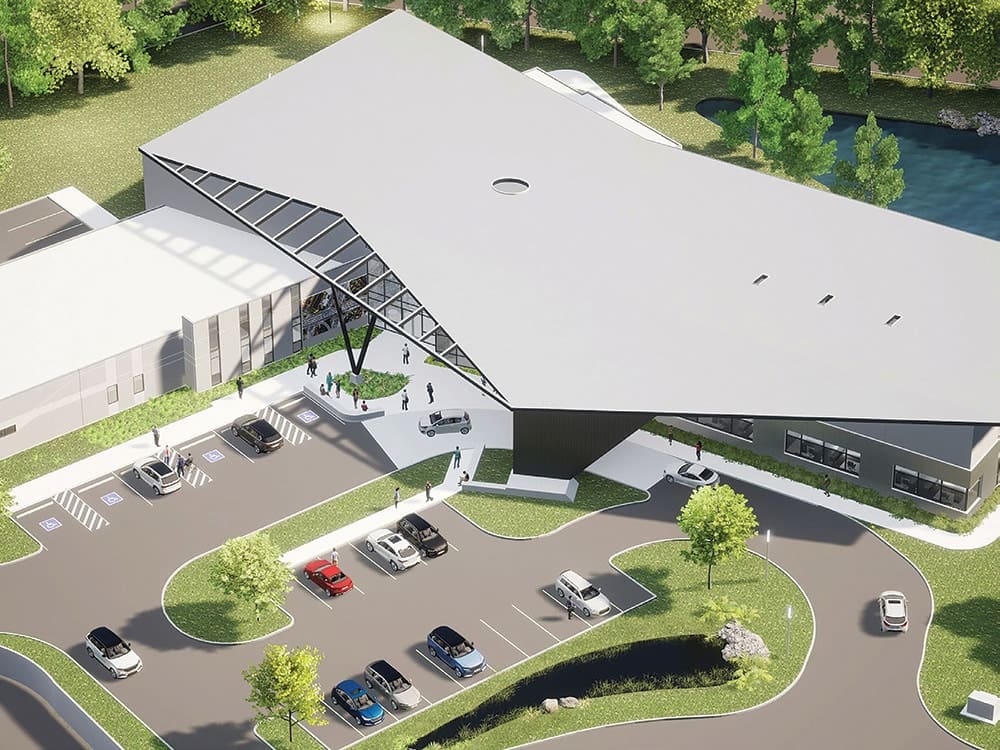 Escambia-Santa Rosa Regional Traffic Management Center (TMC) and Emeralds Coast Regional Council (ECRC) Office Facility[/caption]
Digital Strategy Sessions played a central role in the design process, allowing the team to collaborate on innovative solutions. Leaning on technology solutions, the team was able to integrate advanced technology vendors, allowing the team to test combinations of technologies in a virtual environment. This approach fostered creative problem-solving and enabled the client to participate meaningfully throughout every phase. The resulting facility features a flexible, modular layout designed to accommodate growth. Its traffic-management display can expand along with other public-safety systems as needs evolve. Built with resilience in mind, the structure includes hardened infrastructure, generator backup, water storage, and emergency electrical connections to support disaster response. Within its command environment, biometric access, integrated ITS data feeds, dynamic displays, and real-time traffic and incident monitoring all operate as part of a unified system.
This project demonstrates that the same innovative approaches that are being applied to parking design can also be put to work in designing mobility hubs. The process demonstrated the power of early client involvement, collaborative technology planning, and flexible, future-ready design. It also showed how fully integrating data, systems, and optimized workflows can turn a facility into an intelligent ecosystem rather than a collection of isolated technologies.
Designing for Continuous Optimization & Feedback
Technology enables “design once, refine forever.” Invaluable design insights can be provided by digital twins, sensor networks, and analytics that give real-time performance data covering occupancy, queues, EV usage, energy, ramp bottlenecks, lighting, and more. Analysis of operational data informs future updates and projects, providing empirical evidence for circulation, signage placement, sensor density, energy usage, and structural performance under mixed-use conditions.
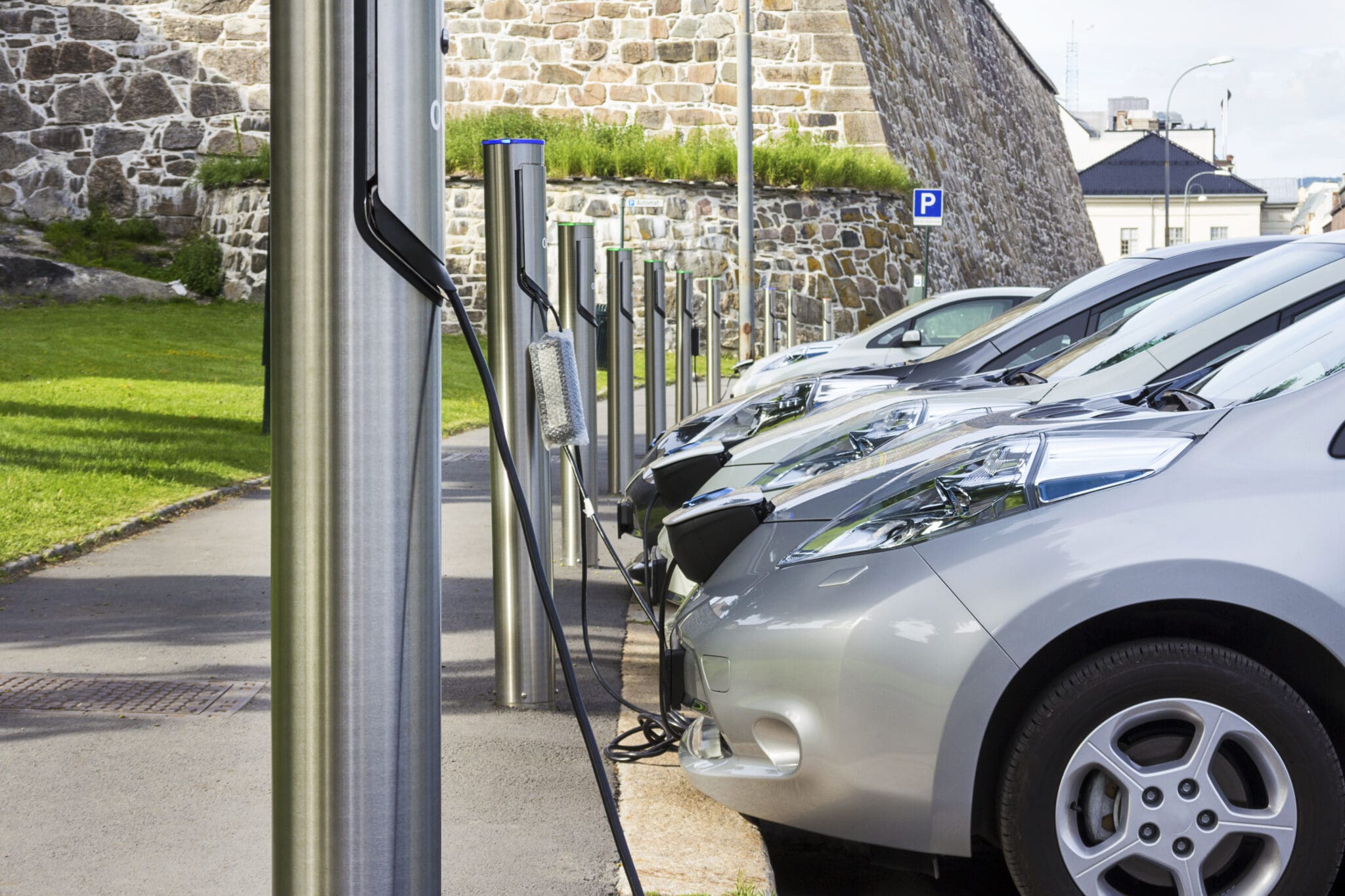
This feedback loop drives continual improvement. Findings are documented, staff are trained in updated procedures, and predictive maintenance schedules are refined. Designers can allocate zones dynamically for EV charging, valet, event, or shared mobility use, while sensors, wiring, and data networks allow rapid conversion to self-parking facilities, shared-mobility hubs, or micro-fulfillment centers. Performance data supports smarter asset lifecycle planning, optimizing total cost-of-ownership and component selection. Integrating digital twins into both design and operation makes parking structures more sustainable, efficient, and resilient.
Given rapid shifts in mobility — EVs, ride-shares, and autonomous vehicles — the digital twin ensures efficient adaptability. Facilities can remain relevant, optimized, and profitable over decades.
Looking Ahead: The Future of Parking Design Technology
Emerging trends will continue to improve and provide additional value in parking and mobility design and operations. Autonomous vehicles will enable narrower bays, steeper ramps, and decrease pedestrian risk. Shared-mobility-ready layouts will accommodate ride-share drop zones, drone and robot logistics, and future conversion of parking levels to storage, office, or retail use.
Parking facilities are integral elements of broader mobility ecosystems, connected to transit, traffic management systems, EV networks, and real-time data. Sustainability and resilience are embedded from the start, with strategies for energy management, storm-surge protection, and adaptive use. AI and predictive analytics optimize design, forecast peak usage, detect equipment anomalies, and manage facility maintenance over time.
Ultimately, the value of a parking asset extends beyond concrete and steel to its digital foundation. The data infrastructure, analytics capabilities, and operational intelligence drive adaptability and efficiency.
Innovation through technology in parking and mobility design is no longer optional, it is imperative. The facilities of 2030 and beyond will be smart, connected mobility assets, designed and built with technology, data, and operations deeply embedded. By engaging design and innovation engineers early, unifying processes and data architectures, connecting systems and stakeholders, and leveraging data rich BIM and digital twins, owners and designers can create parking and mobility infrastructure that is efficient today and easily adaptable tomorrow.
To access the original article, please click here.