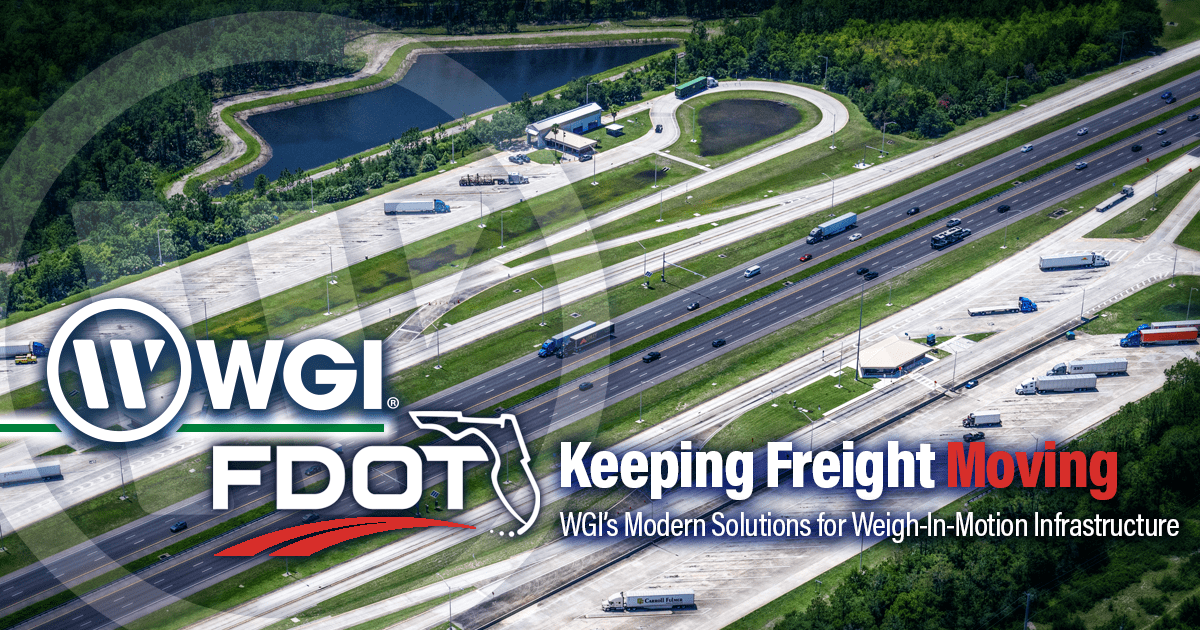
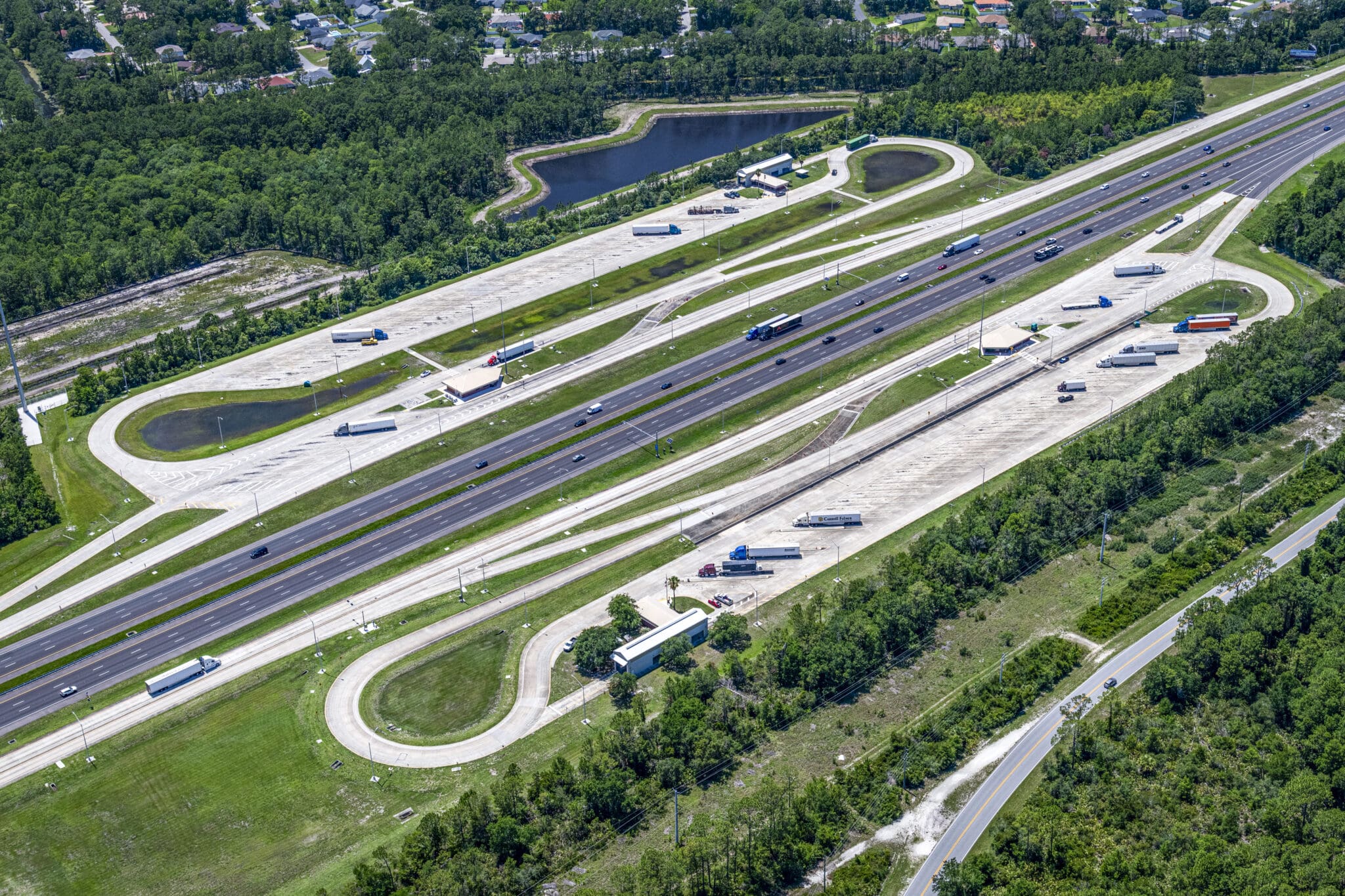
Across Florida, commercial vehicle operations and freight networks depend on specialized infrastructure that most drivers pass each day without a second thought. To ensure safety, compliance, and efficiency on the road, Weigh-in-Motion, or WIM, stations screen trucks at highway speeds, help inspectors focus on high-risk carriers, protect pavement and bridges, and keep compliant operators moving. The result is safer roads, fewer bottlenecks at weigh stations, and better freight data for planning.
Through a Continuing Services Contract with the Florida Department of Transportation (FDOT) Central Office, WGI partnered with the Motor Carrier Size and Weight (MCSAW) Program – a program designed to protect highways and bridges from overweight vehicles and conduct millions of truck weight checks each year – to advance a portfolio of upgrades and replacements at WIM sites across the state. While the contract originated with our Transportation team, this story highlights the integral role of WGI’s Architecture group in shaping the buildings that enable the technology and the people behind it.
Why These Facilities Matter
WIM systems pre-screen trucks on the mainline, route only likely violators into the station, and allow safe, legal carriers to continue without delay. This increases enforcement capacity, reduces congestion inside the station, and saves time for the freight community. These stations also generate valuable data used for pavement and bridge management, long-range planning, and operational improvements.
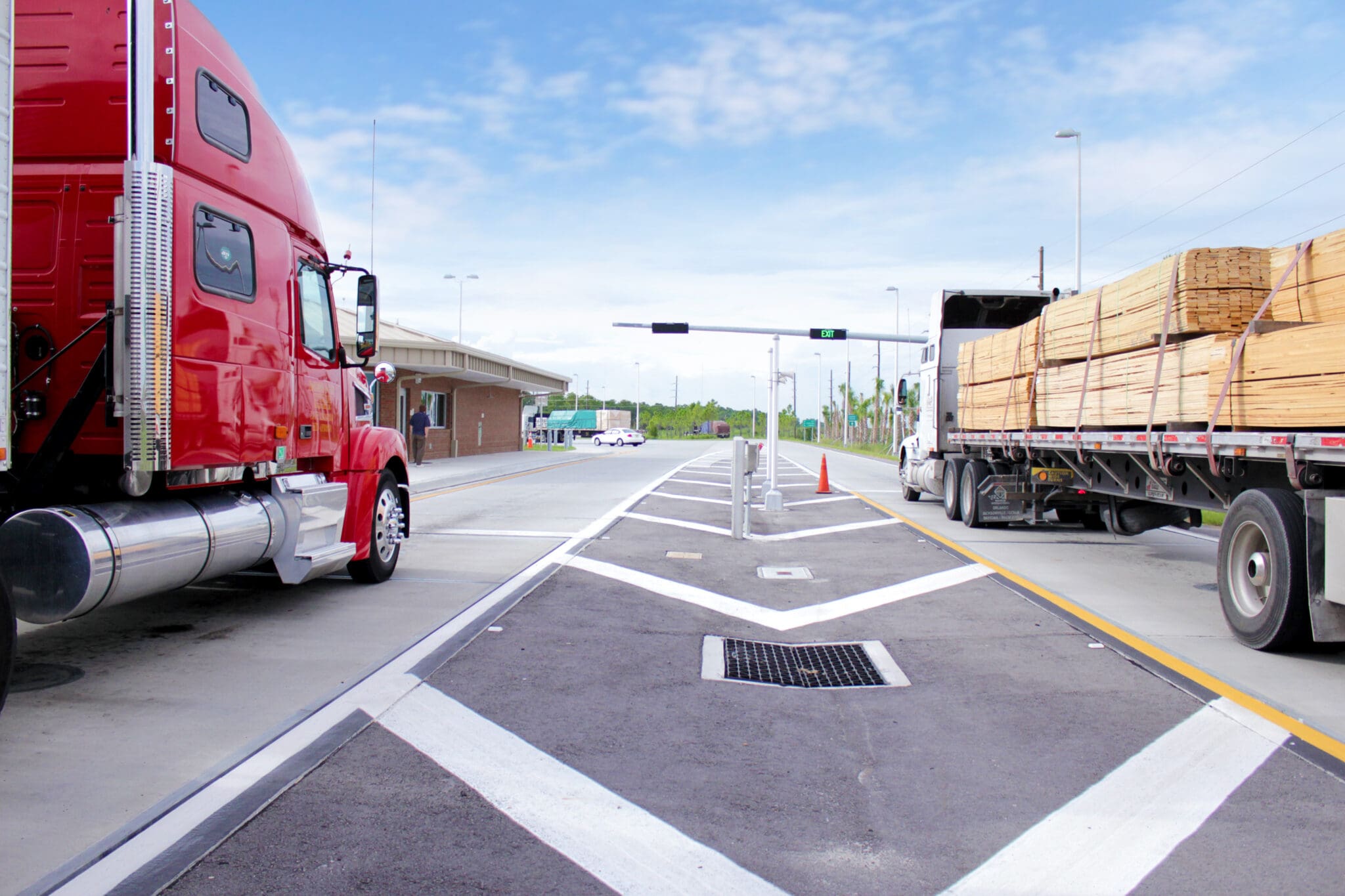
In Florida, FDOT is leveraging data and intelligent systems so that compliant vehicles can bypass subsequent checks, which further improves throughput. Facilities must keep pace with that operational model, which is where building design, durability, and safety come in.
Setting the Standard for Facility Upgrades
WGI worked with FDOT and MCSAW to standardize a scope of work that can be applied, tailored, and repeated across multiple sites. A consistent prototype shortens design cycles, improves cost and schedule predictability, and raises the baseline for safety and comfort for both occupants and visitors. Our teams integrate architecture with transportation, utilities, environmental permitting, and structural needs so each site functions as a cohesive whole.
Architecture-Driven Improvements That Make a Difference
At the heart of this effort is a commitment to functional, resilient, and user-centered design. Across all sites, architectural improvements were targeted to support both immediate performance needs and long-term adaptability.
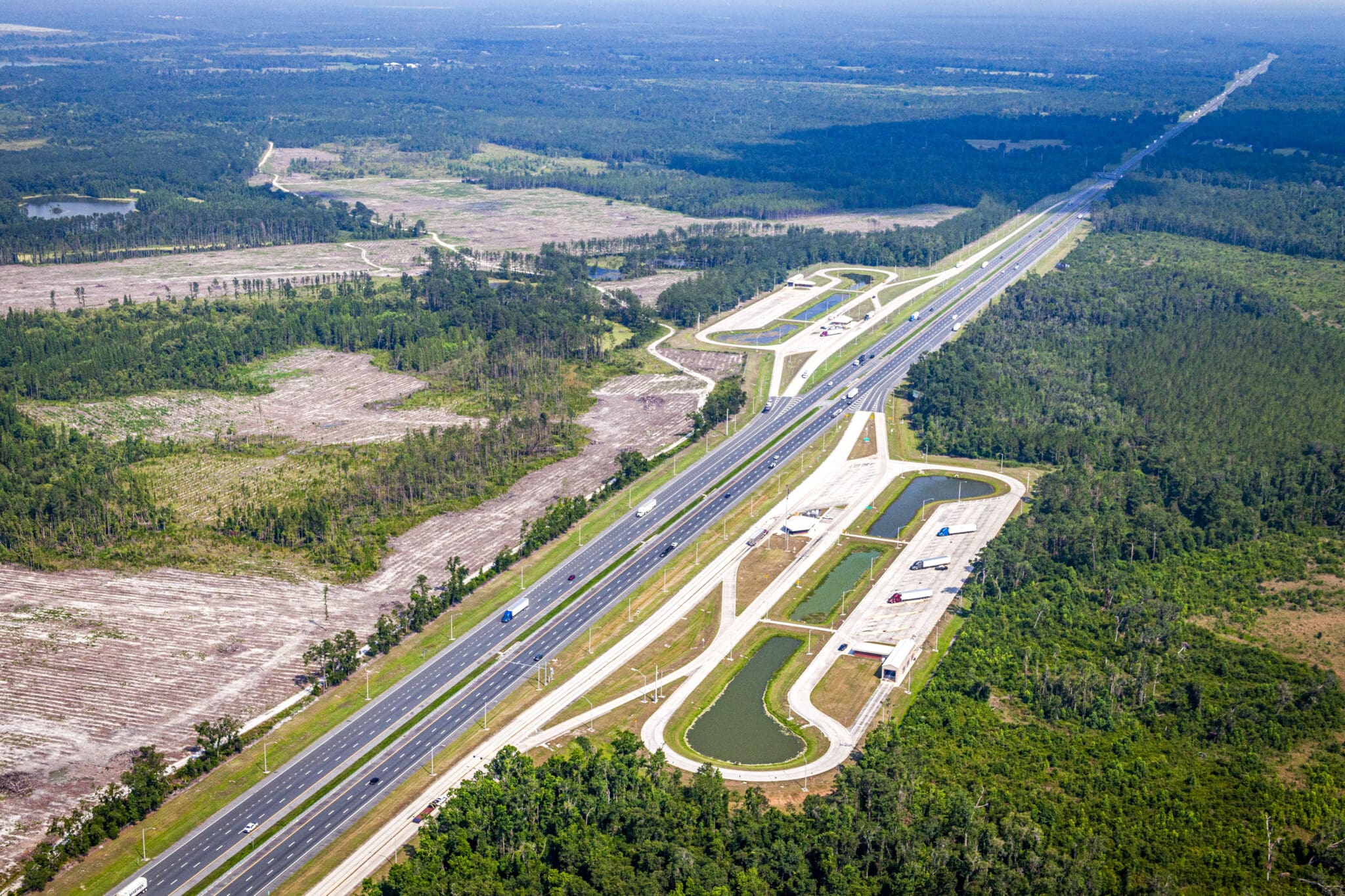
Representative architectural enhancements include:
-
Interior Reconfigurations in administration buildings and comfort stations for better space efficiency and workflow.
-
ADA and Building Code Compliance to ensure accessible, safe environments across all upgraded facilities.
-
Bullet-Resistant Security Features for enhanced protection of staff and law enforcement personnel.
-
Full Replacement of Finishes and Fixtures to improve durability, ease of maintenance, and aesthetic quality.
-
Mechanical and Electrical Upgrades, including energy-efficient HVAC systems, new lighting, generators, and updated panels.
-
Exterior Site Improvements such as new flagpoles, sidewalk replacements, and soffit system upgrades.
At select sites, the scope expands to replace Comfort Stations and replace or rehabilitate Inspection Barns, aligning the building program with current operations.
Design Priorities That Serve People and Mission
Occupant safety and resilience. The layout, materials, and security details support front-line staff who interact with the public and manage compliance checks. Durable finishes and systems lower lifecycle costs and keep facilities operational through Florida’s weather extremes.
Efficiency by design. Reorganizing interior zones shortens walking distances, improves sightlines between work areas, and supports high-frequency tasks like screening, inspections, and reporting. Mechanical and lighting upgrades reduce energy use and improve comfort, which supports productivity on long shifts.

Future-ready infrastructure. As screening technology evolves and data platforms expand, buildings need flexible space, reliable power, and conditioned environments for equipment. Our prototypical details anticipate technology refreshes, which reduces downtime and avoids rework.
A better experience at every touchpoint. Clear public entries, accessible routes, and improved parking and walkways make each site easier to navigate. That user focus extends to staff areas that support training, collaboration, and wellness.
Project Spotlights
The MCSAW Continuing Services Contract encompasses a range of projects across Florida, each designed to deliver consistent and modernized support facilities tailored to their unique site conditions. While scopes vary, all projects follow a prototypical design framework developed by WGI’s multidisciplinary team to ensure code compliance, operational efficiency, and durability.
Below is an overview of the current status of these important projects:
Completed Projects:
-
Flagler WIM Building Upgrades (Flagler County) – Administration and Comfort Station reconfiguration, finishes, ADA and code upgrades, MEP and exterior improvements.
-
White Springs WIM Building Upgrades (Hamilton County) – Interior reconfiguration, security enhancements, systems modernization.
-
Sneads WIM Building Upgrades (Jackson County) – Interior reconfiguration and full finish replacement, ADA and code improvements, electrical upgrades.
-
Palatka WIM Building Replacement (Putnam County) – Full WIM Building replacement with accessible routes and site improvements.
Currently in Construction:
-
Yulee WIM Building Upgrades (Nassau County)
-
Punta Gorda Barn Replacement (Charlotte County)
-
Madison WIM Building Upgrades, New Comfort Station, and New Inspection Barn (Madison County)
-
Lake City WIM Building Replacement (Columbia County)
Out for Bid:
-
Pensacola WIM Building Upgrades and Inspection Barn Rehabilitation (Escambia County)
As new sites progress through design and construction, WGI’s teams continue to refine and enhance the prototypical standards. This ongoing effort is transforming individual projects into a cohesive statewide network of efficient, modern facilities that will support the MCSAW program well into the future.
How WGI makes it work
WGI delivers these facilities with a program mindset. Architecture, structural, MEP, transportation, and geospatial teams work as one, aligning buildings with screening technology, site circulation, utilities, and environmental constraints. Our truck parking and WIM practice is built for repeatable delivery, from planning and concept through design, procurement, and construction support.
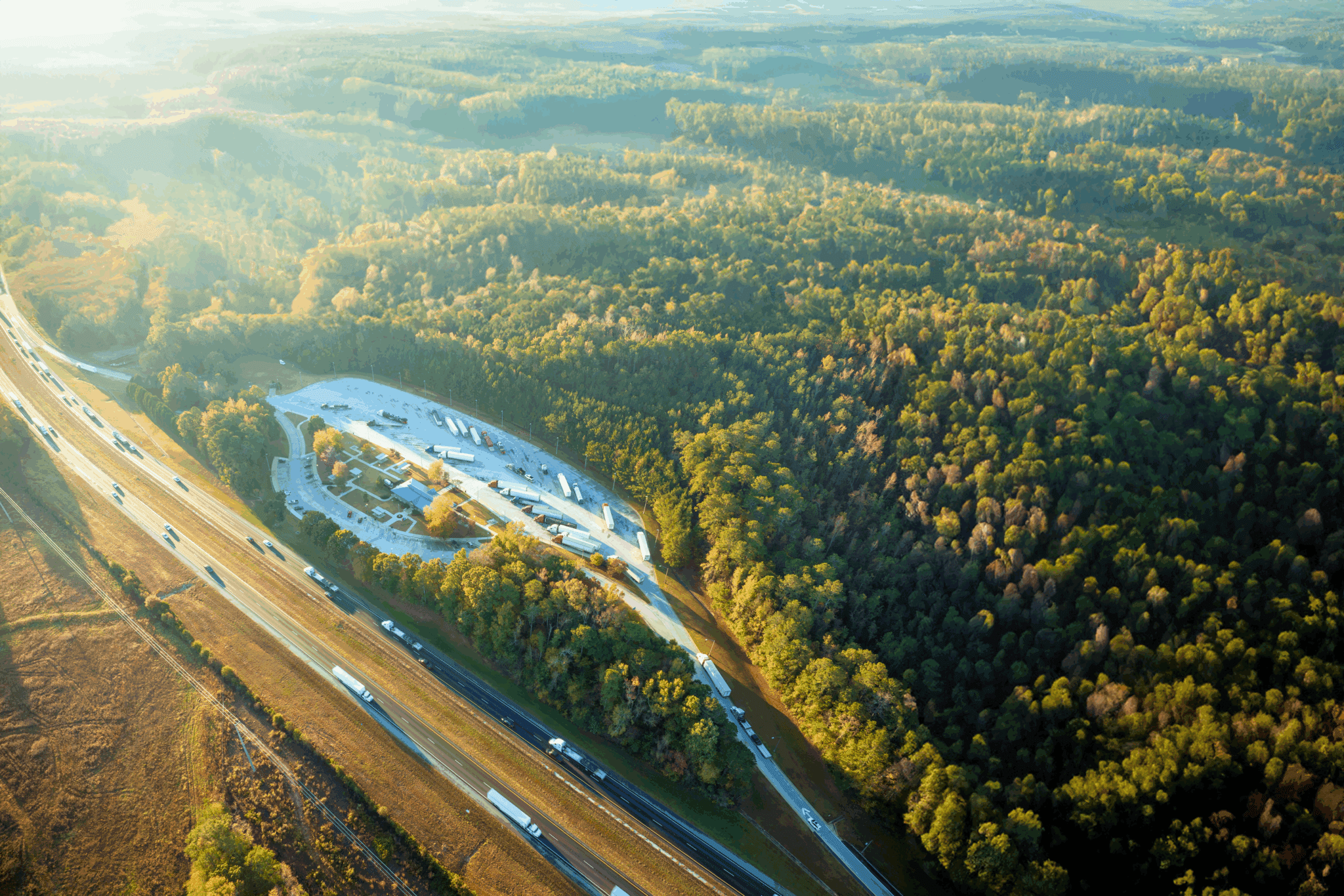
This program strengthens Florida’s infrastructure by enforcing size and weight limits that protect pavements and bridges and extend the life of public assets. Mainline WIM screening increases station capacity, reduces queues, and keeps compliant carriers moving with fewer interruptions. The facilities and the data they produce give FDOT better insight for long-range planning and asset management, which leads to smarter investments and more targeted enforcement.
Let’s Talk About Your Next Project
If you manage WIM facilities or plan to modernize an inspection campus, WGI can help you standardize your program, elevate safety and reliability, and deliver repeatable results across multiple sites. Explore our Truck Parking and WIM capabilities to see how we deliver facilities that support Florida’s freight mission today and adapt to tomorrow’s needs.
Ready to get started? Contact our team today to learn how WGI can support your next facility modernization initiative.