Virginia’s 2025 General Assembly session brought a mixed bag of progress and setbacks for housing policy. With housing affordability and production still front and center, lawmakers introduced a series of bills aimed at unlocking new development, streamlining outdated processes, and empowering local innovation. Some passed with strong support; others stalled in committee. Together, they paint a picture of a state grappling with how to meet the moment.
In this final installment of Policy Puzzle, we explore four key bills and a high-profile debate around corporate housing ownership that defined the state’s housing agenda this year.
Affordable Housing on Nonprofit-Owned Land
Originally titled the Faith in Housing for the Commonwealth Act, HB 2153 began as a proposal to help religious institutions develop affordable housing on land they already own. By the time it passed, it had broadened to include all tax-exempt nonprofit organizations, a major expansion.
The new law gives localities the ability to waive certain zoning restrictions and streamline site plan approvals for nonprofit-led affordable housing developments. These homes must remain affordable for at least 40 years. Localities can adopt strategies such as:
- Relaxed density requirements
- Reduced parking minimums
- Expedited permitting processes
This marks a meaningful step in enabling mission-driven housing development, particularly on underused institutional land in urban and suburban areas.
Planning for Tiny Homes and ADUs
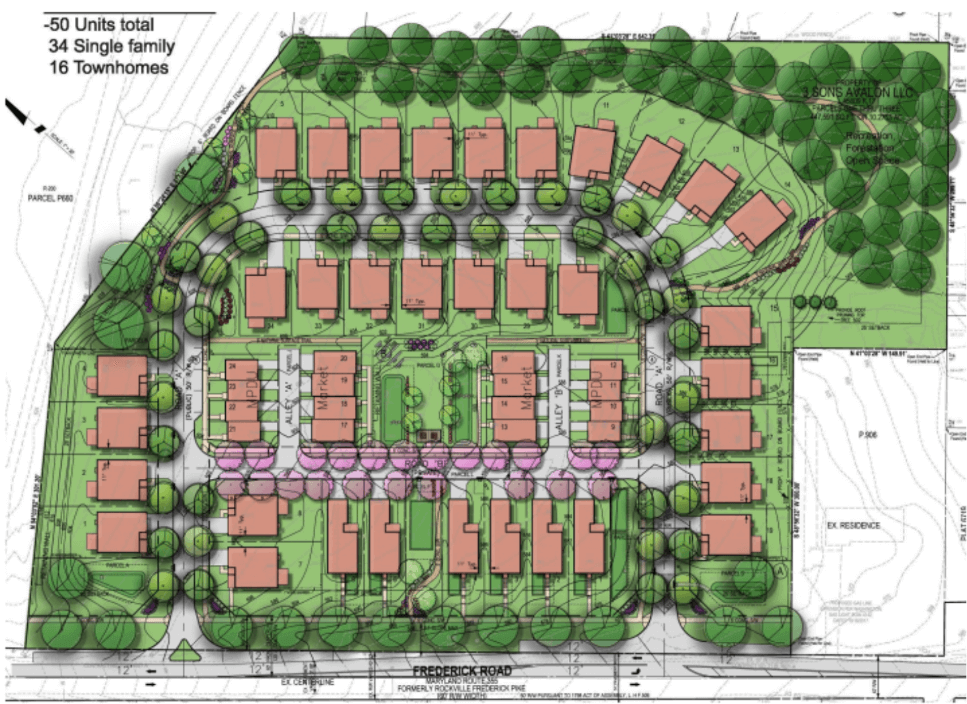
While Maryland passed a law mandating localities allow ADUs, Virginia has taken a more permissive approach. HB 2533, signed into law this spring, allows but does not require local governments to include tiny homes and accessory dwelling units (ADUs) in their comprehensive plans.
- Tiny Homes: Defined as small, independent dwellings within residential developments.
- ADUs: Secondary housing units located on single-family lots.
The law is largely symbolic, but important. By explicitly authorizing localities to plan for these housing types, Virginia is signaling openness to housing diversity and incremental infill, tools many planners consider essential in addressing the housing crisis.
HB 2660 – Streamlining the Development Process
Passed and signed into law, HB 2660 aims to streamline the subdivision approval process by reducing the time local governments have to review and approve plats and site plans. Specifically, the bill mandates that local planning commissions or their designated agents act on proposed plats within 40 days of submission, down from the previous 60-day timeframe.
The legislation also establishes a work group through the Virginia Code Commission to develop recommendations for improving the clarity, consistency, and efficiency of subdivision and site plan review procedures. The group is charged with:
- Organizing procedural steps in a logical sequence
- Clarifying requirements and timelines
- Standardizing terminology across jurisdictions
- Identifying and removing redundancies in the current Code
The group’s findings are due in a report to the General Assembly by November 1, 2025, and could inform broader legislative reform in the future.

HB 2149 – Zoning for Housing Production Pilot Program (Stalled)
Although it passed the House, HB 2149 ultimately stalled in the Senate Finance and Appropriations Committee. The bill proposed the creation of the Zoning for Housing Production Pilot Program, intended to incentivize select Virginia localities to adopt more flexible zoning ordinances that promote affordable and mixed-income housing development. Had it moved forward, localities could have experimented with:
- Upzoning near transit and employment hubs
- Reduced parking mandates
- More flexible use of commercial land for mixed-income housing
- Reducing minimum lot sizes
- Supporting alternative housing construction techniques
Supporters framed it as a way to give local governments “permission to innovate” in the face of local political challenges. Its failure delays but does not end the conversation. With growing attention on zoning reform across the country, similar proposals are likely to reemerge in future sessions.
Corporate Ownership Restrictions
One high-profile idea that didn’t make it past committee: a bipartisan effort to ban large investment firms from buying up single-family homes. Although, SB 693 failed this year, the proposal reflects growing public concern over institutional investors tightening the housing supply. Other states have proposed similar legislation, including Texas and New York, and even Congress has also raised concerns. Expect to see this conversation return in future sessions.
Takeaway
Virginia’s 2025 housing agenda shows clear momentum toward supporting affordable development, reducing regulatory friction, and enabling diverse housing forms. But the fate of several reform bills also shows how politically complex housing policy remains.
Contact Our Team
As housing policy continues to evolve in Virginia, navigating the changes can be challenging. Whether you’re a local official, nonprofit, or private developer, WGI’s experts are ready to help you turn policy into progress and deliver housing solutions that work for your community.