
Mentorship has always played a meaningful role in the engineering profession. Long before formal leadership development programs became common, engineers learned how to manage complex projects, navigate client expectations, and exercise professional judgment by working alongside more experienced colleagues.
While technical education and tools have advanced significantly, the need for mentorship has not diminished. In many ways, it has become more important. Today’s engineering environment is defined by compressed schedules, increasing technical and regulatory complexity, and rising expectations for efficiency and value. In this context, mentorship is not simply a cultural initiative; it is a practical way to develop capable, confident engineers who can perform well under real-world conditions.
At WGI, mentorship is treated as an essential part of professional development, not an informal or incidental activity.
Bridging the Gap Between Education and Practice
Engineering programs prepare professionals to analyze problems with rigor, but real-world projects introduce variables that are difficult to anticipate in a classroom setting. Codes require interpretation. Clients bring competing priorities. Budgets and constraints evolve throughout the project lifecycle.
“Mentorship is the engine that accelerates expertise and judgment, giving emerging professionals the ability to navigate real-world engineering challenges more effectively,” says Eric Luttmann, Director of Architecture at WGI.
Mentorship helps bridge the gap between theory and practice by exposing less experienced engineers to how decisions are made in context. Rather than focusing only on technical solutions, mentors help mentees understand how to balance precision with practicality, manage risk, and communicate effectively with clients and project teams.
Jacob Gonzalez, VP of Client Solutions, emphasizes that this type of learning cannot be replaced by formal training alone.
“Mentors don’t simply transfer technical knowledge. They model how to approach ambiguous problems, communicate with stakeholders, develop a recovery plan, and balance precision with pragmatism,” Gonzalez says.
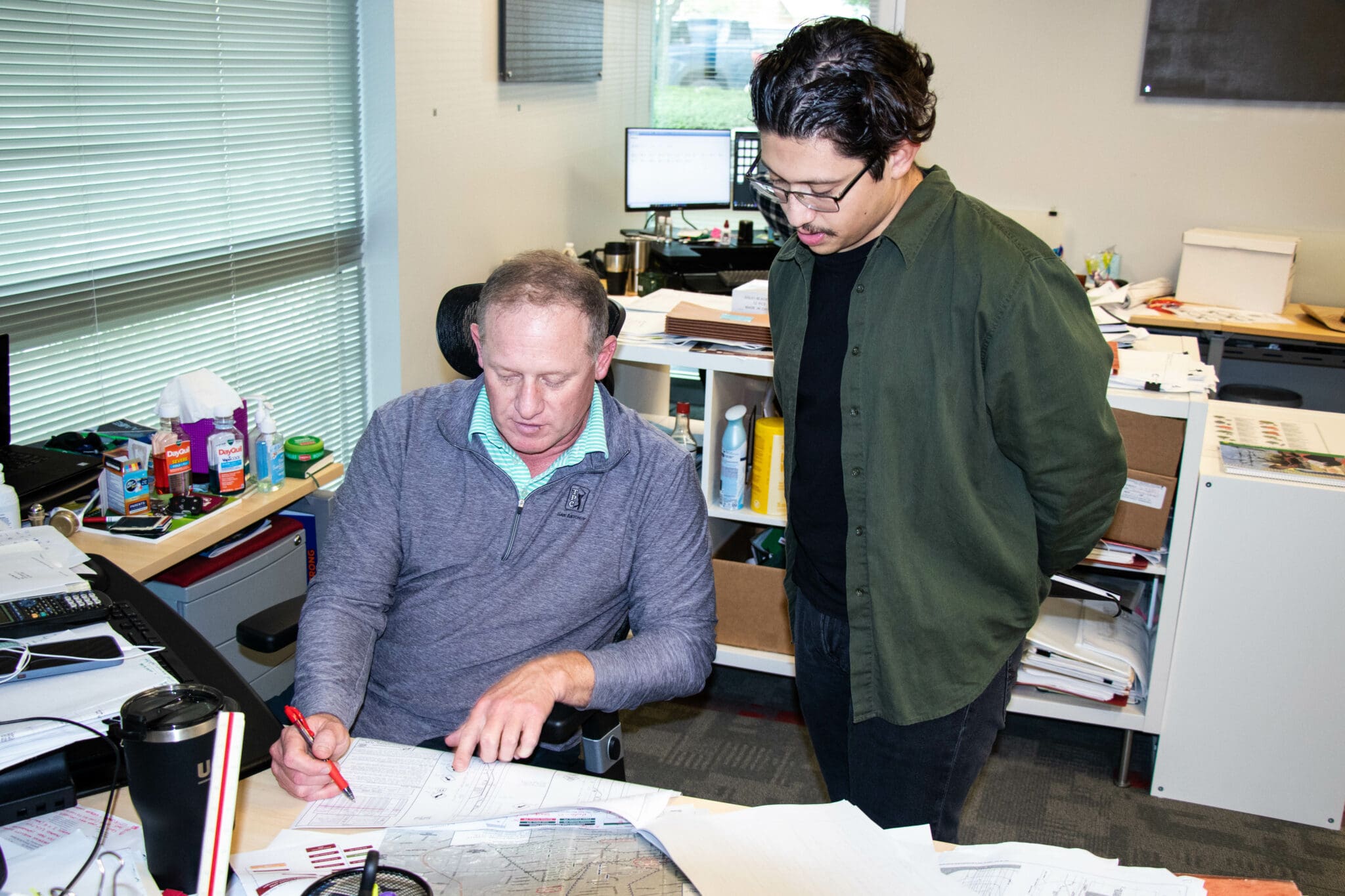
Over time, these experiences contribute to stronger decision-making, greater confidence, and a better understanding of professional responsibility.
Strengthening Teams and Client Relationships
As organizations grow, it can be easy for relationships to become transactional, focused on roles, tasks, and deliverables rather than long-term development and trust. Mentorship helps counteract this tendency by reinforcing a more relational approach to work.
“Strong relationships are the foundation of exceptional client experience (CX), and mentorship is how we cultivate young professionals to own those relationships,” says Luttmann. “It is not just about building skills, but crafting confidence, character, and a shared commitment to excellence.”
When senior professionals invest time in mentoring others, it signals that development matters. This investment supports stronger internal collaboration and, in turn, improves how teams engage with clients. Engineers who are confident in their judgment and communication are better equipped to act as trusted advisors rather than task-based contributors.
However, as project demands intensify and workflows become more transactional, opportunities for relationship-building and professional guidance can diminish. Without intentional mentorship, engineers may have fewer chances to develop the broader perspective needed to fully understand their role in delivering client value.
Gonzalez reinforces the role mentorship plays in addressing this challenge and strengthening professional environments.
“Strong mentorship cultures counteract this trend by reinforcing a relationship-focused model,” Gonzalez says.
Mentorship also provides earlier exposure to higher-level thinking, helping engineers understand how technical decisions affect project outcomes, budgets, and client relationships.
Mentorship as a Leadership Tool
Mentorship is also an effective way for leaders to extend their impact.
“When leaders mentor others, their impact multiplies—expanding capability beyond what any individual can accomplish alone,” says Luttmann.
As teams expand, leaders cannot be involved in every decision. Mentorship allows experienced professionals to transfer knowledge, perspective, and expectations in ways that strengthen overall team performance. Less experienced engineers gain insight into how complex issues are evaluated and resolved, while leaders build more capable and independent teams.
This approach is particularly important as new tools and technologies continue to shape engineering practice. While advanced software and automation can improve efficiency, they do not replace experience. Mentorship provides the context needed to apply tools appropriately, interpret results accurately, and communicate outcomes clearly.
“Activating our platform and mentoring young professionals sparks the kind of momentum that fuels growth, strengthens teams, and moves the entire organization forward,” Luttmann adds.
As Gonzalez notes, leadership plays a direct role in sustaining this momentum.
“In order to effectively leverage the platform, each leader has a responsibility to help build it and strengthen it,” Gonzalez says.
Developing the Next Generation
Mentorship also plays a key role in preparing engineers for long-term growth. Career paths in engineering are rarely linear, and mentors can help individuals assess opportunities, take on new challenges, and make informed decisions about when to stretch beyond their current roles.

One mentee reflected on the impact mentorship has had on their professional development:
“Mentors empower individuals to recognize and harness their unique strengths while expanding their perspective to reveal opportunities they may not yet see. Through their guidance and encouragement, mentors provide the clarity and confidence needed to pursue a career path that aligns with and fully realizes their potential,” says Aaron Joseph, PE, Market Leader at WGI.
At WGI, mentorship relationships often extend beyond reporting lines, allowing engineers to learn from different disciplines and perspectives. This broader exposure supports collaboration, reduces silos, and helps engineers better understand how their work fits into larger organizational and project goals.
A Practical Commitment
Effective mentorship does not happen by chance. It requires intentional participation from leaders and support from the organization.
At WGI, mentorship is viewed as a shared responsibility; one that supports individual development while strengthening teams and improving client outcomes. By creating opportunities for knowledge-sharing, exposure, and guidance, mentorship helps ensure that experience is not isolated but passed on in meaningful ways.
For engineering firms, investing in mentorship is not about adopting a formal program for its own sake. It is about creating an environment where learning is continuous, judgment is developed, and engineers are prepared to take on increasing responsibility with confidence.