
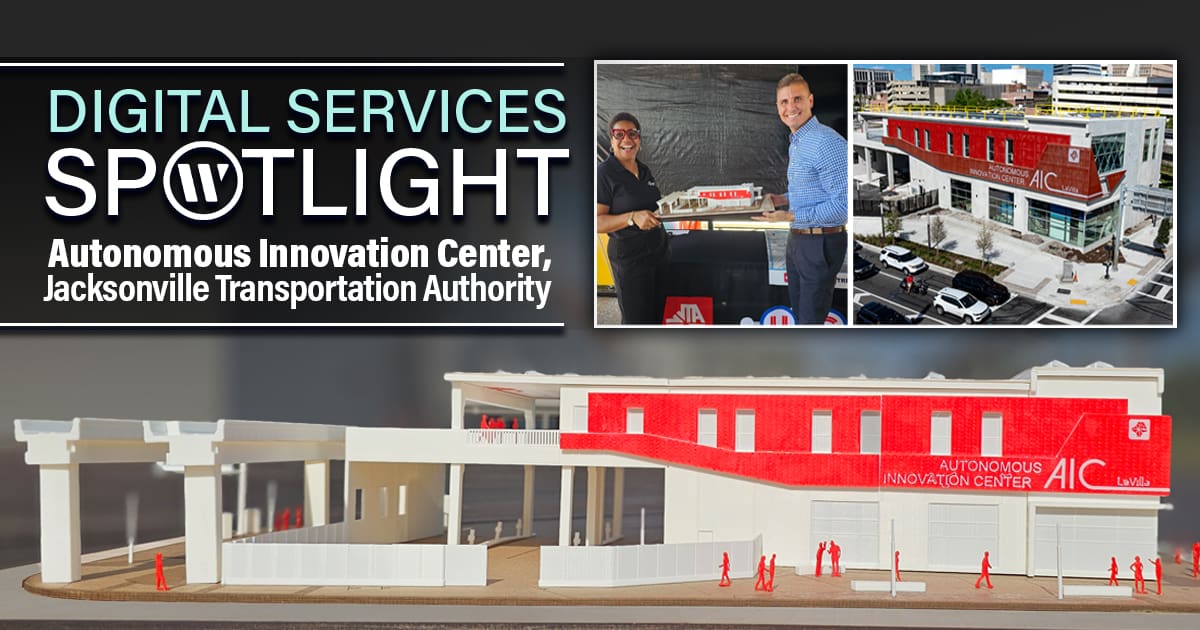
As WGI’s Digital Services Spotlight series continues, we’re exploring how innovation thrives at the intersection of technology, creativity, and human experience.
While digital tools such as BIM, visualization platforms, and data dashboards continue to reshape how we design and deliver infrastructure, sometimes the most powerful innovations come from reintroducing the physical: bringing ideas literally into people’s hands.
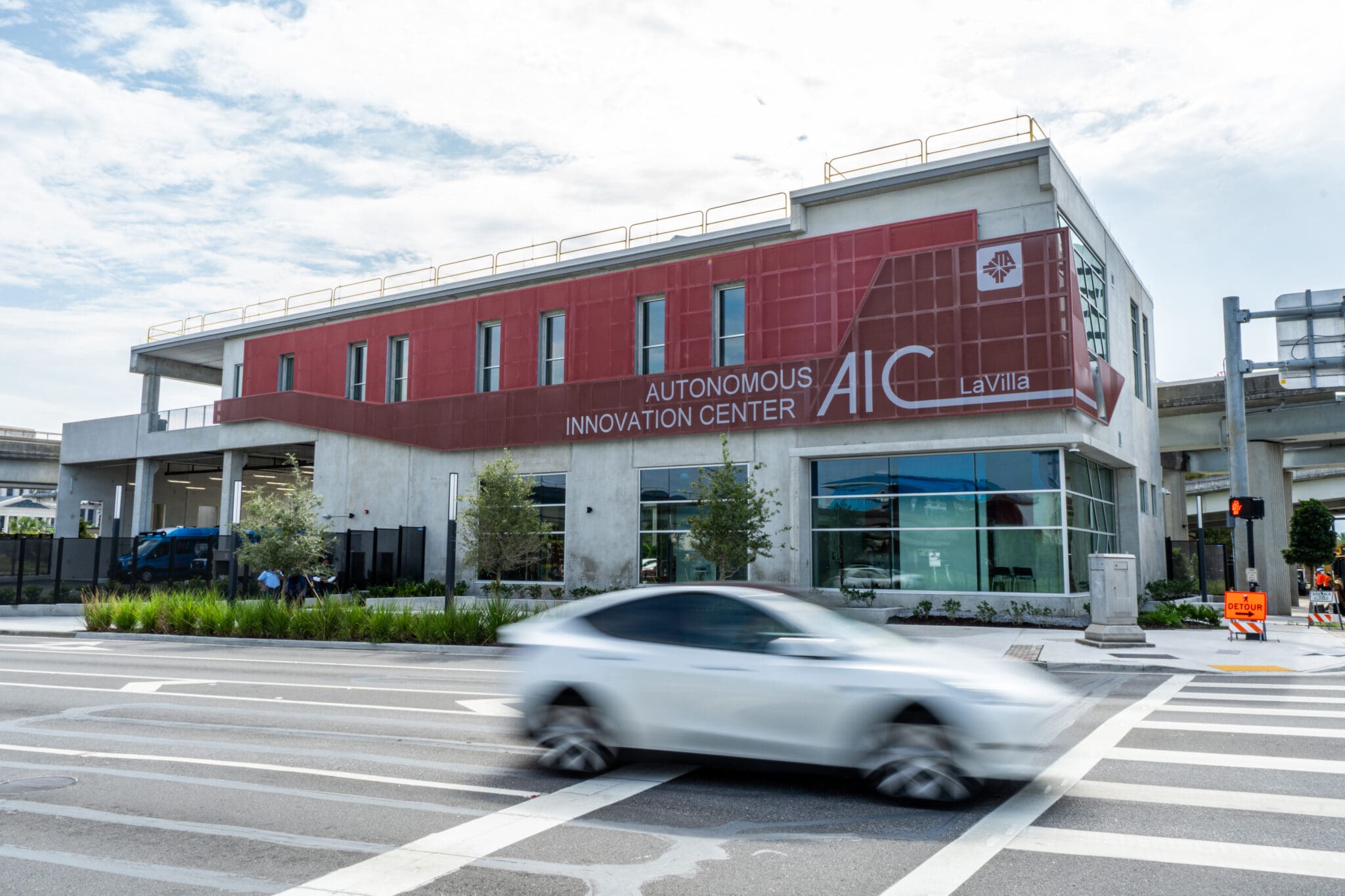
The Jacksonville Transportation Authority’s Autonomous Innovation Center embodies this philosophy. Designed as a forward-thinking hub for autonomous vehicle research and development, the project’s complex geometry, layered façade, and branded wayfinding present a unique opportunity to demonstrate how tactile modeling can complement digital workflows and inspire collaboration across disciplines.
Making Innovation Tangible
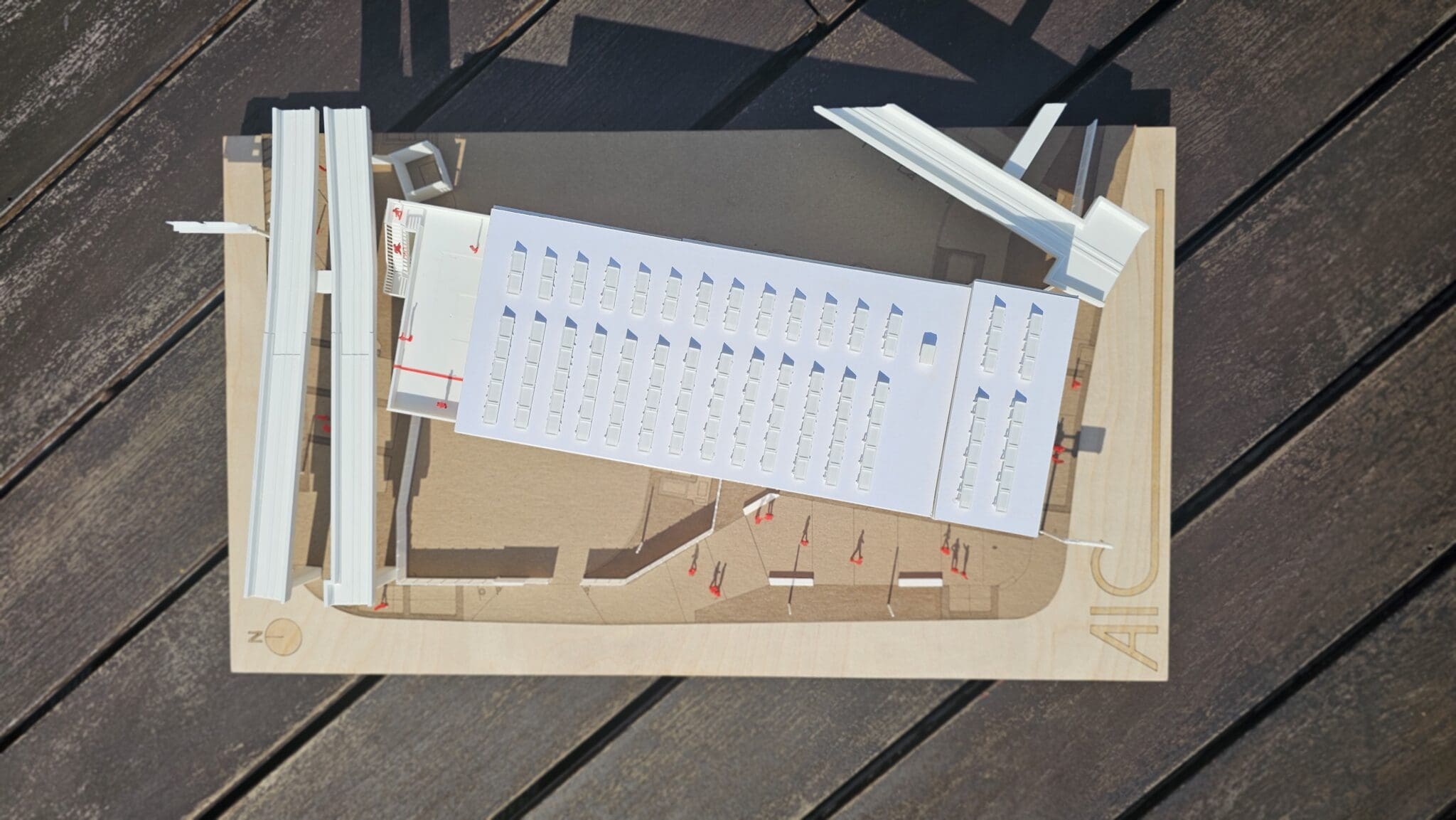
To celebrate the project’s topping out and to help communicate its story more clearly, the project team created a 3D-printed model of the facility, transforming an intricate digital design into a tangible, physical form.
The model showcased the building’s dynamic façade angles, spatial layers, and site relationships, helping both clients and internal teams visualize and understand the project in a new way.
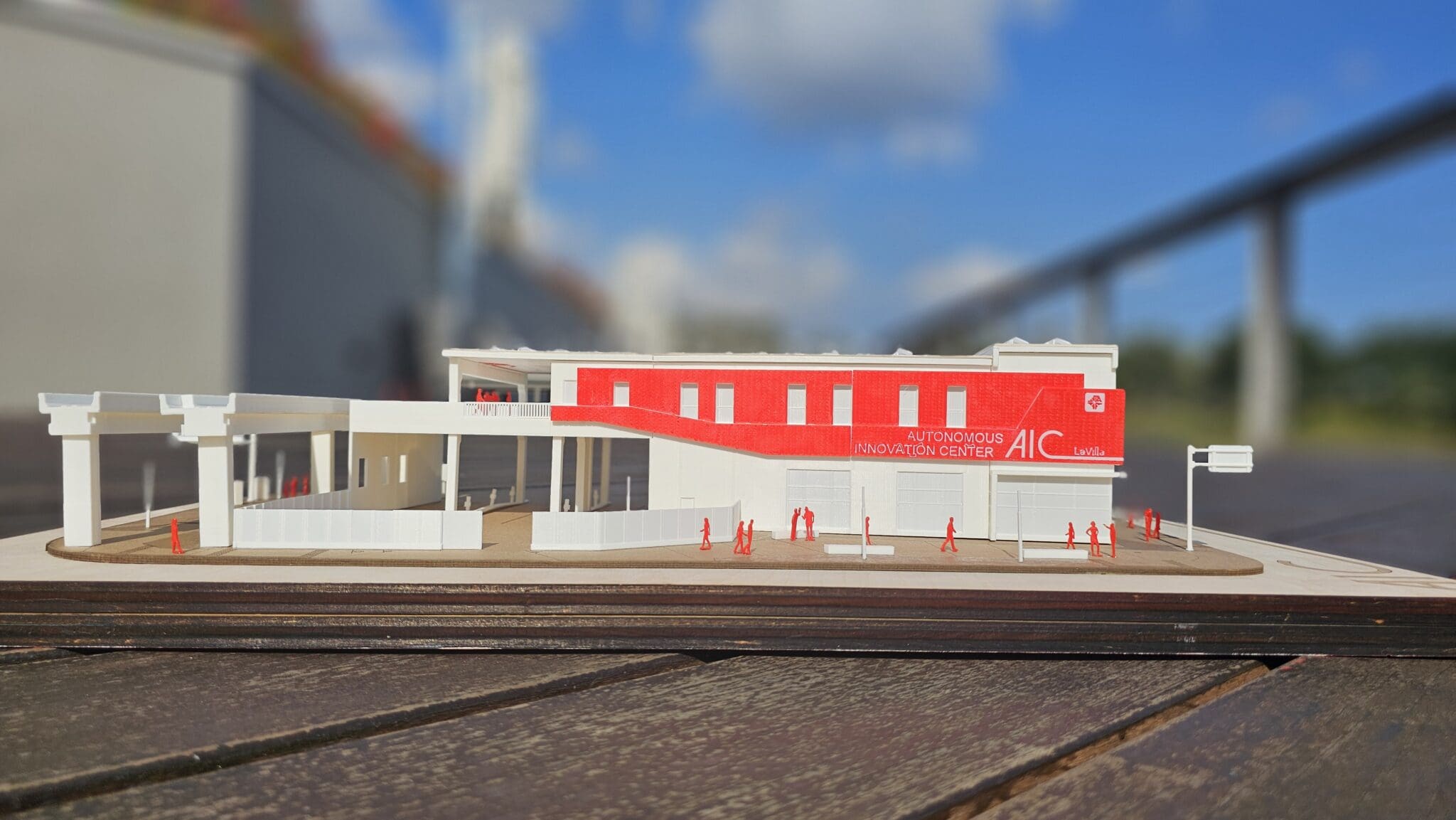
The effort was led by a designer with a background in digital fabrication, who broke the model into precisely scaled, printable pieces. Supported by the WGI architecture team, the process became highly collaborative and iterative; an experiment in blending traditional craft with advanced technology.
Seeing an opportunity for greater impact, the team proactively developed and delivered an additional visual tool that enhanced the client’s experience and understanding of the final project.
From Prototype to Impact
The result was far more than a display piece.
The 3D model became a conversation catalyst, helping the client visualize the project’s complexities in a way that renderings and plans alone could not. It brought the design to life during presentations and became a highlight at the topping out celebration, symbolizing both the project’s progress and the spirit of innovation that defines WGI’s approach.
Internally, the impact was just as profound.
The success of the Autonomous Innovation Center model sparked discussions about how physical prototyping could enhance coordination, clash detection, and interdisciplinary understanding, and it reinforced the idea that, even in an age of advanced digital tools like BIM and Procore, tactile experiences play a vital role in how we design, communicate, and innovate.
The Power of Blending Digital and Physical
This initiative serves as a reminder that innovation isn’t confined to the digital realm.
The future of design lies in the seamless integration of both physical and digital tools to unlock creativity, improve communication, and strengthen engagement.
By combining hands-on experimentation with cutting-edge digital technology, WGI continues to push the boundaries of what’s possible, bridging design, data, and human experience to shape a smarter, more connected future.
Contact Us
The 3D-printed model of the Autonomous Innovation Center did more than celebrate a milestone; it reshaped how teams collaborate and how clients connect with design. By combining digital precision with hands-on creativity, WGI demonstrated that innovation thrives when technology and craftsmanship intersect.
At WGI, we believe that innovation should be built, tested, and experienced – We combine powerful digital tools with tangible design expertise, transforming your vision into reality.
Partner with our Digital Services team to bring additional value to your projects and discover how WGI can help your team visualize, collaborate, and innovate in new dimensions to bring your next idea to life!