Across Texas, municipalities are tasked with maintaining aging water and wastewater systems while managing limited budgets, rapid population growth, and regulatory pressures. In Part 1, we explored the broader landscape of challenges communities face, and Part 2 highlighted strategies for budget-conscious planning. This installment focuses on practical rehabilitation methods that extend infrastructure life, minimize disruption, and maximize investment value.
Understanding Trenchless Rehabilitation
Existing water and wastewater systems across Texas are decades old, with pipelines, lift stations, and other assets approaching the end of their service life. Rather than replacing entire systems, targeted rehabilitation, specifically related to existing pipelines, can restore performance at a fraction of the cost and disruption. Two of the most effective methods include:
Cured-in-Place Pipe (CIPP) – Ideal for pipelines with good wall conditions, limited damage, and point repairs covering less than 50% of total length. Installation is mostly limited to access points like manholes, reducing excavation, traffic control, and restoration requirements. CIPP performs well in challenging locations, such as through busy intersections, within private property, and in tight alleys where access is difficult and minimizing stakeholder impact is paramount.
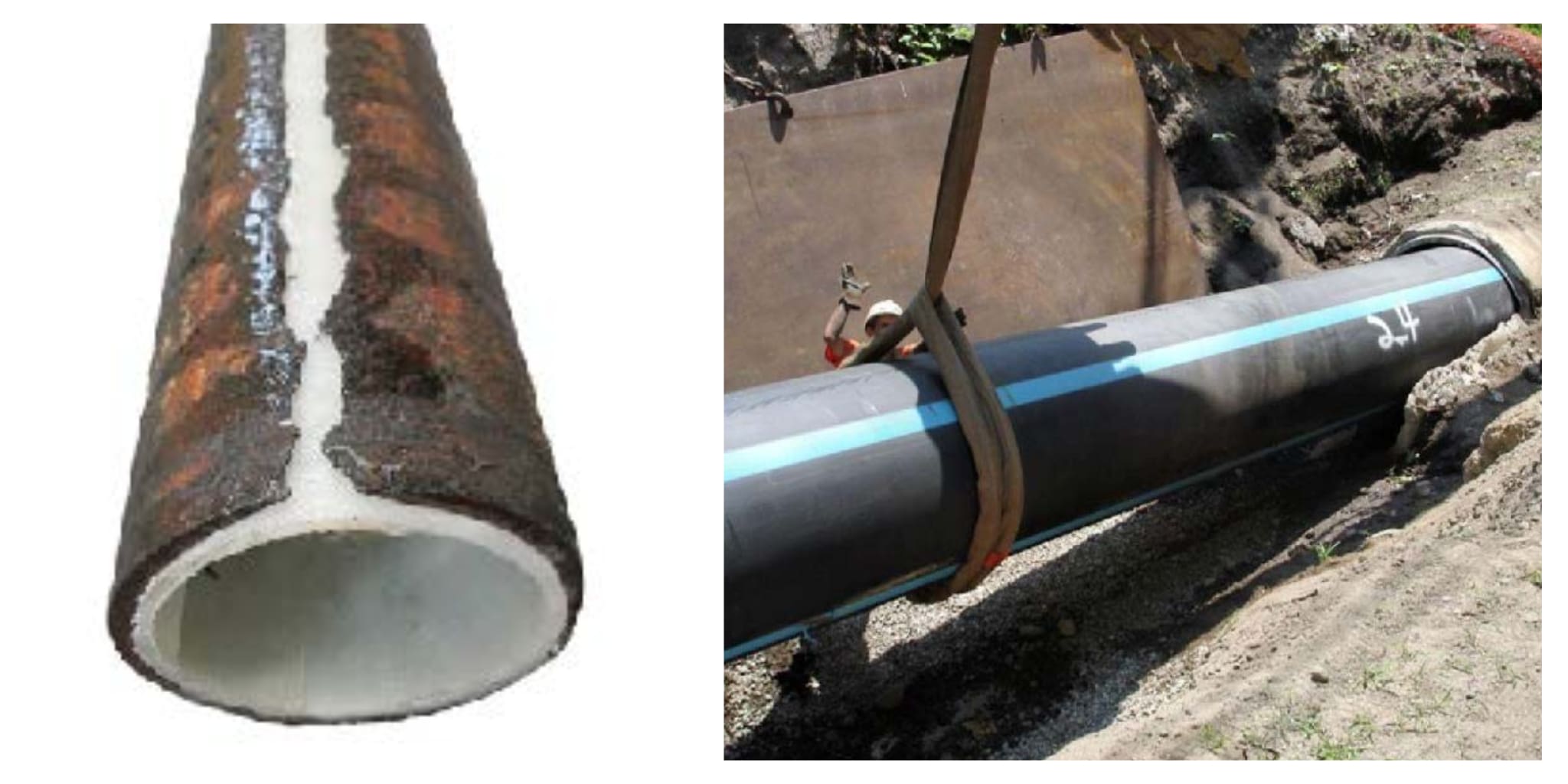
Pipe Bursting – Suitable for pipelines with fair wall conditions and minimal lateral connections. Pipe bursting replaces the host pipe in place with a jointless, durable material while minimizing excavation, restoration, and service disruptions. Through pipe bursting, not only do communities minimize impact to surrounding stakeholders and traffic, they get a new pipe out of it as well.
Both approaches offer expedited timelines compared to open-cut replacement, reduced impacts to neighborhoods and roadways, streamlined budgets, and help communities maintain reliable service with minimal disruption.
Planning and Prioritization
Effective rehabilitation starts with risk-based asset assessment. Engineers evaluate pipe material, age, condition, history of leaks and sanitary sewer overflows, system redundancy, and regulatory priorities. This information guides decision-making, allowing communities to address the highest-risk assets first, reduce emergency repairs, and strategically allocate capital for maximum value.
Phased implementation further enhances efficiency. By segmenting projects, coordinating with roadway improvements, and aligning work with funding cycles, municipalities can make steady progress without overwhelming limited resources. This approach also allows for flexibility; plans can be adjusted as conditions change or additional funding becomes available.
Real-World Project Examples
Trenchless rehabilitation methods, like CIPP and pipe bursting, allow municipalities to extend infrastructure life, minimize disruption, and optimize budgets. Here’s a closer look at how our team of experts are applying these methods on the ground:
2022 Inflow Reduction Package 1 – South Texas
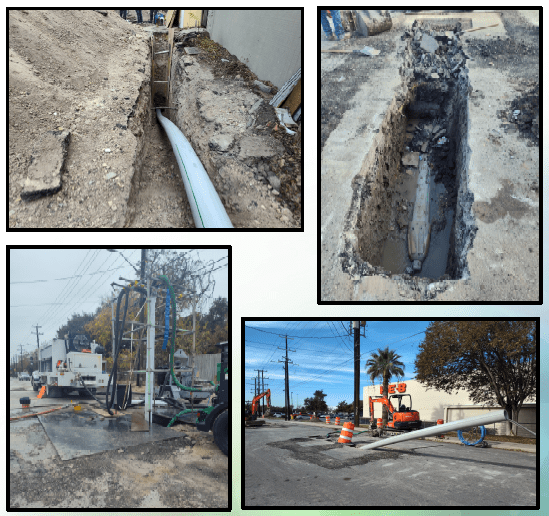
- Scope & Approach: Approximately 18,000 LF of sanitary sewer mains rehabilitated using pipe bursting (8–10” mains) across residential neighborhoods, alleys, arterials, and near commercial buildings.
- Benefits: Minimized neighborhood disruption, reduced traffic impacts, and extended service life of existing infrastructure without full replacement.
- Cost & Efficiency: $8.6M project cost; construction timeline significantly faster than traditional open-cut methods.
2021 CMOM Package 3 – San Antonio, TX
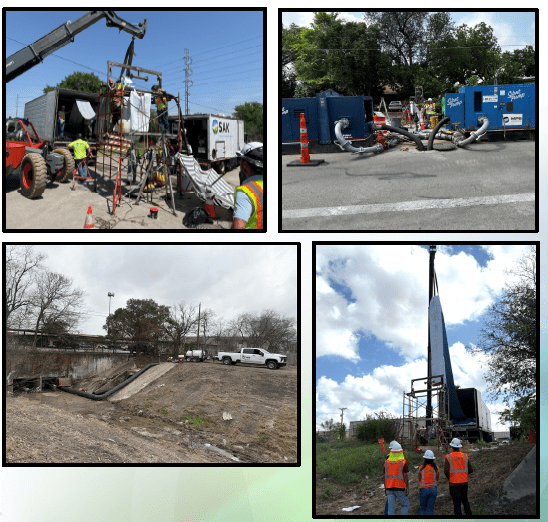
- Scope & Approach: 6,200 LF of large diameter sanitary sewer mains rehabilitated via CIPP, including work within drainage easements, residential neighborhoods, and arterials, with lateral reconnections handled remotely.
- Benefits: Targeted rehabilitation improved system reliability while minimizing construction footprint and public disruption.
- Cost & Efficiency: Completed in 240 days at a cost of $4.3M, demonstrating substantial time and cost savings versus full replacement.
SAWS BPC Package 5 – San Antonio, TX
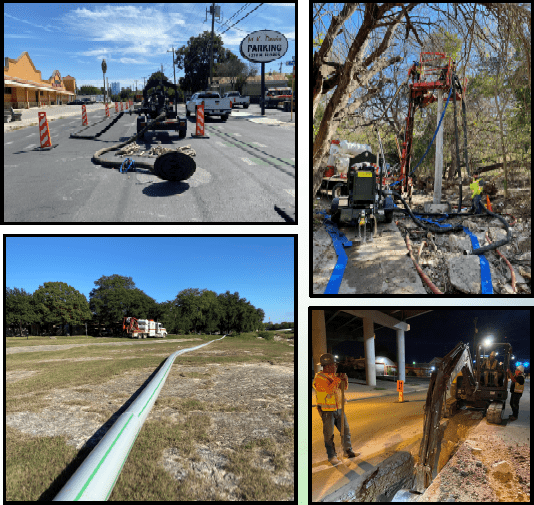
- Scope & Approach: Approximately 11,000 LF of sanitary sewer mains rehabilitated using CIPP, including 8–20” mains across drainage easements, trails, arterials, and near commercial properties.
- Benefits: Phased, targeted rehab minimized community impact and extended the life of aging pipelines across challenging sites, including backyards, alleys, and TxDOT right-of-way.
- Cost & Efficiency: Completed in 365 days at a cost of $2.0M, highlighting the efficiency of trenchless methods in complex environments.
West Ave Water Main Replacement – San Antonio, TX
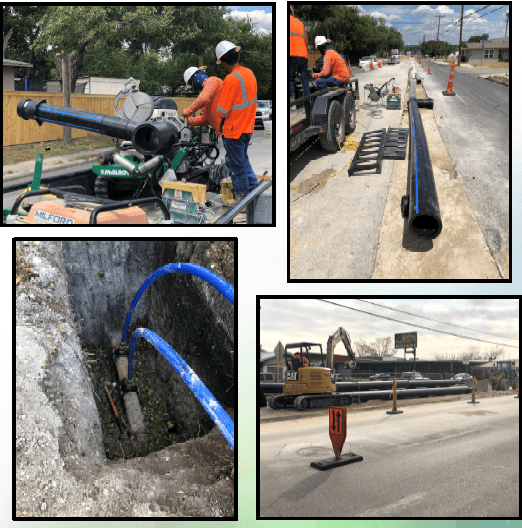
- Scope & Approach: Approximately 5,900 LF of potable water main replaced using pipe bursting (HDPE) along arterial roads with multiple stakeholder considerations, including businesses, residences, and UPRR crossings. One of the first watermain pipe bursting projects for SAWS (included some open cut realignments).
- Benefits: Minimized roadway and property disruption, reduced restoration requirements, and expedited construction timelines compared to open-cut replacement.
- Cost & Efficiency: $3.8M total cost; 30–60% faster construction timeline than traditional methods.
These projects highlight how municipalities can achieve resilient, cost-effective upgrades without full-scale replacement. By carefully selecting rehabilitation methods, coordinating construction schedules, and leveraging trenchless technologies, communities reduce disruption, save on costs, and extend the useful life of critical water and wastewater assets.
Building Long-Term Resilience
As Texas communities continue to manage aging water and wastewater infrastructure on tight budgets, trenchless rehabilitation offers a practical path forward. By selectively targeting high-risk pipelines for CIPP lining or pipe bursting, municipalities can extend system life, minimize disruption, and maximize the value of every investment. These methods support the incremental, budget-conscious approach explored in Part 2, showing that meaningful progress is possible without the cost, time, and complexity of full-scale open-cut replacement projects. In this way, resilient infrastructure is built through informed decision-making, disciplined execution, and innovative design—not a single, large investment.
Key Takeaways
Trenchless rehabilitation demonstrates how smart engineering can deliver resilient, cost-effective results. By evaluating asset condition, selecting the right rehabilitation method, and coordinating construction with existing infrastructure and community priorities, municipalities achieve longer-lasting systems while minimizing disruption to neighborhoods and local businesses. These approaches provide predictable budgets, faster construction timelines, and measurable improvements in system reliability, all without sacrificing performance.
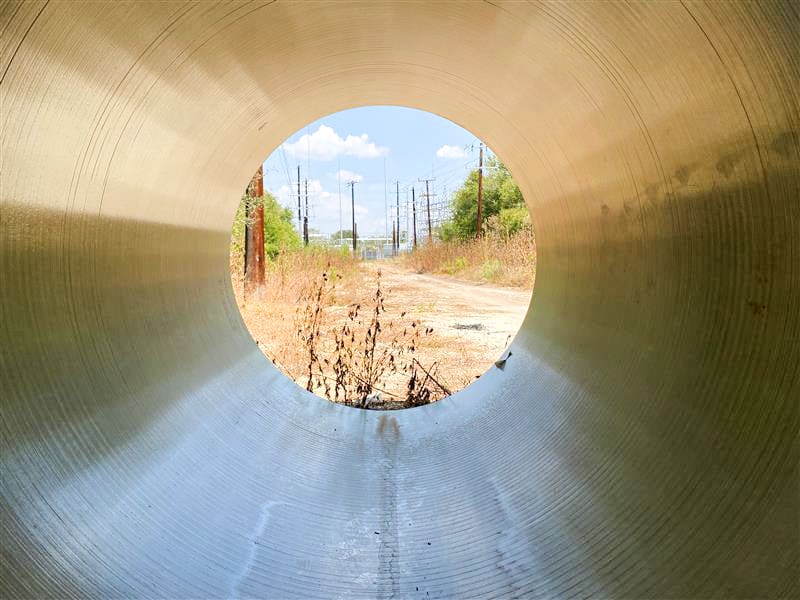
Ultimately, the combination of risk-based prioritization, phased implementation, and innovative rehabilitation strategies empowers communities to move beyond reactive repairs. It allows them to build infrastructure that is durable and adaptable, supporting public health, operational efficiency, and long-term community growth.
Continuing the Conversation
Across the three-part series, we’ve explored the challenges Texas communities face, strategies for planning under budget constraints, and practical rehabilitation approaches to extend system life. Resilient water and wastewater infrastructure is built incrementally through informed decision-making, disciplined execution, and innovative design.
If you missed a previous part of our series, you can find Part 1 and Part 2 here!
Contact Us
Ready to strengthen your community’s water and wastewater systems? WGI’s civil engineering experts work with Texas municipalities to deliver practical, phased, and cost-conscious solutions that improve reliability and support long-term growth.
Connect with WGI to learn how your community can maximize investment value while preparing for the future.